Historic Cities
Nagoya
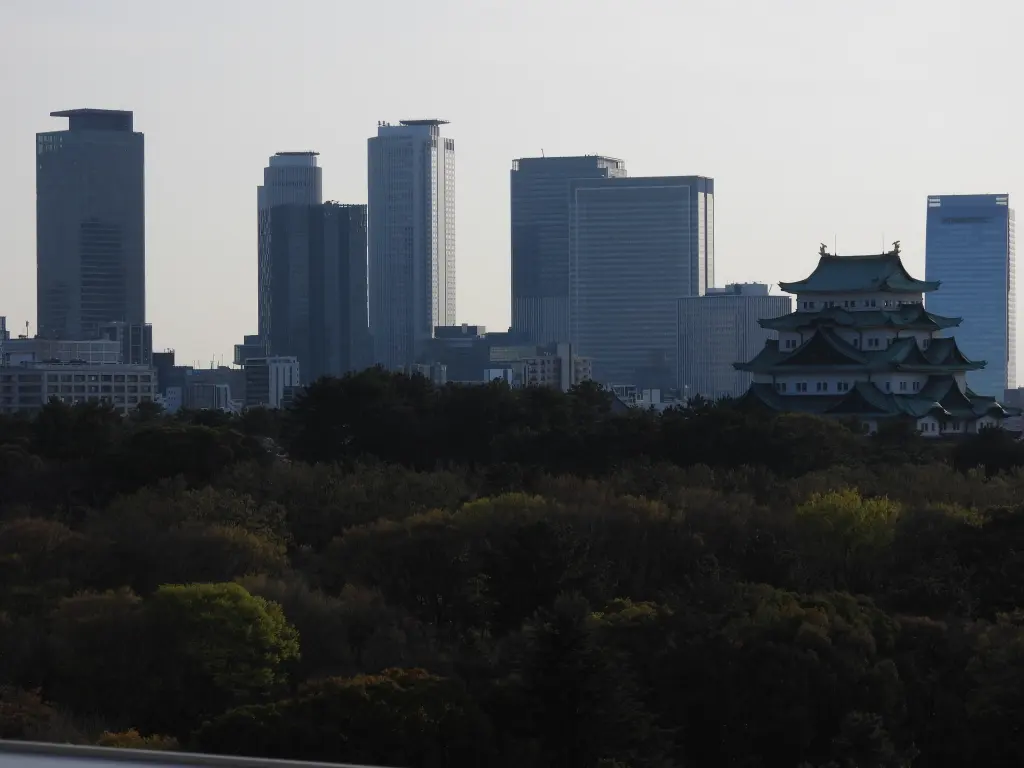
Image: なごやか / Wikimedia Commons · CC0 1.0
Nagoya (名古屋市, Nagoya-shi) is the capital of Aichi Prefecture and the largest city in Japan's Chūbu region. Built around the Tokugawa castle town founded in the early seventeenth century, it later became a major railway, port, and manufacturing centre. Nagoya links the Tōkaidō corridor with Ise Bay and a wider industrial region, but the city, Aichi Prefecture, and the Greater Nagoya economy are not interchangeable. Its landscape joins Nagoya Castle, Atsuta Jingū, merchant and craft districts, rebuilt postwar avenues, the Nagoya Station and Sakae business districts, and the Port of Nagoya. In September 2026 the city is a core host of the Aichi-Nagoya Asian Games, whose venues extend well beyond the municipal boundary.
Overview
| Japanese | 名古屋市 |
|---|---|
| Romanization | Nagoya-shi |
| Prefecture | Aichi |
| Region | Chūbu, central Honshū |
| Municipal status | Prefectural capital and ordinance-designated city |
| City incorporation | October 1, 1889 |
| Castle-town foundation | Construction from 1610; Kiyosu relocation completed in 1613 |
| Port opened to international trade | November 10, 1907 |
| Aichi-Nagoya 2026 | Asian Games, September 19–October 4, 2026 |
Name, geography, and scale
Nagoya’s role as a regional hub is inseparable from conventional railways, private lines, subways, and the Tōkaidō Shinkansen; see Japanese Trains for the national framework.
Nagoya occupies part of the Nōbi Plain near the head of Ise Bay. The Shōnai, Tempaku, and other waterways, reclaimed shorelines, low ground, and terraces have shaped settlement, industry, drainage, and transport. The city is a municipality within Aichi Prefecture; Greater Nagoya is a wider economic and commuting region that includes many other cities.
Historical documents used several written forms for Nagoya, including 那古野, before 名古屋 became standard. Explanations of the name's ultimate origin remain uncertain. Modern references must also distinguish Nagoya City from the Port of Nagoya's multi-municipality jurisdiction and from nearby Toyota City, whose name and industries are often folded loosely into descriptions of Nagoya.
Before the Tokugawa city
The Nagoya area did not begin with the seventeenth-century castle. Atsuta developed around its shrine, maritime approaches, markets, and the Miya crossing of the Tōkaidō. Settlements, fields, religious sites, roads, and older fortifications occupied the plain before Tokugawa construction reorganised its political centre.
The older Nagoya Castle site in the present Ni-no-maru area is associated with Oda Nobunaga's early life, while nearby Kiyosu served as an important political centre. These layers matter because the later city was created through relocation and redesign, not on empty land.
Castle town and the Kiyosu relocation
Tokugawa Ieyasu ordered construction of Nagoya Castle for his son Yoshinao. Work began in 1610, the main keeps were completed in 1612, and Hommaru Palace in 1615. The castle became the seat of the Owari Tokugawa house, one of the three principal Tokugawa collateral families.
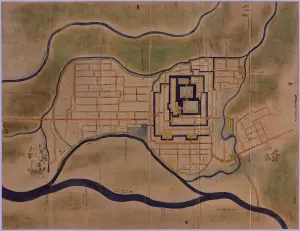
From 1609 to 1613, the Kiyosu-goshi moved residents, institutions, temples, shrines, merchants, craftspeople, and urban functions from Kiyosu to the new jōkamachi. The planned blocks and social districts established an early-modern framework, but later roads, railways, war damage, reconstruction, and redevelopment substantially altered it.
Modern city, port, and industry
Nagoya became a city under the municipal system in 1889. Railways, electric power, municipal expansion, education, and modern factories changed the former domain capital. Textiles, ceramics, machinery, and transport equipment developed through different firms, workshops, labour systems, and state policies rather than one uninterrupted craft tradition.
The Port of Nagoya opened to international trade in 1907. Its later wharves, reclaimed industrial zones, and transport connections supported bulk cargo, containers, machinery, and automobile exports. The port authority's jurisdiction reaches across four cities and one village, so port statistics do not describe Nagoya City alone.
War and reconstruction
MIRAI TOWER, the former Nagoya TV Tower, connects the city’s post-war broadcasting history with the conservation and reuse of modern architecture.
Nagoya's military and industrial importance made it a major target of air raids in 1945. Civilian districts, factories, and cultural property were destroyed; the main keeps and Hommaru Palace at Nagoya Castle burned, although some buildings and stored paintings survived.
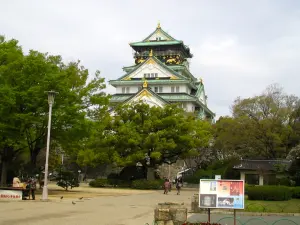
Postwar land readjustment created broad roads, parks, and new building patterns while industry recovered across the region. The concrete castle tower rebuilt in 1959 and the reconstructed Hommaru Palace completed in 2018 represent different eras and conservation choices. They should not be treated as untouched seventeenth-century survivals.
Districts, transport, and urban form
Nagoya is also the host city of the July Grand Sumo Tournament, one of the six official honbasho in the annual professional calendar.
Nagoya Station forms a major rail and business gateway, while Sakae developed as another commercial and civic centre. The castle and government district lie to the north, Atsuta to the south, and port and industrial landscapes extend toward Ise Bay. Subway and surface rail lines connect these centres with residential districts and the wider region.
Arimatsu preserves a different urban scale along the old Tōkaidō. Established in 1608 and associated with tie-dyed textiles, its merchant buildings and curved road show that Nagoya includes incorporated settlements with histories not reducible to the castle-centred grid.
Religion, collections, craft, and foodways
Atsuta Jingū, the Tokugawa Art Museum, Nagoya Castle, temples, neighbourhood festivals, and craft districts preserve different kinds of historical evidence. Arimatsu-Narumi shibori, ceramics, metalwork, and other industries link household skill, commercial networks, design, and modern heritage policy.
Nagoya meshi is an umbrella term for foods promoted as characteristic of the city and region. Miso-based dishes, noodles, eel preparations, and café customs have distinct histories, businesses, and geographic ranges. Treating them as one timeless cuisine obscures invention, branding, and exchange with the rest of Aichi and central Japan.
Manufacturing region and its boundaries
The wider Aichi economy is strongly associated with automobiles, aerospace, machinery, and ceramics. Nagoya supplies headquarters, universities, labour, logistics, finance, and port access within that network, but major plants and companies are distributed across the prefecture. Toyota Motor's home city, for example, is Toyota City rather than Nagoya.
Regional boundaries also matter historically. Ishikawa Kazumasa came from Mikawa in eastern Aichi, whereas Tokugawa Nagoya developed as the centre of Owari in the west. Linking both to modern Aichi is useful, but collapsing Mikawa, Owari, Nagoya, and the prefecture into one place erases important political histories.
Aichi-Nagoya Asian Games 2026
The regional venue network includes Karate at the Asian Games in Toyohashi, outside Nagoya City. This illustrates why the Aichi-Nagoya host label should not be read as meaning that every event is staged in Nagoya.
The twentieth Asian Games are scheduled for September 19–October 4, 2026 under the joint host name Aichi-Nagoya. Nagoya contains the opening and closing ceremony stadium and several competition and event sites, while other venues are spread across Aichi Prefecture and, for some sports, beyond it.
The Games make Nagoya highly visible, but the host label does not mean every competition occurs inside the city. This schedule was checked on September 10, 2026. Venue access, transport controls, start times, and ticket rules are operational information and should be confirmed through the current organiser pages.
Sources
- City of Nagoya, Profile of Nagoya.
- City of Nagoya, History of Nagoya.
- Nagoya Castle Official Website, History.
- Nagoya University, Nagoya—History and Development.
- Nagoya Port Authority, Port Profile.
- Aichi-Nagoya Asian Games Organising Committee, Asian Games 2026.
- Nagoya Convention and Visitors Bureau, Historic Townscapes of Arimatsu.
Last updated: