Historic Cities
Matsue
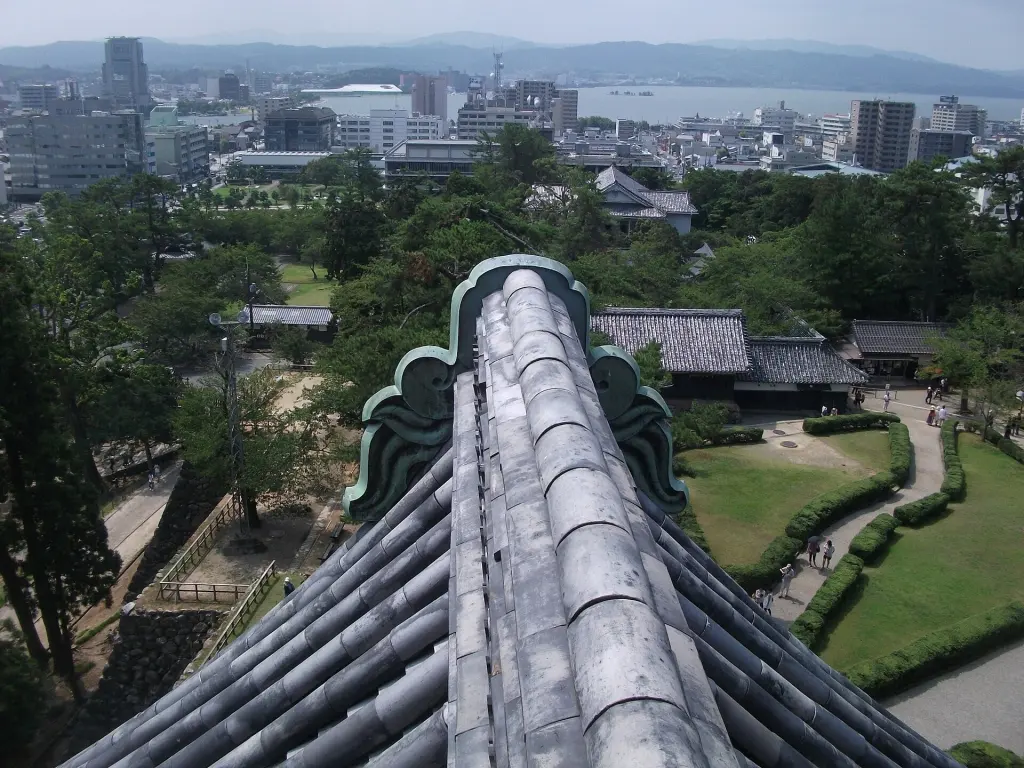
Image: Mister99 / Wikimedia Commons · CC BY-SA 3.0
Matsue is the capital of Shimane Prefecture in the San’in region of western Honshu. The city lies between Lake Shinji, Lake Nakaumi, rivers, the Sea of Japan, and low hills within the wider historical region of Izumo. Horio Yoshiharu began constructing Matsue Castle and its castle town in 1607; the keep was completed in 1611 and is one of twelve surviving premodern castle keeps in Japan. Its designation as a National Treasure in 2015 recognized the keep and associated evidence, not the entire modern city. Moats, canals, former samurai districts, merchant streets, temples, and reclaimed lowlands still make the early-modern plan readable. Matsue also developed strong tea and confectionery cultures, preserves traditions associated with Izumo, and became internationally known through the writings of Lafcadio Hearn, who lived there in 1890–1891. This article focuses on Matsue City rather than all of Shimane Prefecture or the broader Izumo region.
Overview
| Japanese name | 松江市 |
|---|---|
| Romanization | Matsue-shi |
| Prefecture | Shimane Prefecture |
| Region | San’in; eastern Shimane is historically associated with Izumo |
| Castle-town foundation | Construction began in 1607; keep completed in 1611 |
| National Treasure | Matsue Castle keep designated in 2015 |
Water, geography, and scope
Central Matsue lies where Lake Shinji drains through the Ōhashi River toward Lake Nakaumi and the Sea of Japan. Water divided and connected districts, supported transport and fisheries, shaped defense, and required continuous drainage and flood management.
The municipality extends well beyond the castle center to rural, coastal, hot-spring, and former town areas added through modern mergers. Izumo is both an ancient province and a living regional identity larger than Matsue; Izumo Taisha, for example, is in neighboring Izumo City.
Ancient Izumo and medieval networks
The wider Matsue area contains archaeological sites, ancient provincial institutions, shrines, and landscapes described in the Izumo no Kuni Fudoki. These histories long predate the castle town and connect the city to regional political and ritual centers.
Medieval ports and routes around Lake Nakaumi and the Sea of Japan linked settlements with trade and warfare. The later choice of Matsue for a new domain center built on these water networks while redirecting authority away from the mountain fortress of Gassantoda.
Building the castle and castle town
For comparison, Aizuwakamatsu preserves a different castle-town history centred on an 1868 siege and a twentieth-century reconstruction rather than a surviving original keep.
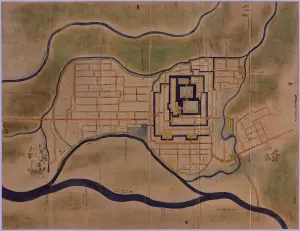
After the Battle of Sekigahara, the Horio family received Izumo and Oki. Horio Yoshiharu selected a low hill near Lake Shinji and began building the castle and jōkamachi in 1607. Reclaimed paddies and wetlands, dug waterways, moats, bridges, and defensive streets formed the new town.
The Horio were followed briefly by the Kyōgoku and then by the Matsudaira family from 1638 until the abolition of domains. Samurai residences concentrated near the castle, with merchant and artisan districts, temples, and transport routes arranged through the surrounding lowlands.
Surviving keep, moats, and districts
The wooden keep survived the widespread dismantling of castle buildings in the Meiji period. Other gates, turrets, and palaces were lost or later reconstructed, so “Matsue Castle” includes remains and buildings with different dates and levels of authenticity.
The keep is one of twelve surviving premodern Japanese castle keeps and was designated a National Treasure in 2015 after research clarified its completion date. Moats, stone walls, canals, former samurai streets, and excavated features preserve the urban system beyond the tower itself.
Tea, confectionery, and domain culture
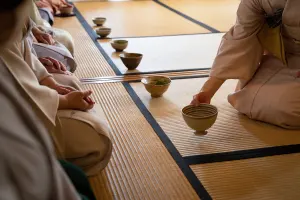
Matsudaira Harusato, known by the tea name Fumai, was the seventh lord of Matsue domain and an influential tea practitioner. His collecting, patronage, and practice contributed to traditions that connect Japanese tea ceremony with local ceramics, utensils, gardens, and confectionery.
Modern Matsue presents tea and wagashi as civic culture, but these practices vary between schools, businesses, households, and public events. They should not be treated as a single unchanged legacy of one lord or as proof that every resident participates in formal tea.
Lafcadio Hearn and modern Matsue
Lafcadio Hearn arrived in Matsue in 1890 to teach English and later wrote about the city, local beliefs, landscapes, and stories. He married Koizumi Setsu and became a Japanese citizen under the name Koizumi Yakumo. His former residence and memorial museum now form part of the castle-area cultural landscape.
Hearn’s work helped shape international images of Matsue, but it reflects a particular outsider’s encounters and literary choices. Reading it alongside Japanese-language sources, Setsu’s role, local archives, and the city’s wider modernization avoids making one author the sole interpreter of the region.
Living water city and stewardship
Lake fisheries, sunsets over Lake Shinji, canal boats, festivals, museums, schools, government offices, and residential neighborhoods sustain Matsue as a living regional center. The city’s identity also reaches east toward Lake Nakaumi and coastal communities, not only inward to the castle.
Preservation involves water management, archaeological research, repair of wooden structures, historic streetscape policy, and viable everyday use. Visitors should distinguish original fabric from reconstruction, respect residential areas around the castle, and check current access when conservation work affects the keep or grounds.
Sources
Last updated: