Japanese New Year
Osechi Ryōri
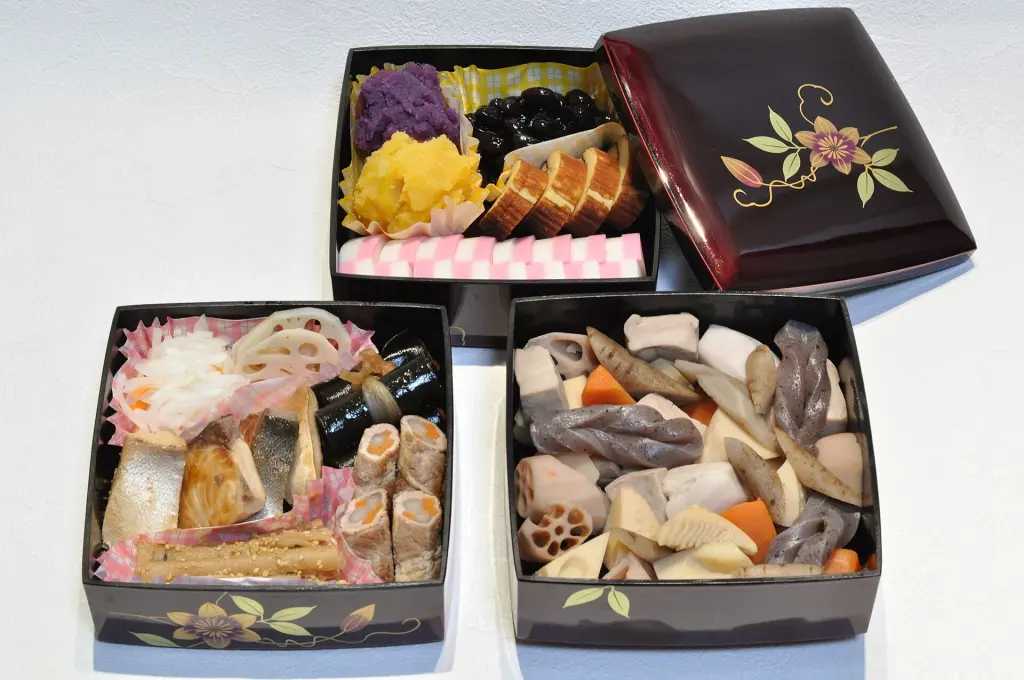
Image: Ocdp / Wikimedia Commons · CC0 1.0
Osechi ryōri are foods prepared for the Japanese New Year and commonly arranged in layered lacquered boxes called jūbako. The category includes preserved seafood, vegetables, sweet preparations, egg dishes, beans, and regional specialties, many of which carry auspicious associations based on color, shape, name, or wordplay. Black soybeans may express a wish for health and diligent work; herring roe can suggest flourishing descendants; prawns, with curved bodies and long feelers, can evoke longevity. These examples are familiar but do not form one mandatory national menu. Recipes and meanings vary by region and household, and Shōgatsu meals also include foods such as zōni. Today, home cooking, specialist shops, department stores, restaurants, and delivery services all participate in the changing osechi tradition.
Overview
| Japanese name | お節料理 / 御節料理 |
|---|---|
| Romanization | Osechi ryōri |
| Occasion | Japanese New Year |
| Typical presentation | Layered jūbako boxes |
| Common character | Festive dishes with regional and auspicious associations |
| Modern forms | Homemade, restaurant-made, retail, and delivered sets |
Name and sekku origins
The word osechi is connected to seasonal observances known as sekku, occasions marked by offerings and special food. Over time, osechi became especially associated with the New Year, the most prominent turn in the annual calendar.
Ryōri simply means cuisine or prepared dishes. The combined term therefore names a festive food tradition rather than one recipe. Historical development involved court observance, warrior and urban households, regional ingredients, preservation techniques, and expanding commerce.
New Year feast and household labor
Osechi marks the New Year table as different from an ordinary meal. Dishes can be prepared before January 1, allowing them to be served during a period of visiting and celebration. Many recipes historically favored seasoning and techniques that kept well in winter conditions.
The common claim that osechi exists solely to rest the household cook simplifies a more complex history. Preservation, ritual offering, hospitality, status display, and the organization of seasonal labor all contributed to the meal's form, while domestic work was distributed unevenly.
Jūbako and presentation
Osechi is frequently packed into square, stackable boxes called jūbako. Compartments separate dishes, protect their shapes, and create a dense composition of colors and textures. Stacking can itself be interpreted as layering good fortune.
The number of tiers and placement of dishes differ among regions, culinary schools, shops, and households. Some meals use formal multi-tier arrangements; others present selected dishes on plates or in a single box. The box is characteristic but not a test of authenticity.
Dishes and auspicious readings
Frequently discussed dishes include kuromame black soybeans, kazunoko herring roe, tazukuri small glazed fish, datemaki sweet rolled omelet, kurikinton sweet chestnut paste, kōhaku namasu red-and-white pickles, simmered vegetables, kelp rolls, and prawns.
Their meanings use visual resemblance, homophones, and valued qualities: fertility, harvest, learning, wealth, purity, or long life. Lists differ, and one food can acquire several explanations. Auspicious interpretation is an active cultural practice, not a single code fixed for all time.
Regional and household variation
Local seafood, vegetables, preservation traditions, and ceremonial histories create substantial variation. The flavor and contents of simmered dishes differ, and some places preserve specialties rarely seen in standardized national sets. Family preferences, dietary needs, budget, and available labor further shape the meal.
Osechi also shares the holiday table with zōni, sashimi, sushi, sukiyaki, soba eaten on New Year's Eve, and other foods. Treating every New Year dish as osechi erases useful distinctions, even though actual meals combine the categories freely.
Preparation, preservation, and commerce
Salting, simmering, sweetening, pickling, drying, and careful packing help many dishes keep and allow preparation to be distributed across late December. Refrigeration has changed food safety and expanded possible ingredients, but chilled storage and use-by guidance remain essential for purchased and homemade sets.
Commercial osechi has a long history and now ranges from neighborhood shops to luxury hotel sets, regional collaborations, mail-order boxes, and compact portions. Buying rather than cooking does not make the meal culturally empty; it changes who performs the labor and how expertise is organized.
Contemporary practice and boundaries
Contemporary sets respond to smaller households, children, vegetarian or allergy-aware diets, and tastes shaped by Chinese, Korean, European, and other cuisines. Some families mix purchased favorites with a few inherited recipes, making selection itself part of the tradition.
Because osechi is both symbolic and edible, its meanings are renewed through preparation, explanation, gifting, photographing, and eating. A careful account recognizes commercial innovation and personal choice while distinguishing them from claims about older or regionally specific practice.
Sources
- Government of Japan, The Origins and Significance of Japan's New Year's Culture.
- Government of Japan, Traditional Winter Events in Japan.
- Kokugakuin University Digital Museum, Shogatsu.
- Ministry of Agriculture, Forestry and Fisheries, Traditional Dietary Cultures of the Japanese.
- Ministry of Agriculture, Forestry and Fisheries, Festive Fare for Special Gatherings.
- Ministry of Agriculture, Forestry and Fisheries, Osechi Ryori.
Last updated: