Martial Arts Figures
Masutatsu Ōyama
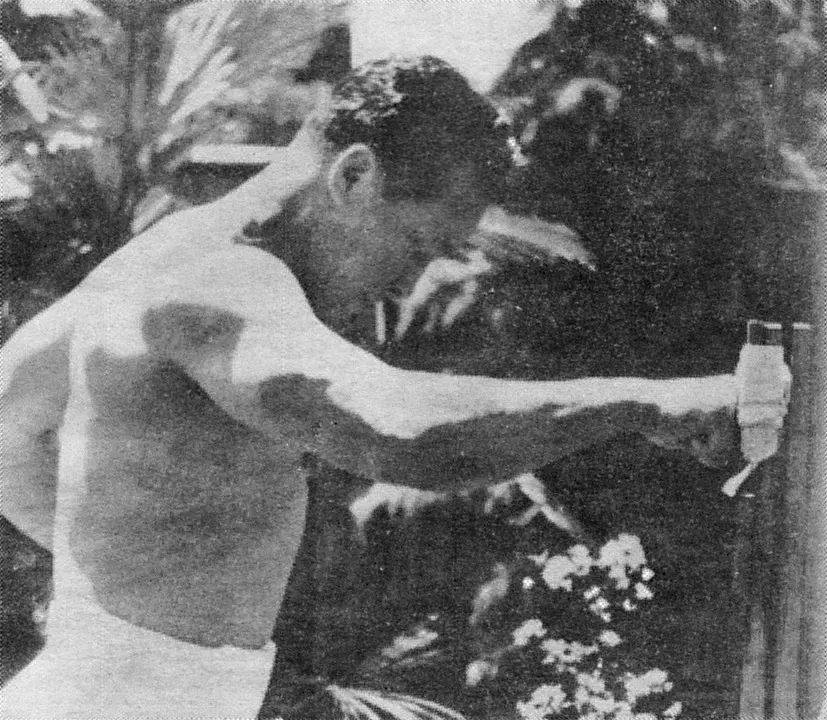
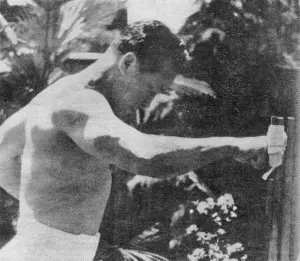
Image: Nippon Sports Publishing Co. (publication source) / Gong Kakutogi via Wikimedia Commons · Public domain
Masutatsu Ōyama (大山倍達, 1923–1994), born Choi Yeong-ui (崔永宜) in Korea under Japanese colonial rule, was the founder of Kyokushin Karate. In Japan he studied Karate in Shotokan- and Gōjū-related circles before developing the Ōyama dōjō and, in 1964, the International Karate Organization Kyokushinkaikan. Its training culture and knockdown competition became highly influential in post-war full-contact Karate. Ōyama also promoted the art through demonstrations, English-language books, films and mass media. That publicity created a biography in which documented organisational events, autobiographical claims and deliberate dramatization often overlap. An authoritative account therefore distinguishes records such as publication dates and tournament organisation from later stories about mountain isolation, challenge matches and animal contests.
Overview
| Japanese | 大山倍達 |
|---|---|
| Reading | おおやま ますたつ |
| Romanisation | Ōyama Masutatsu; English name order: Masutatsu Ōyama |
| Korean name | Choi Yeong-ui (崔永宜; 최영의) |
| Born | 4 June 1923, Gimje, Korea under Japanese rule |
| Died | 26 April 1994, Tokyo |
| Martial art | Karate |
| Founded | Kyokushin and the International Karate Organization Kyokushinkaikan |
| Historical setting | Post-war Japanese full-contact Karate |
Name and background
The Academy of Korean Studies records his birth as Choi Yeong-ui on 4 June 1923 in Gimje, in what is now South Korea. He became known in Japan as Ōyama Masutatsu, written 大山倍達. Mas Oyama is the common shortened English form.
Kyokushin's Japanese institutional chronology begins simply with Ōyama's birth in June 1923 and does not foreground his Korean name. Both identities are relevant: one documents his birthplace and early name, while the other is the name under which he wrote and organised Karate in Japan.
Training in Japan
Ōyama moved to Japan as a teenager. Kyokushin history associates his Karate study with Gichin Funakoshi, Gōgen Yamaguchi and So Neichu. The institutional chronology places these influences together in 1943, while the Korean biographical source places his entry into Funakoshi's circle earlier.
The broad relationships are well established in institutional memory, but exact periods, grades and the degree of direct instruction differ among accounts. They should not be converted into a tidy uninterrupted lineage without contemporary records.
The Ōyama dōjō
Kyokushin's official chronology records an Ōyama dōjō sign at his home in Mejiro in 1954 and regular training in a rented ballet studio near Rikkyō University from 1956. The latter is treated by the organisation as the predecessor of its headquarters.
Early training acquired a reputation for demanding contact, conditioning and physical testing. Later recollection can exaggerate a uniform “anything goes” culture; actual practice changed as membership, facilities and competition structures developed.
Formation of Kyokushin
The name Kyokushin (極真) conveys the idea of “ultimate truth.” Construction of a headquarters began in 1963, and Kyokushin's own history dates the formal establishment of the International Karate Organization Kyokushinkaikan and completion of the headquarters to June 1964.
Some organisational and biographical sources use 1963 because that was the year of incorporation activity and headquarters construction. TokyoWaltz uses 1964 for the formal launch while noting the preceding institutional development.
Full-contact competition
Kyokushin developed knockdown competition in which controlled full-power body and leg techniques, knockdowns and fighting effect are central. The first open All Japan championship was held in 1969, followed by the first open world championship in 1975.
Kyokushin rules are not the same as JKF or WKF point kumite. Permitted targets, hand techniques to the head, protective equipment and victory conditions depend on the particular Kyokushin organisation and event.
Books and international expansion
Ōyama published What Is Karate? in 1958 and later produced numerous instructional and autobiographical works. English publication and overseas demonstrations helped present Japanese Karate to audiences with no access to a local dōjō.
His books are valuable primary evidence for his teaching and self-presentation. Autobiographical writing is not independent verification of every event it describes, especially where the same episode also served organisational publicity.
Documented history, publicity and legend
Kyokushin's official chronology records periods of mountain training, contests with bulls and overseas demonstrations. Some events were filmed or reported, but later accounts often enlarge numbers, circumstances or outcomes. These claims should be attributed to institutional or autobiographical sources rather than presented as neutral proof of exceptional powers.
The manga Karate Baka Ichidai, serialised from 1971, and related films transformed parts of Ōyama's life into heroic popular culture. The works are historically important to his public image, but their scenes are dramatization, not documentary biography.
Death and organisational succession
Ōyama died on 26 April 1994. Disputes over leadership, names and trademarks followed, and several organisations now use Kyokushin-derived identities.
Japanese court records provide stronger evidence for this institutional fragmentation than any one claimant's lineage narrative. “The Kyokushin organisation” after 1994 can therefore refer to different legal and technical bodies and should be identified precisely.
Legacy
Ōyama's durable influence lies in the international network he built, the full-contact competitive format he promoted and the schools that developed from Kyokushin. His students and former members helped shape several later Karate and kickboxing organisations.
His legacy also illustrates a broader historical problem: martial-arts biography can become a promotional genre. Dates, books, organisations and recorded events are more reliable anchors than repeated anecdotes whose earliest source is a dramatized publication.
Sources
- International Karate Organization Kyokushinkaikan, History of Kyokushin.
- International Karate Organization Kyokushinkaikan, Masutatsu Ōyama profile.
- National Diet Library Search, Watashi no Karate-dō Jinsei by Ōyama Masutatsu.
- Academy of Korean Studies, Choi Yeong-ui.
- Courts in Japan, intellectual-property judgment concerning Kyokushin organisations.
- Japan Institute of Invention and Innovation, Kyokushin trademark and succession case commentary.
Last updated: