
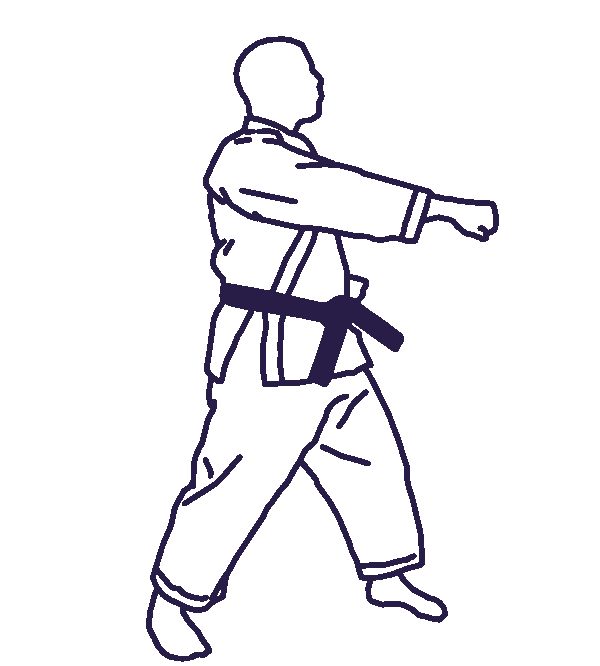
Gyaku-zuki
Gyaku-zuki is a Karate thrust delivered with the arm opposite the forward leg, used across kihon, kata, kumite and competition.
Gyaku-zuki is a Karate thrust delivered with the arm opposite the forward leg, used across kihon, kata, kumite and competition.
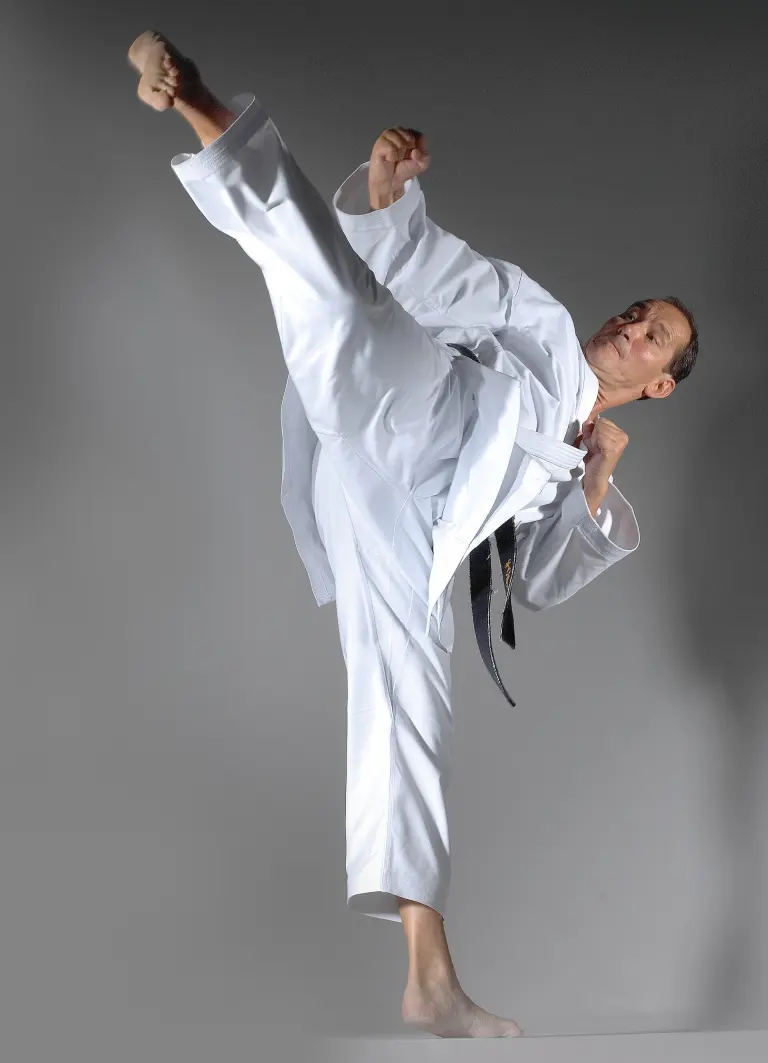
Geri is the familiar compound form for Karate kicking techniques, classified by direction, path, contact surface, target and training context.
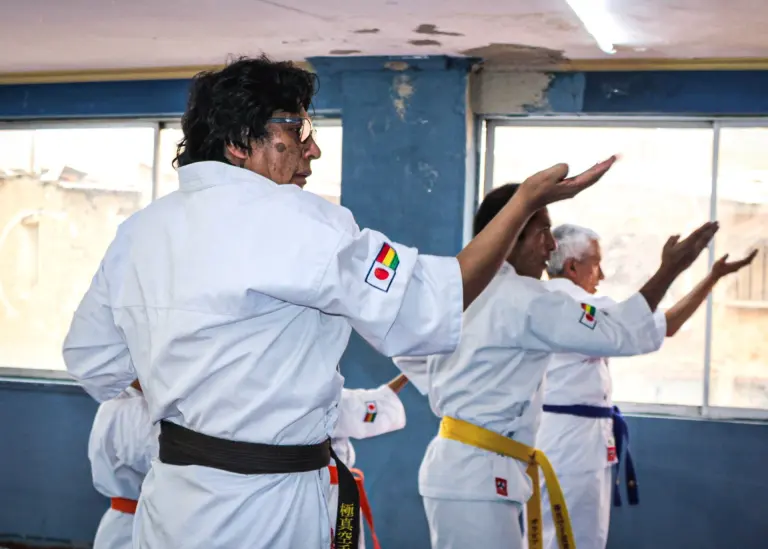
Uke means receiving in Karate and covers actions that intercept, redirect, cover or control attacks rather than one rigid category of blocks.
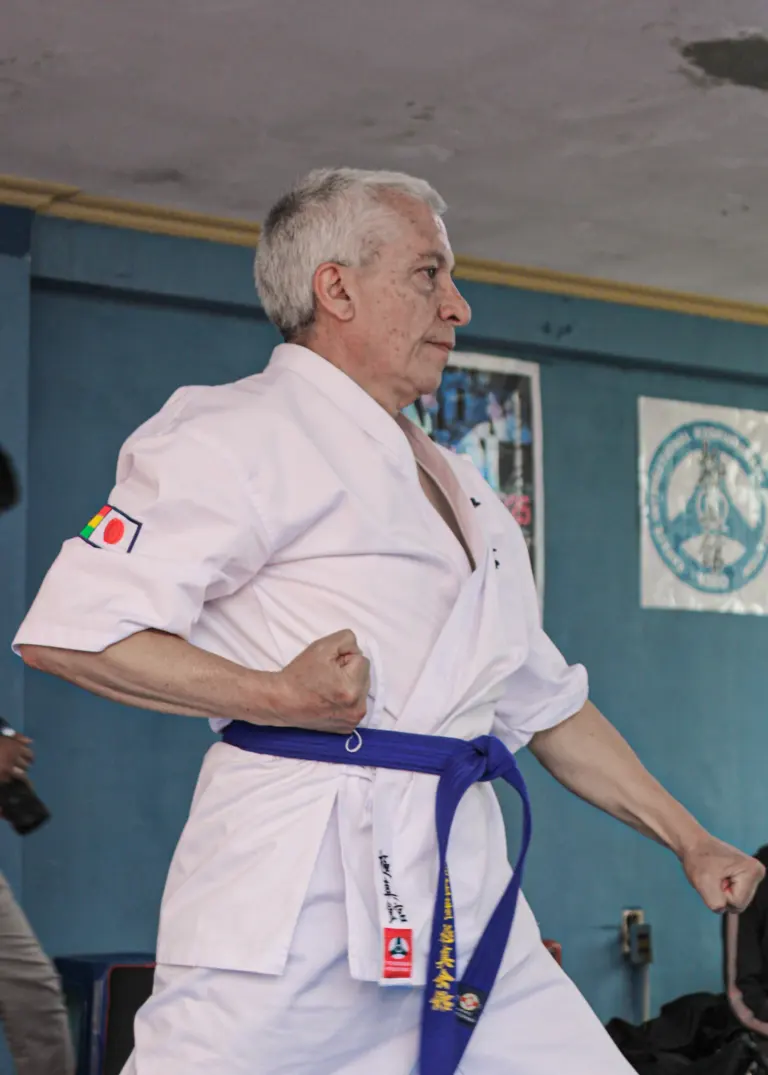
Tsuki is Karate’s family of thrusting hand techniques, commonly punches, with names determined by path, level, stance and movement relationship.
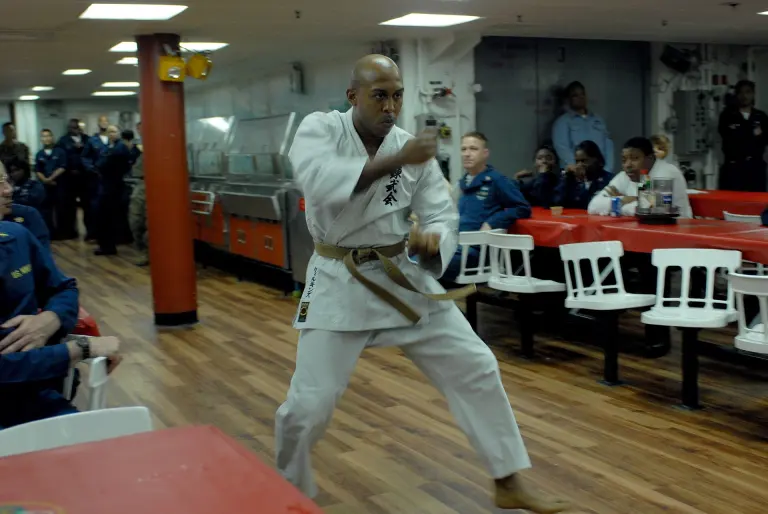
Karate techniques include thrusts, strikes, receiving actions, kicks, stances and movement, organised differently across styles, training methods and competition rules.
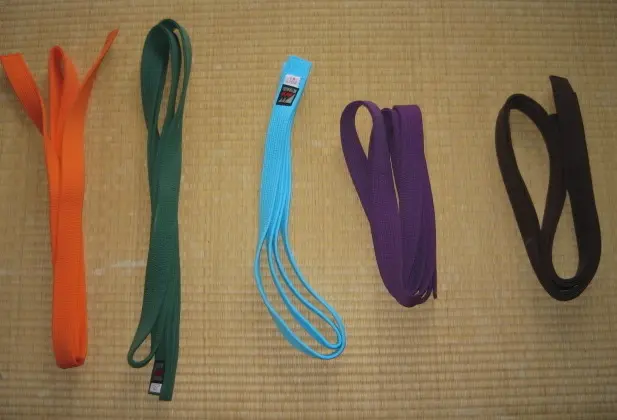
Karate belt ranks combine kyū and dan grades with organisation-specific belt colours, examinations and recognition; there is no universal worldwide sequence.
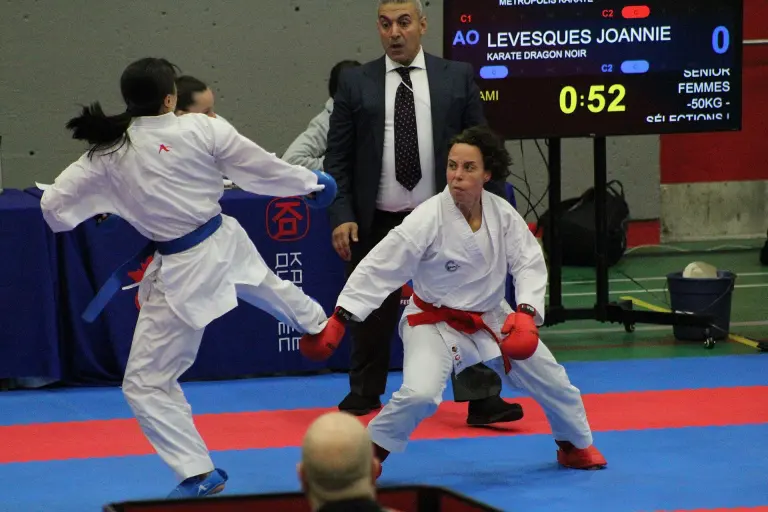
Karate competition rules differ by organisation and event; this guide explains current JKF kumite and kata rules, scoring and major limitations.
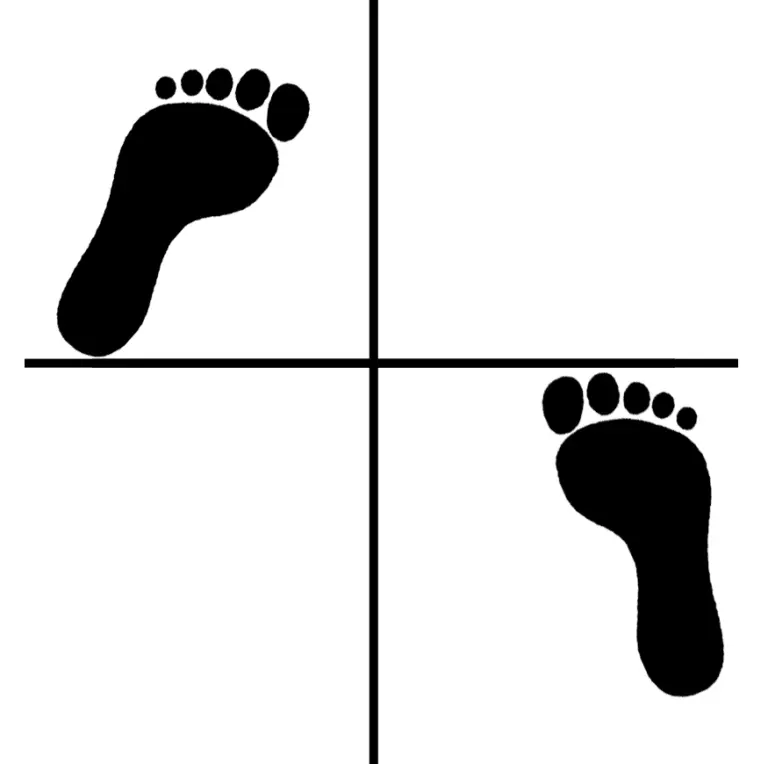
Karate stances organise support, posture and movement; their names, dimensions and weight distribution vary among styles and training contexts.
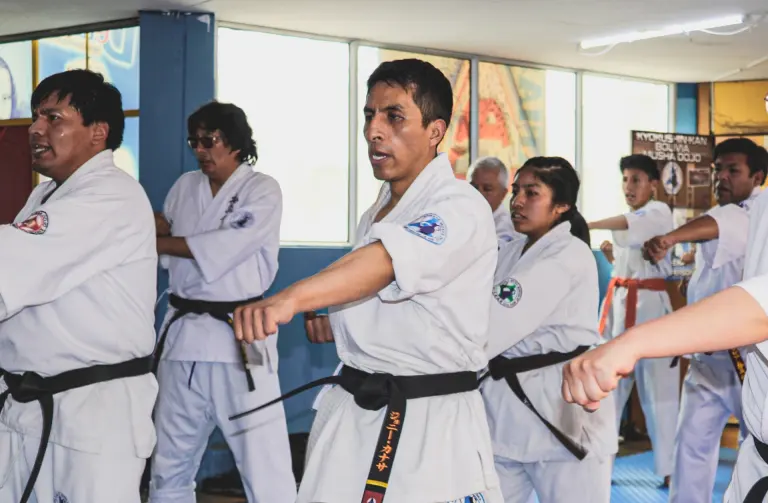
Kime is Karate’s coordinated moment of technical focus, joining timing, posture, force and control without requiring permanent whole-body tension.
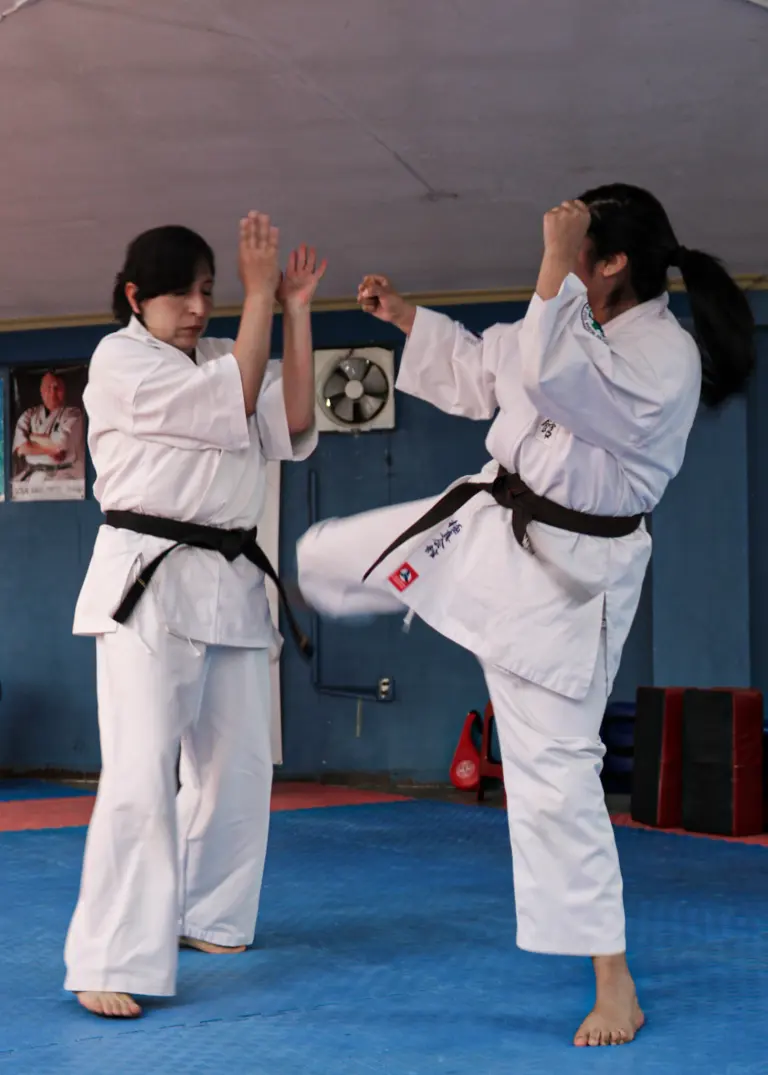
Bunkai is the analysis and interpretation of Karate kata movements, studied through explanation, partner work and adaptation rather than one universal answer.