
Gedan-barai-uke
Gedan-barai-uke is a Karate receiving technique that sweeps aside lower-level attacks, with a front kick given as one JKF example.
Gedan-barai-uke is a Karate receiving technique that sweeps aside lower-level attacks, with a front kick given as one JKF example.
Ushiro-geri is a Karate back kick delivered as the body turns away and the leg or heel drives along a backward line.
In JKF terminology, chūdan uchi-uke receives a middle-level attack as the arm moves from the body’s outside toward the inside.
In JKF terminology, chūdan soto-uke receives a middle-level attack as the arm moves from the body’s inside toward the outside.
Jōdan age-uke is a Karate receiving technique in which the inner forearm rises from below against an attack to the face.
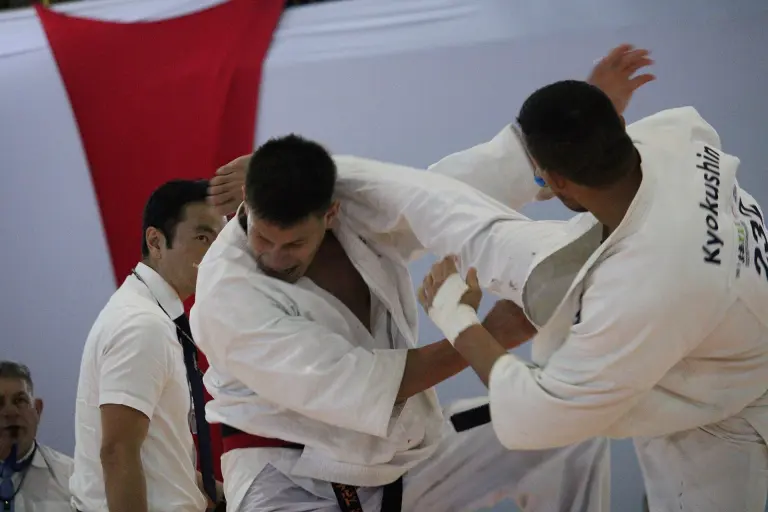
Mawashi-geri is a Karate roundhouse kick that approaches an upper- or middle-level target along a curved path from the side.
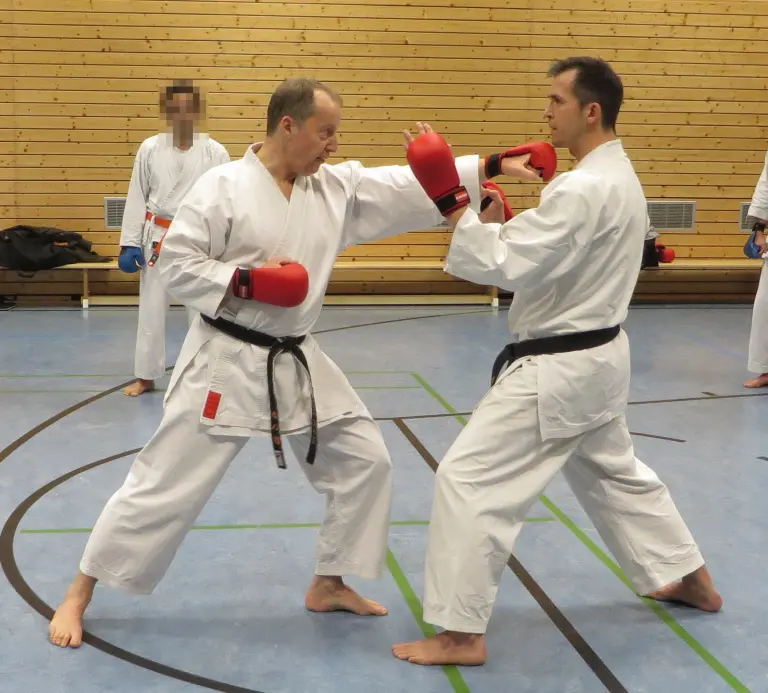
Kizami-zuki is a Karate lead-hand thrust delivered from guard while the front foot steps in and the rear leg follows.

Karate at the Asian Games comprises edition-specific kata and kumite medal events within the Olympic Council of Asia’s continental programme.
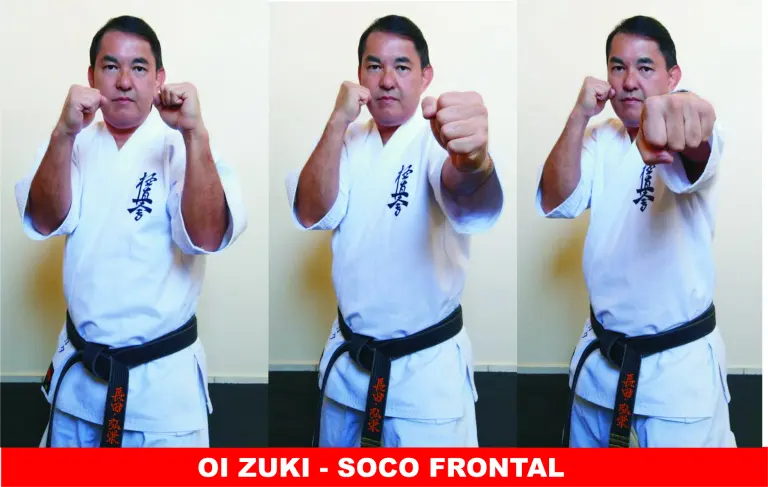
Oi-zuki is a Karate thrust coordinated with an advancing step, using the arm on the same side as the stepping or forward leg.
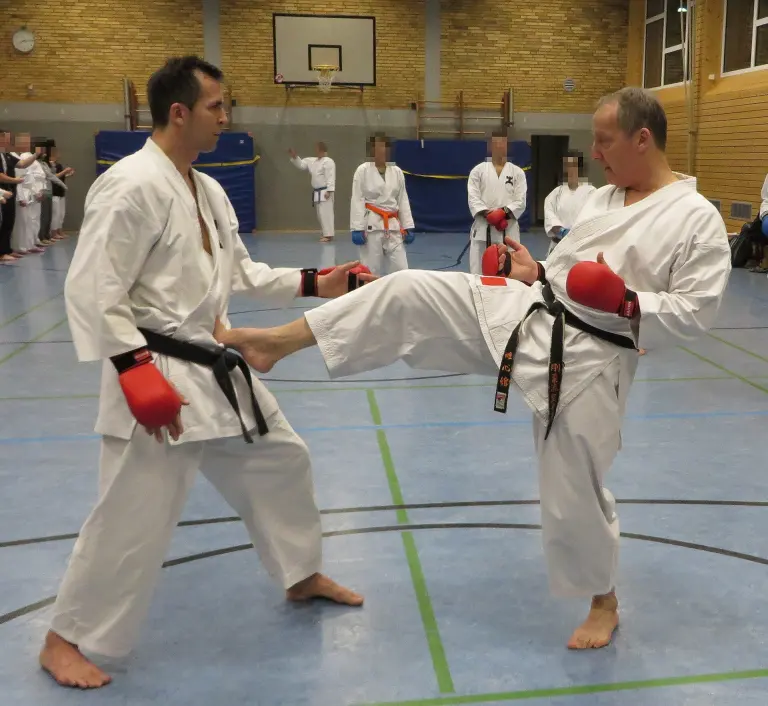
Mae-geri is a Karate kick directed forward, with recognised variations in leg choice, trajectory, contact surface, recovery and training purpose.