Martial Arts Figures
Minoru Mochizuki
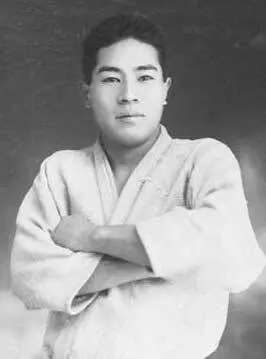
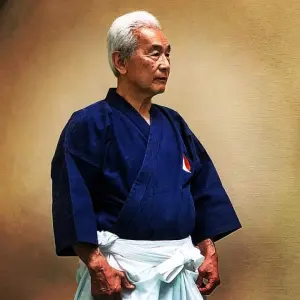
Image: Unknown photographer / Wikimedia Commons · Public domain in Japan
Minoru Mochizuki (1907–2003) was a Japanese martial artist whose career connected Kodokan Judo, Aikido, classical weapons practice, karate, and the early European transmission of Japanese budo. A student of Jigoro Kano and Morihei Ueshiba, he joined the Kodokan's classical martial-arts research activity and opened the Yoseikan dojo in Shizuoka in 1931. From 1951 he taught Judo and Aikido in France, becoming one of the earliest Japanese teachers to present Aikido in Europe. Mochizuki sought common principles across arts rather than treating each curriculum as isolated. His composite teaching influenced Yoseikan Aikido and later Yoseikan developments, but modern Yoseikan Budo was principally formulated in France by his son Hiroo Mochizuki; the two stages should not be collapsed into a single founding event.
Overview
| Japanese name | 望月稔 |
|---|---|
| Born | 7 April 1907, Shizuoka Prefecture, Japan |
| Died | 30 May 2003, France |
| Principal teachers | Jigoro Kano, Kyuzo Mifune, and Morihei Ueshiba |
| Founded | Yoseikan dojo, Shizuoka, 1931 |
| Historical importance | Early Aikido teaching in France and cross-disciplinary budo study |
Early training
Mochizuki began martial training in childhood and entered the Kodokan in 1926. He practised under leading judoka including Sanpo Toku and Kyuzo Mifune, developing a strong interest in both technique and teaching method.
His early Judo belonged to a period when the Kodokan still maintained close debate with older jujutsu schools. This environment encouraged him to study beyond a single competition ruleset.
Kodokan kobudo research
Jigoro Kano supported research into older martial traditions that might otherwise disappear during modernisation. Mochizuki took part in this effort and studied disciplines including classical weapons systems.
The research did not produce one uniform Kodokan kobudo curriculum. For Mochizuki, it became a personal and pedagogical foundation for comparing balance, posture, distance, and the transition between armed and unarmed practice.
Study with Morihei Ueshiba
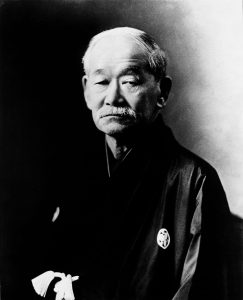
In 1930 Kano sent or introduced Mochizuki to Morihei Ueshiba. Ueshiba's art was then commonly described as aiki-bujutsu or aiki-budo rather than by the later standard name Aikido.
Mochizuki became an important early student while retaining his Kodokan identity. He did not treat the relationship as a demand to abandon Judo; instead, he compared Ueshiba's entries and controls with Judo and older systems.
The Yoseikan dojo
Mochizuki opened the Yoseikan dojo in Shizuoka in November 1931. The name can be translated approximately as “hall for cultivating truth and goodness,” though English renderings vary.
Yoseikan provided a place where Judo, aiki methods, karate, and weapons could be studied in relation to one another. This was a composite educational approach, not a claim that historical differences among the arts had disappeared.
War and postwar reconstruction
Mochizuki's career was interrupted by war and service in Japanese-controlled Manchuria. As with other martial educators working there, this activity took place inside the institutions of imperial expansion.
After returning to Japan, he rebuilt practice in Shizuoka. Postwar restrictions and changing public attitudes encouraged martial teachers to restate their work as education, sport, culture, and international exchange.
Teaching in France
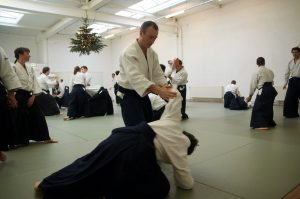
Mochizuki travelled to France in 1951 and taught Judo and Aikido during a stay that lasted into 1953. His demonstrations and classes were among the earliest sustained presentations of Aikido by a Japanese instructor in Europe.
European students encountered the art through a teacher who explained it alongside Judo, self-defence, and other budo. The resulting reception was therefore different from the later growth of single-style international federations.
Technical synthesis
Mochizuki compared throws, controls, strikes, groundwork, and weapons across several curricula. His goal was not random mixture but the identification of common body mechanics and tactical transitions.
Critics may view composite systems as weakening historical specificity, while supporters see them as preserving the broad research ideal encouraged by Kano. Mochizuki's own teaching changed over time, so no short list of techniques fully defines it.
Legacy and Yoseikan Budo
Mochizuki's students continued Yoseikan-related Aikido and budo in Japan and abroad. He spent his final years in France and died there in 2003.
His son Hiroo Mochizuki developed Yoseikan Budo as a distinct modern system from the late 1960s onward. Minoru supplied the dojo, cross-disciplinary inheritance, and many technical sources; Hiroo created the later system's characteristic pedagogy, equipment, and organisational form.
Sources
Last updated: