Social Customs
Longevity Culture in Japan
Image: Tanomura Chokunyū (1814–1907) / The Metropolitan Museum of Art · Public domain
Overview
A long life is recognised through relationships and symbols.
Longevity culture in Japan encompasses the ways a long life is named, celebrated and represented. Family milestones such as kanreki, kiju and beiju sit alongside auspicious images of cranes and pines, shrine ceremonies and public recognition of older people. Keirō no Hi provides a national occasion for respect, while local and household practices vary. These customs concern relationships and the meaning given to age; they are not a single explanation for Japan’s demographic patterns. Historical age reckoning also matters: kazoe-doshi counts age differently from birthdays. Understanding a celebration therefore requires attention to the person, community and counting convention as well as the name of the milestone.
Names give particular ages meaning.
Art conveys auspicious wishes.
Families, communities and public institutions celebrate.
At a glance
- Key term
- 長寿 · chōju · longevity
- Age celebrations
- 年祝い · toshiiwai
- Sixty-year cycle
- 還暦 · kanreki
- Examples of later milestones
- 喜寿 77; 米寿 88; 白寿 99
- Public observance
- Keirō no Hi
- Important distinction
- Cultural celebration and demographic explanation
01
Celebrations make age a shared event
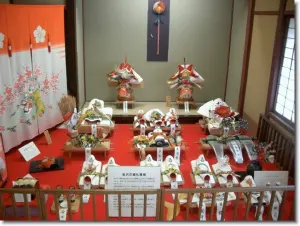
Fukuoka City Museum’s exhibition on age celebrations places them within household and village relationships. Its Shikanoshima examples connect different life stages with organised communal roles. Celebrating age presupposes people who recognise the occasion. This local evidence offers a way to understand the social setting of longevity rituals without assuming that one community’s practices apply throughout Japan.
02
Kanreki marks the return of a calendar cycle
Kanreki refers to completion of the sixty-year cycle formed by the ten stems and twelve branches. It is commonly associated with age sixty by birthday reckoning and sixty-one in traditional counted age. In kazoe-doshi a person is one at birth and gains a year at New Year. Contemporary shrine guidance allows either convention and acknowledges regional differences; a family’s chosen celebration date should therefore be understood in context.
03
The names preserve literary and graphic associations
Several later milestones are named through literary references or the forms of written characters. The Association of Shinto Shrines explains beiju through the components of 米, read as eighty-eight, and hakuju through 百 with its top stroke removed. Such explanations give symbolic meaning to age rather than creating a mandatory nationwide schedule.
Kanreki · 還暦
- Associated age
- 60 completed years
- Meaning
- Return of the sixty-year cycle.
Kiju · 喜寿
- Associated age
- 77
- Meaning
- Associated with a cursive form of 喜.
Beiju · 米寿
- Associated age
- 88
- Meaning
- 米 evokes the components of eighty-eight.
Hakuju · 白寿
- Associated age
- 99
- Meaning
- 白 is 百 with one stroke removed.
04
Pines and cranes express wishes for a long life
Tanomura Chokunyū’s 1903 hanging scroll Pines and Cranes of Longevity, held by the Metropolitan Museum of Art, provides one documented example. Japanese cultural accounts also connect the crane with longevity and good fortune, including in paper-folding traditions. These motifs communicate auspicious wishes. Their symbolic lifespans should not be read as zoological statements or evidence about human health.
05
Public observances add another scale of celebration
Keirō no Hi is distinct from Rōjin no Hi, the 15 September observance associated with the national centenarian recognition programme. On 15 September 2026, the Ministry of Health, Labour and Welfare reported 107,677 people aged one hundred or more and described the annual presentation of congratulatory messages and gifts. That is a dated statistical record, not a permanent population figure.
06
Respect coexists with varied lives and needs
The Cabinet Office’s 2025 ageing-society report covers households, work, learning and social participation, including the increase in older people living alone. This breadth matters: older adults do not share one family arrangement or social role. Gift-giving in Japan and family celebrations illuminate one cultural dimension, while demographic and social-policy sources address different questions about everyday life.
Sources
- Fukuoka City Museum, Age celebrations: village and age.
- Association of Shinto Shrines, Celebrating longevity.
- Metropolitan Museum of Art, Pines and Cranes of Longevity.
- Government of Japan, Linked origami cranes and auspicious symbolism.
- MHLW, Ministerial briefing, 15 September 2026.
- Cabinet Office, Annual Report on the Ageing Society 2025.
Last updated: