Social Customs
Kotatsu
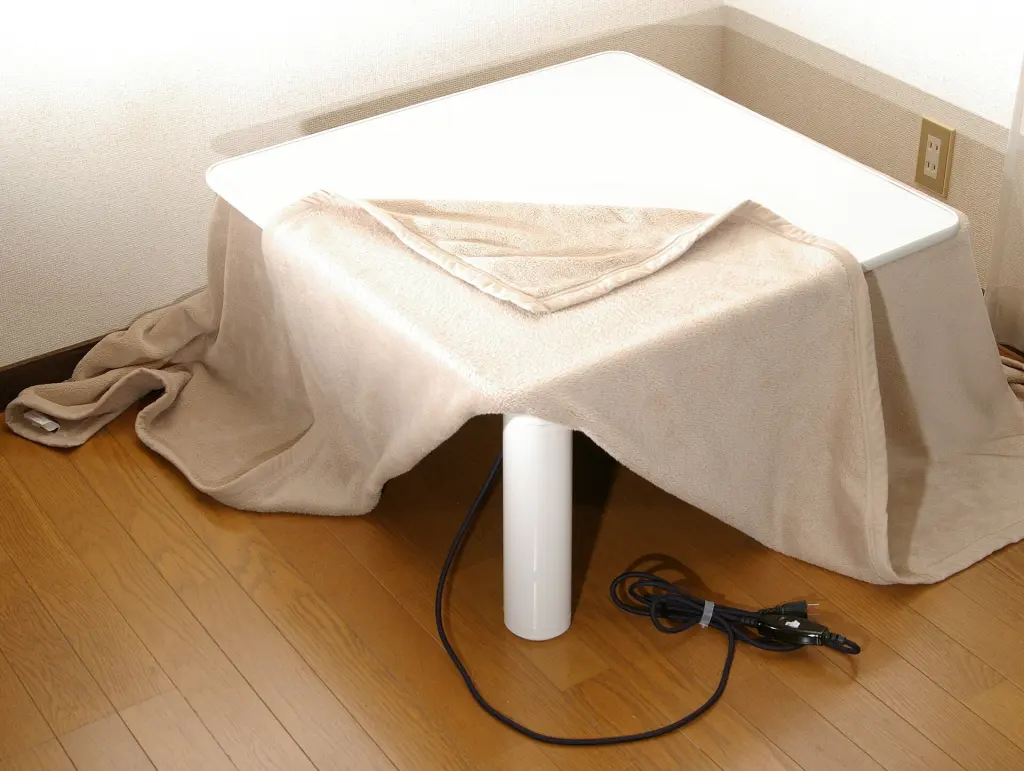
Image: Hustvedt / Wikimedia Commons · CC BY-SA 3.0
A kotatsu is a low table fitted with a heat source and covered by a quilt, with a tabletop placed above the covering. People sit around it with their legs beneath the quilt, creating a small heated zone rather than warming the entire room. Older forms developed around a charcoal hearth, while the widely recognized modern kotatsu uses an electric heater attached under a movable table. It is associated with winter meals, conversation, reading, television, and rest, but household use varies with room layout, climate, heating technology, and lifestyle. Safe use requires suitable equipment, clear ventilation around the heater, and attention to burns, fire, cords, and prolonged immobility.
Overview
| Japanese | Kotatsu (炬燵・火燵) |
|---|---|
| Classification | Localized domestic heating and table furniture |
| Main parts | Low table, heat source, quilt, and removable top |
| Historic heat source | Charcoal hearth |
| Common modern form | Electric heater mounted beneath the table |
| Season | Primarily winter |
Definition and components
The modern kotatsu combines a low frame, an electric heating unit, a heavy quilt called a kotatsugake, and a tabletop that holds the quilt in place. Warm air is retained beneath the covering around the users’ legs. Products vary in height, heater type, thermostat, table shape, chair compatibility, and whether the frame folds for storage.
Hearth origins
Earlier kotatsu were connected to the indoor hearth. A framework and covering could retain heat above banked charcoal, creating localized warmth for seated users. Historical forms included a fixed sunken hearth and later portable charcoal braziers. Their dates, names, and construction changed over time; the present electric table should not be projected unchanged into the distant past.
Electric kotatsu
Electrification removed smoke and simplified temperature control, while a heater mounted beneath a table made the unit portable within the home. Electric kotatsu became a conspicuous feature of postwar domestic life. They coexist with kerosene heaters, heat pumps, heated floors, insulated buildings, and other systems rather than replacing all room heating.
Domestic social space
The kotatsu gathers people close together around one surface for eating, conversation, study, games, or television. This intimacy has made it a recurring image in advertising, manga, and family narratives. Yet access to the warm central space can also reflect household routines and seating relationships; the object does not create one universal pattern of Japanese family life.
Localized heating
Heating the occupied area beneath a quilt can use less energy than raising the temperature of an entire poorly insulated room, depending on equipment and behaviour. The system also reflects the thermal challenges of some Japanese houses. A kotatsu warms mainly the lower body and should not be assumed to provide adequate whole-room comfort in severe cold.
Use with tatami and floor seating
Kotatsu are often placed on tatami or other flooring with cushions, rugs, or floor chairs. Furniture feet, concentrated weight, heat, and moisture can affect floor materials, so protective mats and manufacturer guidance may be needed. Raised dining kotatsu and chair-compatible designs adapt the concept for users who find floor sitting difficult.
Safety and care
Only quilts, tables, cords, and heaters designed for compatible use should be combined. Bedding, clothing, dust, or other objects must not block or touch hot components. Users should follow temperature, cleaning, inspection, and storage instructions, avoid damaged cords, supervise children and pets, and take breaks from prolonged heat and sitting. Charcoal forms require fire and carbon-monoxide precautions beyond those of electric units.
Contemporary variations
Contemporary kotatsu range from compact apartment tables to dining-height models and fashionable furniture used year-round without the quilt. Some households store the covering after winter; others no longer use a kotatsu because of central heating, limited space, pets, or seating preferences. The object remains culturally recognizable while its practical role continues to change.
Sources
- Japan National Tourism Organization, Kotatsu.
- Art & History Museum Brussels, Shin hanga exhibition booklet.
- Japan Foundation, Irodori: Rooms.
- JICA, Notes: Japanese Houses.
- Japan Tourism Agency, Enjoying Japanese-style Rooms.
- Government of Japan, Traditional Wisdom and Technology Thriving in Modern Life.
- Nara National Research Institute for Cultural Properties, Shoin Style.
Last updated: