Social Customs
Futon
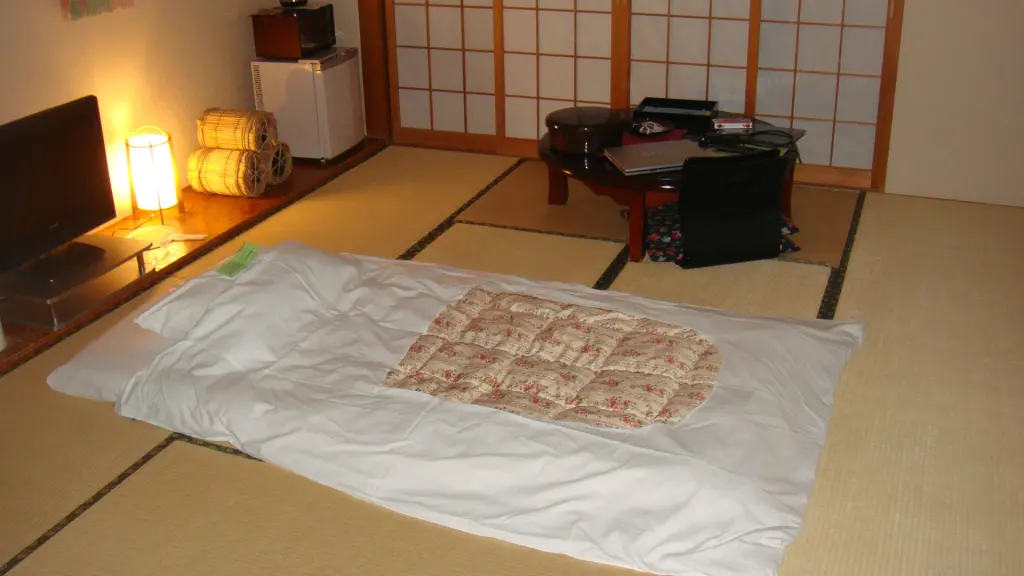
Image: David McKelvey / Wikimedia Commons · CC BY 2.0
In Japanese usage, futon refers to bedding rather than specifically to a folding sofa-bed. A typical set includes a shikibuton, the mattress laid on the floor, and a kakebuton, the quilt placed over the sleeper, together with sheets, covers, and a pillow. Futon can be spread on tatami at night, aired and folded, then stored in an oshiire cupboard so that the room is available for other activities. The familiar cotton-filled form developed through changes in textile production and domestic life; materials and thickness now vary widely. Beds are common in modern Japan, and many households use combinations of beds, futon, foam pads, and Western-style mattresses.
Overview
| Japanese | Futon (布団) |
|---|---|
| Classification | Portable bedding |
| Lower bedding | Shikibuton (敷布団) |
| Upper bedding | Kakebuton (掛布団) |
| Typical storage | Oshiire cupboard |
| English-language distinction | Not necessarily a convertible sofa-bed |
Term and components
A Japanese bedding set may include a floor mattress (shikibuton), quilt (kakebuton), covers, sheets, blankets, pads, and a pillow. The broader word futon can refer to the set or to a particular padded item when qualified. Products differ in filling, fabric, thickness, folding method, season, and whether they are intended for a floor or bed frame.
Historical development
People in Japan have slept on many kinds of mats, straw, quilts, robes, and padded bedding. Cotton-filled bedding became more attainable as cotton cultivation, textile production, and markets expanded, but quality bedding remained a valuable household possession. The portable futon familiar today is therefore historical rather than an unchanged feature of every Japanese dwelling since antiquity.
Laying out and storing
A shikibuton is commonly laid over tatami or another suitable floor surface, then covered with a sheet. In the morning, bedding may be folded and placed in an oshiire. Storage helps free the room, but bedding should not be packed away damp. Exact routines depend on household schedules, floor material, climate, storage, and physical ability.
Multifunctional rooms
Portable bedding allows one room to support daytime activities and nighttime sleep. This is often presented as a defining virtue of the Japanese house, but it also involves labour: laying out, folding, carrying, airing, laundering covers, and maintaining clear storage. Beds may be preferred for accessibility, convenience, or comfort even when a tatami room is available.
Airing and care
Body moisture can accumulate in bedding and at the contact surface below it. Airing, turning, using a drying rack or appliance, cleaning covers, and following the manufacturer’s care label help manage dampness and wear. Strong sunlight, beating, washing, and mechanical drying are not suitable for every filling. Mould risk is especially important on poorly ventilated floors.
Ryokan and guest use
In many ryokan, staff lay futon on the tatami after the evening meal and store them after breakfast, allowing the guest room to change function. This hospitality practice is highly visible to visitors but should not be mistaken for the routine of every household. Hotels, inns, hostels, temples, and private homes use different bedding systems.
Modern materials and beds
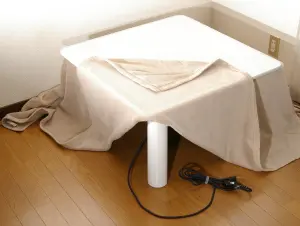
Modern domestic textiles and fillings also appear in winter furnishings such as the quilt used with a kotatsu, although kotatsu coverings and sleeping futon serve different purposes.
Cotton remains important, but wool, feathers, polyester, urethane foam, latex, and hybrid products are common. Slatted bases, dehumidifying pads, raised platforms, and Western mattresses may be combined with Japanese bedding. Urban floor plans and built-in closets have also changed, so the relationship between portable bedding and room use varies widely.
The word in English
In North American and other English usage, “futon” often means a relatively thin mattress placed on a frame that converts between a sofa and a bed. That furniture developed from an international reinterpretation of Japanese bedding. It is related by name and inspiration but should not be treated as the standard meaning of futon in Japan.
Sources
- Japan Tourism Agency, Enjoying Japanese-style Rooms.
- Japan Foundation, Irodori: Rooms.
- International Christian University Hachiro Yuasa Memorial Museum, Japanese Bedding Exhibition.
- International Christian University Hachiro Yuasa Memorial Museum, Annual Report 2022–2023.
- Government of Japan, Traditional Wisdom and Technology Thriving in Modern Life.
- JICA, Notes: Japanese Houses.
- Nara National Research Institute for Cultural Properties, Shoin Style.
Last updated: