Music
Japanese Game Music
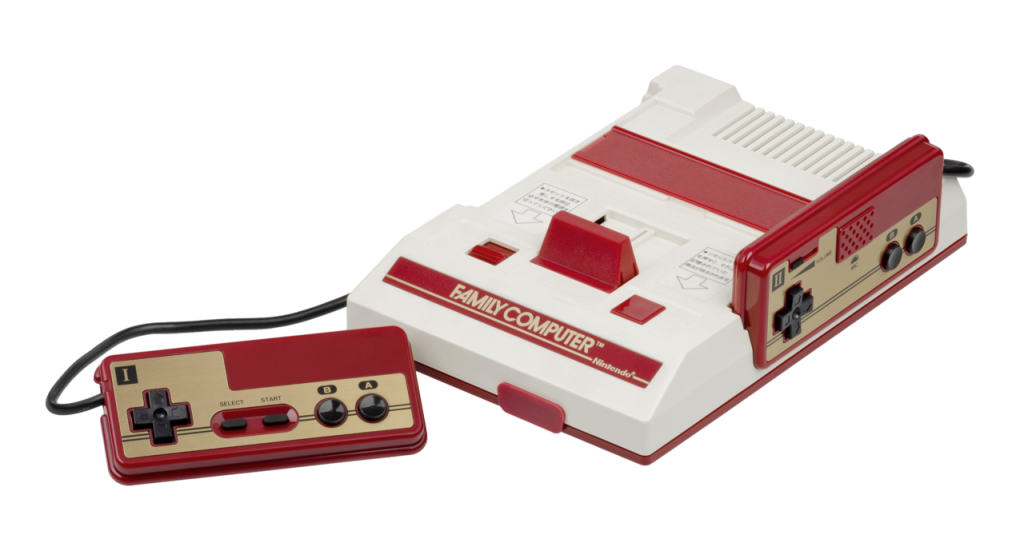
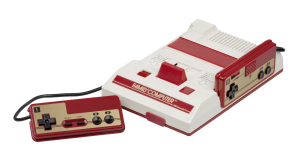
Image: Evan-Amos / Wikimedia Commons · Public domain
Overview
Composition meets hardware and the player’s actions.
Japanese game music is music created for games associated with Japan’s game industry and the listening cultures that develop around those scores. It ranges from music generated by early sound chips to recorded ensembles, songs and complex interactive soundtracks. The category is defined by its relationship to games and production history rather than by one musical style. A composition can identify a place, support movement, signal a change of situation or become a memorable theme outside the game. Soundtrack albums and concerts give it additional forms. Understanding the field means considering the composer, the hardware or audio system, the player’s actions and the particular version being heard.
Themes and textures give the game a musical identity.
Audio systems connect cues with play.
Recordings and concerts create further settings.
At a glance
- Japanese term
- ゲーム音楽 · gēmu ongaku
- Scope
- Music for games and associated listening cultures
- Early constraints
- Limited sound channels, timbres and memory
- Interactive role
- Music responds to or frames play
- Other forms
- Soundtrack recordings and concert arrangements
- Key distinction
- An in-game score and an album are different presentations
01
Game music is a function as well as a recording
A score is heard in relation to what a player is doing. Nintendo’s interviews with its composers describe music in terms of movement, repeat listening and the function of a particular scene. A soundtrack album presents a selected listening sequence instead. The same theme can therefore have a different duration, arrangement or context in play and on a recording.
02
Early hardware made limitation part of composition
In his Library of Congress interview, Kōji Kondō explains the restricted waveform sounds used for Super Mario Bros. Those limitations required choices about rhythm, melody and timbre. They did not prevent musical complexity. The Library’s account relates the 1985 Ground Theme to Kondō’s musical background and to the task of communicating the game world and the player’s movement.
03
A musical cue can help the player read the world
Nintendo’s Ocarina of Time interview discusses varied field music and the problem of returning to an area only to hear the same tune repeated unchanged. Such accounts show that musical form can be designed around transitions and player behaviour. The following questions provide a way to listen analytically, rather than a required system used by every game.
When does a cue begin or change?
- What it reveals
- The relationship between music and a game state.
How does repetition work?
- What it reveals
- Loops, variation and the time spent in an area.
What does the timbre suggest?
- What it reveals
- The sound palette and its connection with setting or hardware.
Which theme returns?
- What it reveals
- Links between places, characters or events.
04
Music acquires another form outside the game
Square Enix’s Distant Worlds releases present Final Fantasy music in orchestral arrangements, including work by Nobuo Uematsu and performances conducted by Arnie Roth. A concert arrangement is a new presentation of game material, with different performers and a fixed programme. Credits should distinguish the original composition, arrangement and performance. The existence of orchestral versions does not make chip-based originals merely unfinished sketches.
05
Recognition also creates a preservation question
The Super Mario Bros. Ground Theme entered the United States National Recording Registry in 2023, the first video-game music included. This recognises a particular work, not the whole history of Japanese game audio. Preserving a score’s context also means documenting the game and version in which it was heard; a later arrangement cannot answer every question about the original experience.
06
Identify the game, version and creative roles
For a useful comparison, begin with the game title, platform or edition, composer and recording source. Japanese Video Games supplies industrial context, while JRPG explains a genre in which music can be closely tied to character and world building. The Legend of Zelda provides another specific series history. These examples should not be treated as a complete list of Japanese musical approaches.
Sources
Last updated: