Aesthetic Concepts
Iki
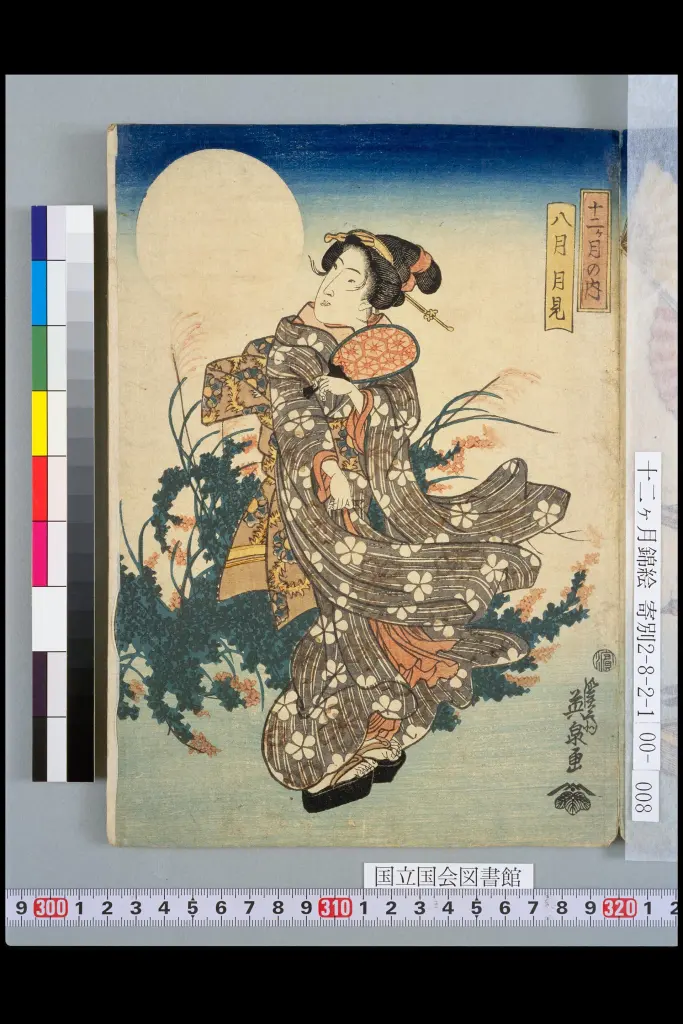
Image: Keisai Eisen / Wikimedia Commons; National Diet Library Digital Collections · Public domain
Iki (いき or 粋) is an aesthetic of urbane style that developed in Edo during the late eighteenth and nineteenth centuries. It was associated especially with merchant culture, fashion, entertainment districts, and the knowing conduct of geisha in the city's pleasure quarters. Iki combined spirited liveliness and sensual appeal with restraint, sophistication, and an appearance of freedom from attachment. It is therefore unlike the rural austerity commonly linked to wabi-sabi. The philosopher Kuki Shūzō made the term central to modern Japanese aesthetics in The Structure of Iki (1930), analysing its social meanings and visual expressions. His account remains influential but is a philosophical reconstruction, not a timeless definition accepted uniformly across Japan.
Overview
| Japanese | いき; commonly 粋 |
|---|---|
| Historical centre | Edo (present-day Tokyo) |
| Peak cultural setting | Late eighteenth and nineteenth centuries |
| Associated worlds | Merchant fashion, geisha, pleasure quarters, and ukiyo-e |
| Major modern theorist | Kuki Shūzō (1888–1941) |
| Landmark text | The Structure of Iki (1930) |
Name and meanings
Iki can suggest spirit, liveliness, style, or chic, but no single English word covers its historical range. Written forms and nuances vary. In the Kyoto–Osaka region, sui developed as a related ideal; Edo speakers reshaped urban taste in ways that emphasized subdued color, alertness, and a distinct local identity.
Edo social context
Edo's large population and commercial economy supported theatres, publishing, fashion trades, restaurants, and licensed pleasure quarters. Status rules limited overt display by townspeople, encouraging forms of distinction legible through fabrics, patterns, gesture, speech, and cultural knowledge. Iki belonged to this social performance of taste rather than to art objects alone.
Pleasure quarters and geisha
Accounts of iki often focus on relations between male clients and geisha or courtesans. The ideal involved attraction held in tension with distance, self-possession, and knowledge of convention. Because this setting depended on gendered labor and regulated entertainment, romantic descriptions should not erase its economic and social inequalities.
Fashion and visual culture
Subdued colors, fine stripes, particular hairstyles, postures, and an apparently effortless coordination of dress could signify iki. Bijinga by artists such as Keisai Eisen and Utagawa Kunisada recorded and shaped these fashions. A motif was not inherently iki; its effect depended on combination, wearer, occasion, and contemporary codes of perception.
Kuki Shūzō's analysis
Kuki drafted his study after years in Europe and published Iki no kōzō in 1930. He described iki through three interrelated moments often translated as coquetry, proud spirit, and resignation or detachment. He also analysed bodily inclination, vertical stripes, color, and musical expression, combining phenomenology with an account of Edo culture.
Iki, sui, tsū, and date
Iki overlaps with other taste words without simply replacing them. Sui was especially associated with Kamigata; tsū referred to connoisseurial knowledge or being “in the know”; date could indicate showy, fashionable boldness. Their boundaries shifted by region, period, and speaker, revealing competition over what counted as refined urban conduct.
Modern use and interpretive limits
Modern Japanese still uses iki approvingly for stylish conduct or design, though not always in Kuki's technical sense. Scholars also question whether his elegant structure idealized a narrow, male-centred image of Edo. The term is most informative when its class, gender, regional, and historical conditions remain visible.
Sources
- Stanford Encyclopedia of Philosophy, Japanese Aesthetics.
- JAANUS, Japanese Architecture and Art Net Users System.
- JAANUS, Iki.
- University of Hawaiʻi Press, The Structure of Detachment: The Aesthetic Vision of Kuki Shuzo.
- The Metropolitan Museum of Art, Rejected Geisha from Passions Cooled by Springtime Snow.
Last updated: