Institutions
Budō in Japanese Schools

Image: Douglas P. Perkins / Wikimedia Commons · CC BY 3.0
Budō in Japanese Schools
Movement, respect and cultural learning.
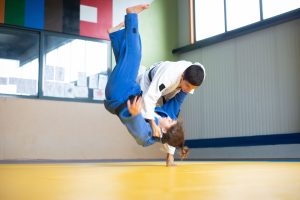
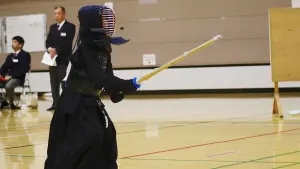
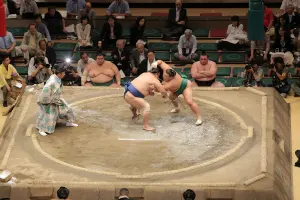
Budō in Japanese schools refers to martial arts taught within education, especially the physical education curriculum of junior high schools. From the 2012 school year, budō became compulsory for both boys and girls in the first two junior-high years under the revised national curriculum. This does not mean that every pupil studies every martial art, or that all schools offer identical provision. Jūdō, kendō and sumō are prominent curricular examples, while official teaching resources cover a wider range of disciplines. Classroom instruction has educational purposes and practical constraints that differ from competitive clubs, private dōjō and the training of specialist athletes.
Curriculum
Compulsory in the first two junior-high years.
Learning
Skills, conduct and understanding.
Provision
Disciplines depend on the school’s programme.
At a glance
- Japanese expression
- 学校武道, gakkō budō
- Main setting discussed
- Junior-high physical education
- Compulsory phase
- First and second junior-high years; boys and girls
- Implementation
- 2012 school year, following the 2008 curriculum revision
- Educational emphasis
- Movement skills, cultural understanding, respect and safe participation
01
What compulsory study means
The 2008 revision established budō and dance as compulsory areas in the first two years of junior high school, with implementation in 2012. The requirement concerns a field of learning within physical education. It should not be read as a national requirement that every school teaches jūdō, kendō and sumō together, or that every pupil joins an after-school martial arts club.
02
Learning movement and learning with others
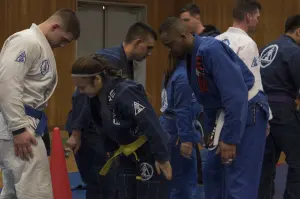
The curriculum connects basic movement and techniques with an understanding of traditional ways of thinking and conduct. Respecting an opponent, following agreed rules and attending to safety are part of the educational purpose. Bowing and other formal actions need explanation within the activity; merely reproducing a gesture is not the same as understanding why participants use it.
03
Lessons, clubs and private training
A physical education lesson introduces learning to a whole class, including beginners. A school club organises continuing extracurricular activity, often with a greater competitive focus. A private dōjō operates outside the school curriculum. These settings can share techniques and participants, but their teaching time, membership and immediate aims differ.
- Physical education
- Curricular learning for pupils with varied experience.
- School club
- Extracurricular practice and, often, competition.
- Private dōjō
- Training under an independent organisation or instructor.
04
A wider set of teaching resources
Sports Agency resources introduce nine disciplines: jūdō, kendō, sumō, karatedō, naginata, kyūdō, aikidō, Shōrinji Kempō and jūkendō. Nippon Budokan also provides school teaching materials across these arts. The existence of national resources shows the range available to educators; it is not evidence that all nine are offered at any particular school. Local staffing, facilities and teaching plans matter.
05
A changing educational history
Research on the transition from kenjutsu to kendō identifies the permission to teach martial practices in secondary schools in 1911 as an important institutional development. Names, methods and educational purposes subsequently changed. Post-war reintroduction also involved reformulation: the All Japan Kendo Federation describes the 1952 return of shinai competition to school education. The modern curriculum should therefore not be presented as an unchanged survival of samurai training.
06
Teaching conditions shape the experience
Kitamura’s study of compulsory budō highlights practical questions about staffing, facilities and how to teach cultural understanding alongside technique. Government implementation materials likewise emphasise preparation and safe instruction. A school programme has to accommodate differences in experience and confidence, with appropriately qualified guidance and suitable space. Educational quality depends on how those conditions support learning, rather than on the name of the martial art alone.
Sources
- Japan Sports Agency, compulsory budō and dance in junior high schools.
- MEXT, junior-high health and physical education curriculum.
- Japan Sports Agency, learning the martial arts of Japan.
- Kitamura Naohiro, Issues and Prospects of Compulsory Budō, 2013.
- Historical study of the change from kenjutsu to kendō, 2006.
- All Japan Kendo Federation, school kendō and post-war reform.
- Nippon Budokan, school budō teaching materials.
Last updated: