Places
Kyoto International Manga Museum
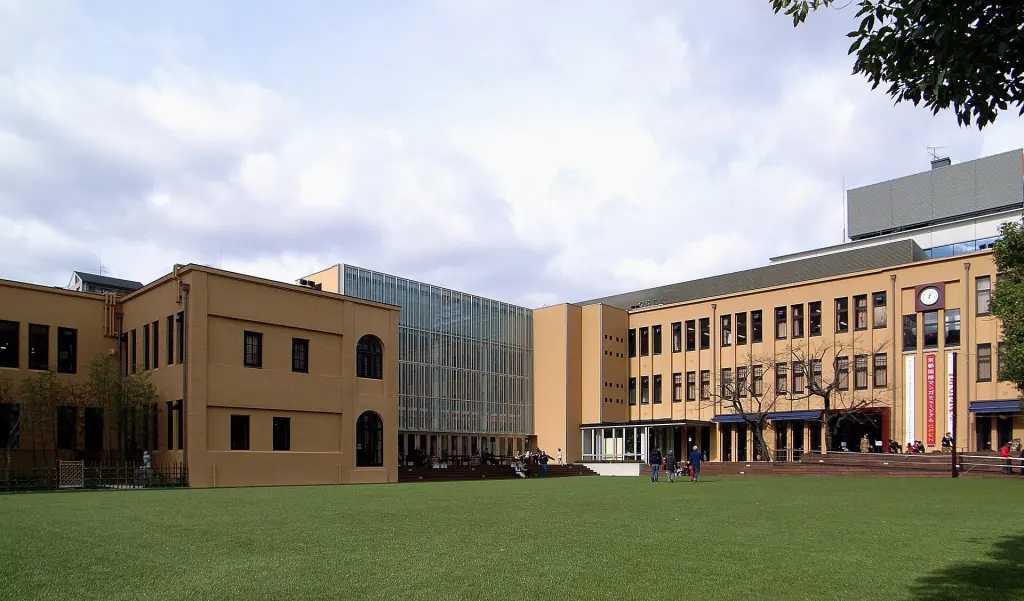
Image: 珈琲ルンバ / Wikimedia Commons · CC BY-SA 3.0
The Kyoto International Manga Museum is a museum, library, archive, and research venue in central Kyoto, established jointly by Kyoto City and Kyoto Seika University and opened in 2006. Housed in the former Tatsuike Elementary School, it preserves approximately 300,000 manga-related items ranging from Edo-period caricature books and Meiji-period magazines to postwar rental manga, contemporary volumes, and international publications. Part of the collection is available for onsite reading through the Wall of Manga, while rarer materials support reference use, exhibitions, and scholarship. The institution does not present manga only as popular entertainment or only as fine art; its combined functions make publishing history, reading practices, original materials, preservation, and academic research visible together.
Overview
| Japanese name | 京都国際マンガミュージアム |
|---|---|
| Type | Museum, library, archive, and research facility |
| Location | Karasuma-Oike, Nakagyō, Kyoto |
| Opened | 25 November 2006 |
| Founding partners | Kyoto City and Kyoto Seika University |
| Holdings | Approximately 300,000 manga-related items |
| Building | Former Tatsuike Elementary School |
| Public reading | About 50,000 volumes on the Wall of Manga |
Joint foundation
Kyoto City and Kyoto Seika University developed the museum as a joint project, bringing municipal cultural infrastructure together with the university’s manga education and research. It opened in November 2006. The partnership distinguishes the institution from a commercial manga attraction: collecting, preservation, research, public reading, exhibitions, workshops, and education form part of the same mandate.
The former Tatsuike Elementary School
The museum occupies buildings associated with the former Tatsuike Elementary School. Their preserved school architecture gives the institution a layered local identity: classrooms and corridors have been adapted for galleries, bookshelves, research, and public programs. The reuse also connects a neighborhood educational landmark with a newer cultural and academic role rather than erasing the site’s earlier function.
Collection scope
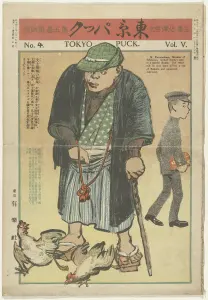
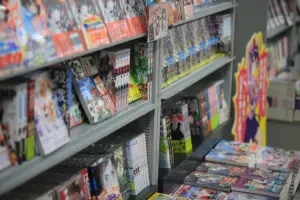
The collection spans approximately 300,000 items. It includes Edo-period humorous pictures, satirical and manga magazines from the Meiji and later periods, postwar rental books, popular series, research literature, international editions, and materials connected with original manga art. Not every object is freely browsable: preservation needs, cataloguing status, copyright, and rarity affect how materials can be accessed and displayed.
The Wall of Manga
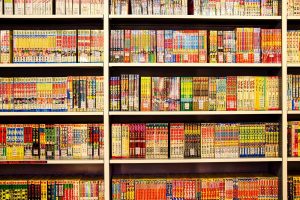
Roughly 50,000 volumes are arranged on shelves known as the Wall of Manga and may be read within the museum grounds. This creates a reading environment as well as an exhibition experience. The open shelves largely represent postwar and modern publishing, while closed-stack and research collections extend the historical range. The Wall is therefore a public interface to the archive, not the entire collection.
Research and preservation
Kyoto Seika University’s International Manga Research Center plays a central role in research and programming. The museum collects fragile magazines, rental books, prints, and other materials that conventional art museums and libraries historically treated unevenly. It also works with high-quality replicas known as Genga’(Dash), which allow original manga images to be exhibited while reducing exposure of vulnerable artwork.
Exhibitions and public programs
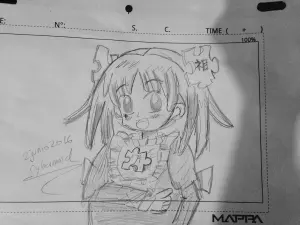
Permanent and temporary exhibitions examine manga as expression, industry, history, and social practice. Workshops, talks, live drawing, portrait manga, and kamishibai programs give visitors different ways to approach production and performance. These activities vary over time, so the museum is best understood by its continuing functions rather than by any single exhibition or event schedule.
Between museum and library
The institution deliberately crosses the boundary between a museum that selects and interprets objects and a library that enables reading. A manga volume can be a mass-produced book, a research source, a designed object, and part of a serial publishing system at once. By retaining those contexts, the museum helps explain manga beyond famous titles or authors and supports comparison across periods, formats, and national markets.
Sources
Last updated: