Manga
JJM: Joshi Jūdōbu Monogatari
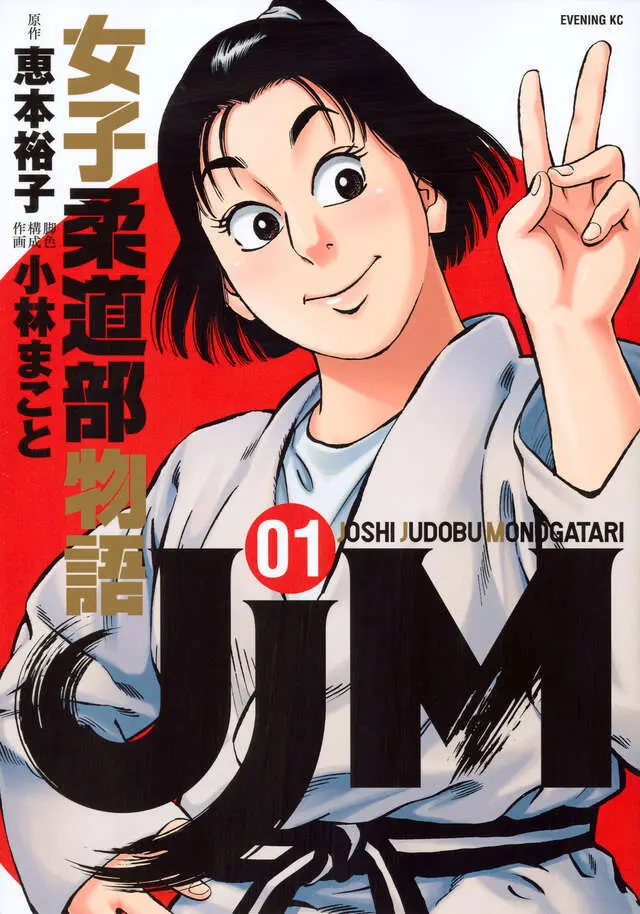
Image: Yuko Emoto and Makoto Kobayashi; © Kodansha / Kodansha official product page · Copyrighted; limited low-resolution identification and critical commentary
JJM: Joshi Jūdōbu Monogatari (JJM 女子柔道部物語) is a manga based on an original story by Olympic champion Yuko Emoto and structured and drawn by Makoto Kobayashi. It began in Kodansha’s Evening in 2016. Through the fictional athlete Emo Kagura and Kamui Minami High School in Asahikawa, the series adapts key circumstances of Emoto’s life: beginning judo in high school, developing rapidly, entering corporate competition, and reaching the international level. The high-school arc was collected in fifteen volumes, followed by Shakaijin-hen, the working-adult or corporate-team arc, on Comic Days. The work belongs to the tradition of judo sports manga but differs from a documentary biography; names, scenes, chronology, and supporting characters are shaped for serial fiction.
Overview
| Japanese title | JJM 女子柔道部物語 |
|---|---|
| Romanization | JJM: Joshi Jūdōbu Monogatari |
| Original story | Yuko Emoto |
| Manga composition and art | Makoto Kobayashi |
| Initial serialization | Evening, from 2016 |
| High-school arc | 15 volumes |
| Continuation | Shakaijin-hen on Comic Days |
Publication and authorship
Kodansha credits Emoto for the original story and Kobayashi for composition and other creative work. Volume 1 was released in December 2016 after chapters in Evening. The fifteen-volume high-school phase concluded in 2023. A separately titled Shakaijin-hen continues the protagonist’s story after graduation through Comic Days.
Biographical basis
Emoto began judo at Asahikawa Minami High School and later won the women’s 61 kg class at the 1996 Atlanta Olympics. The manga relocates those experiences into Emo Kagura’s fictional biography. That device permits comedy, composite characters, and rearranged events while retaining the unusual arc of a beginner who enters the sport comparatively late and reaches elite competition.
Emo Kagura and the team
Emo is introduced as a white-belt student recruited through school relationships rather than as a childhood prodigy. Teammates and rivals give the narrative multiple weight classes and ambitions. The club’s progress is collective: even when Emo’s rapid development drives the plot, team matches depend on the order and results of several athletes.
Women’s judo and weight classes
The series foregrounds the institutional world of women’s judo—school team events, selection, weight management, domestic championships, and the route toward international competition. Its period setting reflects a generation when women’s judo was consolidating Olympic status. Rules and weight categories changed historically, so the manga’s competition structure should be read in its stated era.
Training and technical detail
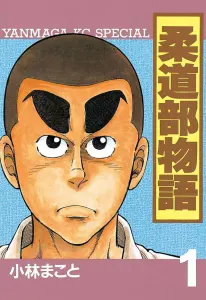
Kobayashi again uses grip exchanges, uchikomi, randori, throwing combinations, and tactical observation to make development visible. Emoto’s competitive experience supplies a biographical and technical frame. As in Jūdōbu Monogatari, comic exaggeration remains part of the style; the panels explain a sporting experience rather than provide formal coaching instruction.
High-school and corporate arcs
The first fifteen volumes follow Emo’s school-club growth and national competition. Shakaijin-hen moves into company-team judo, a structure historically central to elite Japanese women’s competition. The shift changes daily life, coaching, selection pressure, and the relationship between employment and athletic performance.
Fiction and biography
The series is sometimes described as the story of Japan’s first women’s Olympic judo gold medallist. That description identifies its source, not its genre. For Emoto’s actual record, the Japanese Olympic Committee’s athlete profile, results, and interviews are more appropriate. The manga’s contribution is to turn that record into a sustained account of learning, community, and competitive identity.
Place in sports manga
The collaboration connects Kobayashi’s influential boys’ club manga with a women-centred account authored from Olympic experience. It also places women’s judo history inside popular serial culture, where training detail can be joined to humour and character growth. Read alongside YAWARA! and Mō Ippon!, it shows three different ways of narrating women’s judo.
Sources
- Kodokan Judo Institute, History and Founding Principles.
- University of Tokyo Repository, study summary discussing Jūdōbu Monogatari.
- Japan Media Arts Festival, Manga Division archive.
- Agency for Cultural Affairs, Media Arts Database.
- Kodansha, JJM: Joshi Jūdōbu Monogatari volume 1.
- Kodansha, Shakaijin-hen volume 1.
- Japanese Olympic Committee, Yuko Emoto profile.
- Japanese Olympic Committee, Yuko Emoto interview.
Last updated: