Manga
Jūdōbu Monogatari
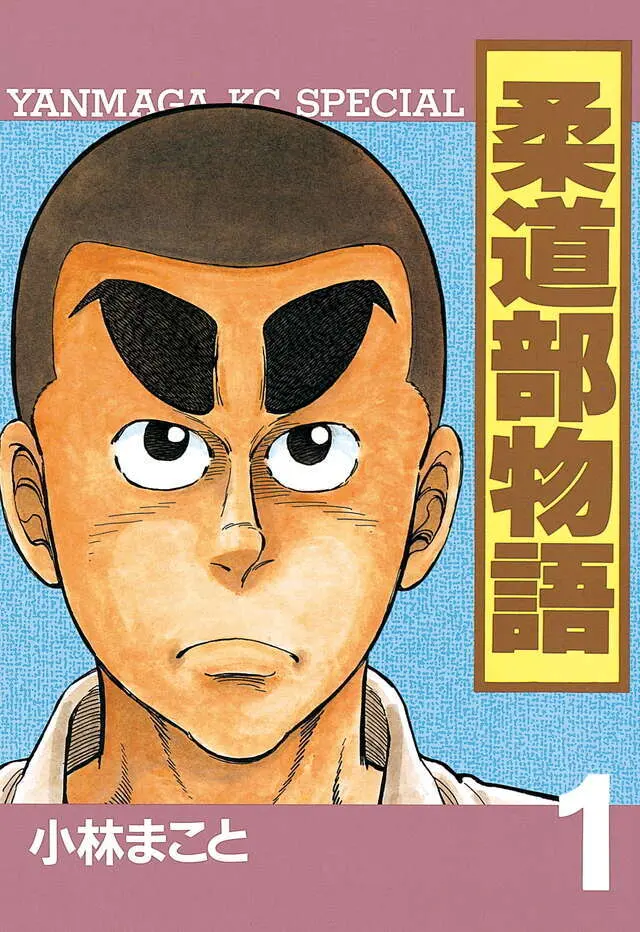
Image: Makoto Kobayashi; © Kodansha / Kodansha Manga IP Search · Copyrighted; limited low-resolution identification and critical commentary
Jūdōbu Monogatari (柔道部物語, “Judo Club Story”) is a manga written and drawn by Makoto Kobayashi. Serialized in Kodansha’s Weekly Young Magazine from 1985 to 1991, it was collected in eleven original volumes. The story follows Jūgo Sangō, a high-school student with no judo background who is drawn into his school’s club and gradually becomes a serious competitor. Comedy, harsh senior–junior relations, repetitive training, injury, technical improvement, and national-level ambition are combined in a detailed portrait of Japanese school sport. Although the work is fiction and reflects the norms and comic exaggerations of its period, its attention to throws, grip fighting, conditioning, and tournament pressure gave it a durable reputation among judo readers.
Overview
| Japanese title | 柔道部物語 |
|---|---|
| Romanization | Jūdōbu Monogatari |
| Creator | Makoto Kobayashi |
| Medium | Manga |
| Serialization | Weekly Young Magazine, 1985–1991 |
| Original collected edition | 11 volumes |
| Primary subject | High-school judo club life |
Publication history
Kodansha serialized the manga in Weekly Young Magazine between 1985 and 1991. Its chapters were first collected in eleven volumes. Later Bunko and redesigned editions reorganized the same work into different volume counts; Kodansha’s eight-volume 2013–2014 new edition, for example, combines material from the original eleven books.
Premise
Jūgo Sangō enters high school intending to continue with music, but a casual visit to the judo club leads to recruitment under misleadingly easy promises. The comic first treats the club as an alien institution of shaved heads, hierarchy, physical exhaustion, and absurd rules. Sangō’s anger and competitiveness then become commitment as he discovers an aptitude for judo.
Training and technique
Improvement is shown through uchikomi, randori, strength work, grip fighting, posture, and repeated refinement of a small number of reliable attacks. Sangō becomes closely associated with seoi-nage. Technique is not presented as a magical move: entries, timing, fatigue, opponent adaptation, and combinations determine whether it works. Comic timing coexists with unusually sustained attention to bodily mechanics.
Club culture
The manga depicts the Japanese school club as a social system with seniors, juniors, a coach, shared labour, ritualized discipline, and collective reputation. Some early scenes of coercive training and humiliation reflect practices that should not be treated as acceptable coaching standards. The story later complicates hierarchy by showing responsibility passing to Sangō when he becomes a senior and captain.
Competition structure
Local qualifying events, the Inter-High, the national individual high-school championship, and the Kinshūki team tournament organize the long narrative. Individual and team formats produce different tactical demands. Tournament progress also expands the cast from one provincial club to rival schools whose athletes have distinct styles, body types, and relationships to training.
Humour and realism
Kobayashi uses caricature, visual reaction, and improbable names, yet matches often slow down to show grips and changes of balance. This mixture makes technical information readable without turning the series into a manual. The work remains a selective representation: it centres boys’ high-school competition and a particular era of club culture rather than the full range of judo practice.
Animation and later editions
A two-part original video animation was released in 1991 and adapts the opening phase of Sangō’s entry into the club. The manga has subsequently appeared in Bunko, convenience-store, digital, and new-edition formats. These editions vary in packaging and volume count, so bibliographic references should specify the edition used.
Legacy
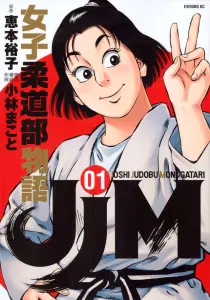
The series is frequently cited in Japanese judo discourse because it treats improvement as accumulated practice rather than innate invincibility. It also provides a cultural record—stylized and critical in places—of late Shōwa school-club ideals. Kobayashi returned to women’s judo with Yuko Emoto in JJM: Joshi Jūdōbu Monogatari.
Sources
- Kodokan Judo Institute, History and Founding Principles.
- University of Tokyo Repository, study summary discussing Jūdōbu Monogatari.
- Japan Media Arts Festival, Manga Division archive.
- Agency for Cultural Affairs, Media Arts Database.
- Kodansha Manga IP Search, Jūdōbu Monogatari volume 1.
- Kodansha, New Edition Jūdōbu Monogatari volume 8.
- Kotobank, Jūdōbu Monogatari.
Last updated: