
Seasonal Customs
Shichi-Go-San
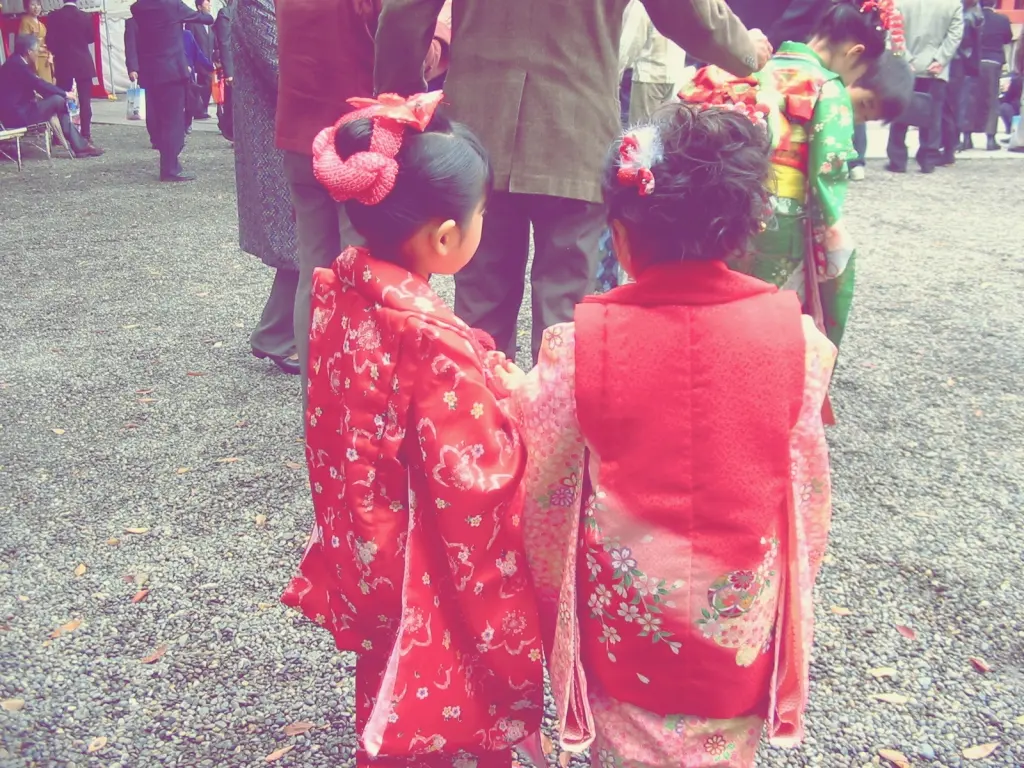
Image: ruma views / Wikimedia Commons; Flickr · CC0 1.0
Shichi-Go-San (七五三), literally “seven-five-three,” is a Japanese observance celebrating children’s growth at the ages of three, five, and seven. Families commonly visit a Shinto shrine around November 15, dress children in formal clothing, receive or request a blessing, take photographs, and give chitose-ame, a long red-and-white candy associated with longevity. The familiar pattern assigns age three to girls and boys, age five especially to boys, and age seven especially to girls, but historical and contemporary practice varies by region, family, and shrine. The custom developed from several early modern rites marking stages of childhood rather than from one single ancient festival. It is a family and religious custom, not a national public holiday.
Overview
| Japanese | 七五三 |
|---|---|
| Literal meaning | Seven-five-three |
| Usual date | November 15, with visits throughout autumn |
| Children | Ages three, five, and seven, with varying conventions |
| Central practice | Family visit to a Shinto shrine |
| Familiar gift | Chitose-ame, or thousand-year candy |
Name, ages, and date
The name lists three ages considered important stages in childhood. November 15 is the conventional date, but families often choose a nearby weekend or a date convenient for the shrine, photography, and relatives. Some count children by traditional age reckoning and others by modern birthday age, so participants may not all be the same chronological age.
Earlier childhood rites
The modern observance gathers several rites once associated with court and warrior households. Kamioki marked growing a child’s hair at about three; hakamagi marked a first hakama at about five; and obitoki marked a girl’s first adult-style obi at about seven. Their dates, participants, and names changed as the practices spread.
Growth, risk, and gratitude
In periods of high childhood mortality, reaching a new social and bodily stage carried special weight. Families expressed gratitude for survival and requested continued protection. Modern explanations emphasize healthy growth, happiness, and family bonds. Historical claims that all children passed through one identical threshold should be treated cautiously.
Shrine visit and blessing
Families may simply pay respects at a shrine or apply for a formal gokitō blessing performed by a priest. The sequence often includes purification, prayer, an offering, and the presentation of amulets or gifts. General Japanese shrine etiquette applies, but reservation and photography rules differ by shrine.
Clothing
Long-sleeved kimono for girls may resemble or be described as furisode, while boys and girls may also wear hakama ensembles. Age, family practice, rental availability, and shrine or studio arrangements all shape the choice.
Formal children’s kimono at Shichi-Go-San may be coordinated with split-toe tabi and appropriately sized zōri.
Children’s Shichi-Go-San dress may use age-specific kimono accessories and forms of obi, with modern families often relying on rental and dressing services.
Family clothing at Shichi-Go-San may include age- and occasion-specific forms of kimono, often rented or professionally dressed for the shrine visit and photographs.
Children often wear kimono, haori, and hakama, though Western formal dress is also common. The clothes may be inherited, purchased, or rented. Dressing conventions preserve echoes of the earlier age rites, especially the five-year-old’s hakama and the seven-year-old’s obi, while contemporary styling and family preference create wide variation.
Chitose-ame
Chitose-ame means “thousand-year candy.” Its long shape and red-and-white colouring express wishes for long life and good fortune. The bag often carries auspicious cranes, turtles, pine, bamboo, and plum. The candy is both an edible gift and a highly recognizable object in commemorative photographs.
Photography and modern family life
Studio portraits and shrine photographs have become central to the modern observance, allowing relatives to share and preserve a record of growth. Families may separate the photo session, shrine visit, and meal across different days. Shichi-Go-San now combines religious petition, clothing culture, service industries, and family archive without losing its focus on a child’s safe development.
Sources
Last updated:


.jpg)