
Seasonal Customs
Tsukimi
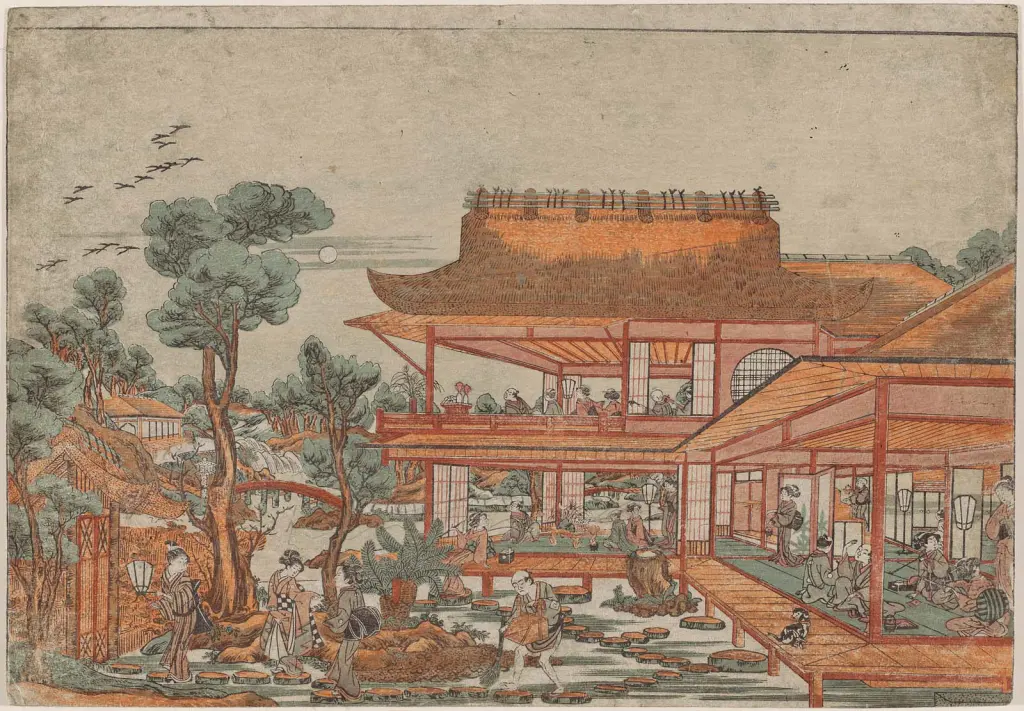
Image: Utagawa Toyoharu / Wikimedia Commons; Museum of Fine Arts, Boston · Public domain
Tsukimi (月見), or moon viewing, is a Japanese autumn custom centred on the mid-autumn moon. Its principal observance is Jūgoya, the fifteenth night of the eighth month in the traditional lunisolar calendar, which falls in September or October on the Gregorian calendar. People may view the moon from a garden, veranda, temple, public event, or waterside setting and arrange offerings of round tsukimi dango, Japanese pampas grass, taro, fruit, and other seasonal produce. The practice developed through continental influences and Heian court culture, where poetry, music, sake, and reflected moonlight formed an elite aesthetic occasion. As moon viewing spread, harvest gratitude and household offerings became prominent. The festival date changes annually, and the designated night is not necessarily astronomically full.
Overview
| Japanese | 月見; お月見 |
|---|---|
| English name | Moon viewing |
| Principal observance | Jūgoya, the fifteenth night |
| Calendar | Eighth lunar month; September or October today |
| Typical offerings | Dango, pampas grass, taro, fruit, and sake |
| Historical settings | Courtly banquets, households, temples, and gardens |
Name, date, and moon
Tsukimi literally combines “moon” and “viewing”; the honorific form otsukimi is common. Jūgoya means the fifteenth night and refers to the eighth-month observance. Because the traditional date is converted into the Gregorian calendar, it changes each year. The moon can be near full without reaching the precise astronomical full moon on that evening.
Continental influence and the Heian court
Mid-autumn moon appreciation reached Japan through cultural exchange with China and became established among Heian-period elites. Court nobles held banquets, composed poetry, played music, and viewed moonlight reflected in water or sake cups. Sites such as Daikakuji preserve or revive the image of boating under the autumn moon.
Harvest and household observance
As the practice extended beyond court circles, it became linked with the autumn harvest and thanks for agricultural abundance. Households prepared a viewing place, often oriented toward the moon, and offered newly harvested foods. The event thus combines contemplation with reciprocal offering rather than treating the moon as scenery alone.
Dango, susuki, and produce
Round white tsukimi dango visually recall the moon and are commonly stacked on a raised tray. Susuki, or Japanese pampas grass, resembles rice ears and may serve as a ritual marker when rice plants are unavailable. Taro, sweet potatoes, chestnuts, grapes, pears, edamame, and sake appear according to region and household.
Jūgoya and Jūsanya
A second viewing called Jūsanya, the thirteenth night of the ninth lunar month, developed distinctively in Japan. It is associated with later autumn produce, especially chestnuts and beans. Some traditions praise observing both nights and describe viewing only one as incomplete, but this convention should not be assumed in every household.
The rabbit in the moon
Japanese viewers often describe the lunar markings as a rabbit pounding mochi. The image draws on a Buddhist tale of self-sacrifice and on the visual resemblance of the moon’s dark areas. It appears in children’s songs, confectionery, art, and seasonal advertising, adding narrative to the act of observation.
Poetry, art, and modern practice
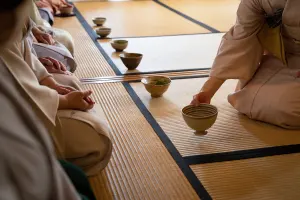
Moon viewing remains a theme in poetry, tea gatherings, garden design, temple events, and popular food names. Modern urban participants may make a small display at home or attend an illumination rather than hold a formal banquet. Across these forms, Tsukimi turns seasonal looking into a structured relationship among sky, harvest, art, and company.
For the food placed beside the autumn moon, see Tsukimi Dango, including regional shapes and offering traditions.
Sources
Last updated:

_Uki-e_ch%C5%AB-aki_no_kei_tsukimi_zu.jpg)