Folklore & Mythology
Tengu
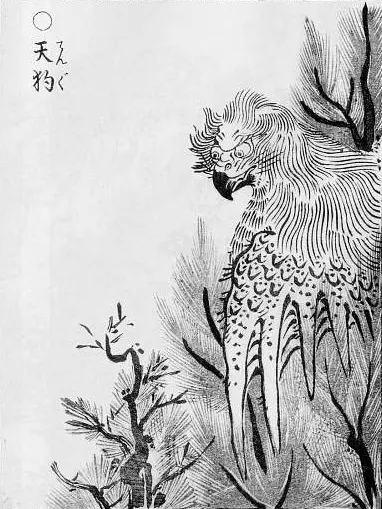
Image: Toriyama Sekien / Wikimedia Commons · Public domain
Tengu (天狗) are powerful mountain beings in Japanese religion, folklore, literature, and art. Early sources connect the name with a celestial omen and later Buddhist narratives cast tengu as disruptive forces that mislead monks, encourage pride, or disturb institutions. Over time they acquired both birdlike and human forms. The karasu-tengu has a beak and wings, while the familiar great tengu has a red face and exceptionally long nose. Tengu are also linked with yamabushi mountain ascetics, flight, wind, martial skill, and sacred peaks. They may abduct, deceive, or punish, yet in local and modern contexts they can protect mountains and temples. This range makes them prominent but internally diverse yōkai.
Overview
| Japanese | 天狗 |
|---|---|
| Romanization | Tengu |
| Primary setting | Mountains, forests, temples, and sacred peaks |
| Major visual forms | Birdlike karasu-tengu and long-nosed great tengu |
| Associated figures | Yamabushi mountain ascetics |
| Famous centre | Mount Kurama, Kyoto |
Name and early meanings
The characters literally mean “heavenly dog” and derive from a Chinese term for an ominous celestial phenomenon. The earliest Japanese appearances do not yet describe the standardized long-nosed mountain figure. Medieval Buddhist literature gradually developed tengu as beings associated with illusion, disorder, improper ambition, and the dangerous powers of remote mountains.
Buddhist warning and pride
Some texts describe arrogant monks or learned people falling into a tengu realm because attachment to status and supernatural ability obstructed liberation. Tengu could impersonate holy beings, cause possession, or attack temples. Such narratives used the supernatural to criticize pride inside religious institutions, rather than presenting tengu only as monsters outside Buddhism.
Birdlike and long-nosed forms
Art distinguishes a bird-headed karasu-tengu from anthropomorphic great tengu whose red face and long nose became especially familiar. Wings, feather fans, beaks, talons, swords, and priestly clothing appear in different combinations. The two forms are often placed in hierarchies, but terminology and rank vary across texts, mountains, artistic workshops, and modern summaries.
Mountains and yamabushi
Tengu are closely associated with yamabushi, practitioners of mountain ascetic traditions. Art may give them the small cap, pom-pom sash, robes, and feather fan associated with mountain practice. This resemblance connects tengu with difficult terrain, disciplined power, wind, and the ambiguous status of people who move between settled communities and sacred wilderness.
Kurama and martial legends
Mount Kurama north of Kyoto is one of the best-known tengu landscapes. Sōjōbō is presented in later tradition as a great tengu of the mountain, and the young warrior Minamoto no Yoshitsune is said to have learned martial skills from tengu there. The story joins mountain initiation to heroic biography; it should be read as legend rather than a verifiable account of training.
Threat, protection, and locality
Tengu may abduct children, possess people, start fires, punish disrespect, or confuse travellers. Elsewhere they defend a sacred mountain, temple, or practitioner. These roles are not a simple progression from “evil” to “good.” They reflect different institutions and communities using a potent mountain being to define dangerous conduct, legitimate authority, and the protection of place.
Tengu among yōkai and kami
Modern reference works normally include tengu among yōkai, while particular mountains can treat a tengu in a more revered, guardian-like manner. This does not make every tengu a kami or every mountain kami a tengu. Classification follows the narrative and ritual relationship in a given setting.
Sources
Last updated: