Folklore & Mythology
Kappa
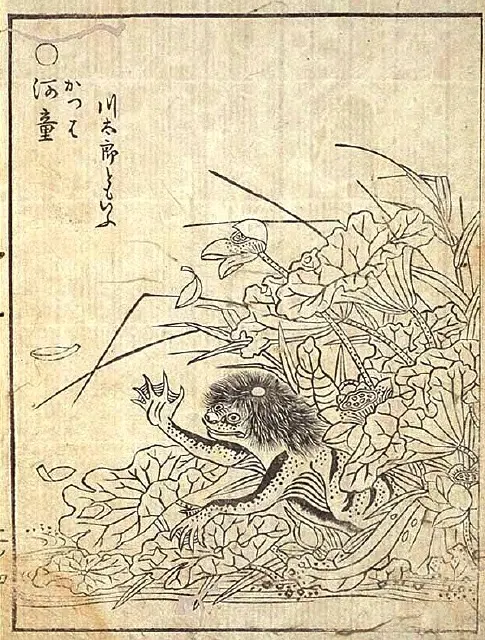
Image: Toriyama Sekien / Wikimedia Commons · Public domain
Kappa (河童) are Japanese waterside beings associated with rivers, pools, irrigation channels, and other places where people meet deep or moving water. The familiar modern kappa is a small humanoid with a beak, shell, webbed limbs, and a water-filled dish on its head, but local reports describe many colours, shapes, and names. Stories warn of drowning, attacks on people or animals, and dangerous contests; others portray kappa as courteous, medically knowledgeable, or bound by promises. This combination of fear, humour, and negotiation helped kappa become one of the best-known yōkai. Tōno in Iwate Prefecture is especially famous for preserving and presenting kappa traditions.
Overview
| Japanese | 河童 |
|---|---|
| Romanization | Kappa |
| Primary setting | Rivers, pools, channels, and other watersides |
| Familiar features | Head dish, beak, shell, and webbed limbs |
| Recurring motifs | Sumō, cucumbers, promises, and water danger |
| Famous locality | Tōno, Iwate Prefecture |
Name and local names
The modern name combines the characters for river and child. Historical records use many regional terms, including kawatarō, gatarō, enko, and names for related water beings. These labels do not always describe identical creatures. Treating every local waterside tradition as a minor version of one standardized kappa can erase the differences that folklore records preserve.
Appearance and the head dish
Popular illustrations often combine a turtle-like shell, birdlike beak, webbed hands and feet, green skin, and a circular dish called a sara on the crown. Water in the dish is said to maintain the being’s strength; spilling it can weaken or immobilize the kappa. Earlier descriptions vary widely, including hairy, red, dark, child-sized, reptilian, or monkey-like forms.
Danger at the water’s edge
Kappa stories often mark a practical boundary between safe ground and dangerous water. They may pull swimmers, children, horses, or cattle into a river. Telling such stories can communicate real environmental risk, but reducing kappa to a safety lesson is also too simple: narratives encode local waterways, work, animals, illness, taboo, and relations with non-human powers.
Sumō, cucumbers, and etiquette
Kappa are famous for challenging people to sumō and for liking cucumbers. A person may defeat one by making it bow and spill the water from its head dish, turning etiquette into a protective tactic. Stories also emphasize that a kappa can honour a bargain. Once captured or injured, it may promise not to harm people and may reward assistance with knowledge of medicine or bone setting.
Tōno and The Legends of Tōno
Tōno became a major centre of Japanese folklore through Yanagita Kunio’s The Legends of Tōno, published in 1910 from stories associated with local narrator Sasaki Kizen. The region’s kappa are often described as red and sharp-nosed. Today Kappabuchi, the Tōno Municipal Museum, and local heritage projects present the beings as part of a living landscape of storytelling rather than as an isolated mascot.
Visual and modern culture
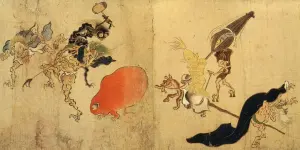
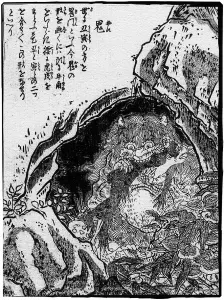
Edo-period artists such as Toriyama Sekien contributed to a recognizable kappa image, while modern books, advertising, anime, and local characters made the figure friendlier and more uniform. Kappa can now symbolize regional identity, clean water, or environmental concern. These modern uses are historically important, but they coexist with older stories of genuine danger.
Classification and comparison
Kappa are normally classed as yōkai because they explain uncanny agency at watersides and appear in folklore and visual catalogues. Some local accounts use language closer to water deities, showing that the line between yōkai and kami depends partly on ritual treatment. Unlike yūrei, kappa are not principally human spirits of the dead.
Sources
Last updated: