Performing Arts
Rakugo
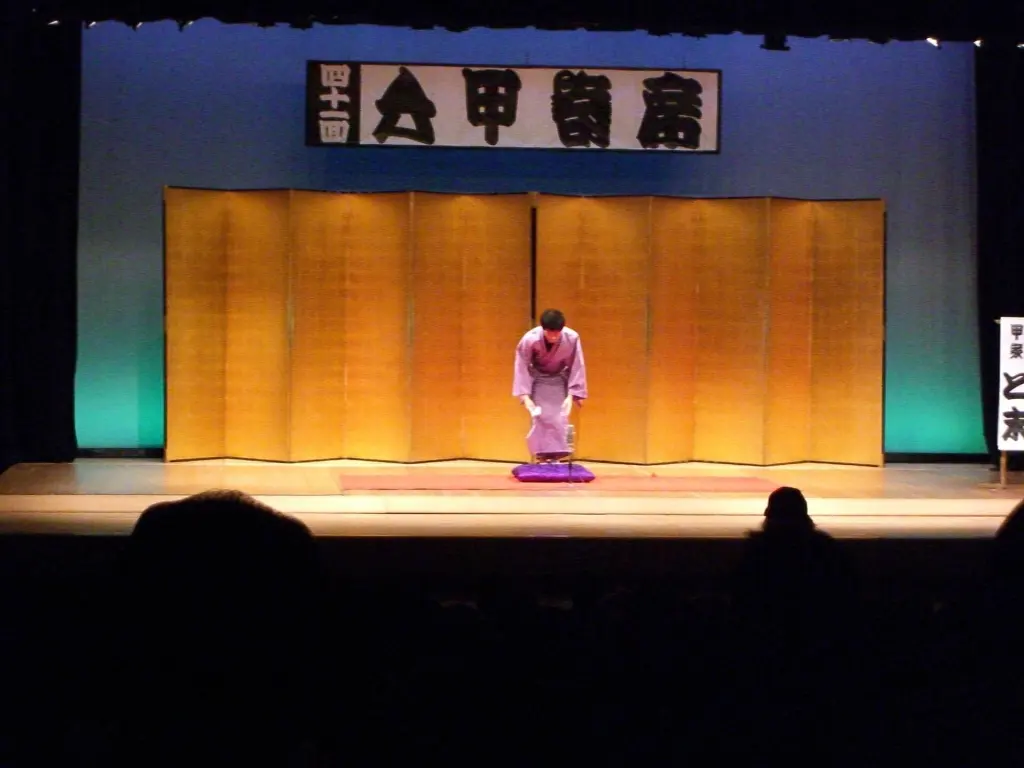
Image: jim212jim / Wikimedia Commons; Flickr · Creative Commons Attribution 2.0 Generic
Rakugo (落語) is a Japanese narrative performance in which a single seated storyteller creates scenes and multiple characters through changes of voice, gaze, posture, and timing. The performer normally remains on a cushion and works with only a folding fan and a hand towel as conventional props. Rakugo developed into professional urban entertainment during the Edo period, with major traditions in Edo, now Tokyo, and Kamigata, centred on Osaka and Kyoto. Although the name is associated with an ochi, or comic drop at the end, the repertory is broader than short punchline comedy. It includes long comic stories, sentimental narratives, ghost stories, and new works written by modern performers.
Overview
| Japanese name | 落語 |
|---|---|
| Classification | Solo narrative performance |
| Professional development | Edo period |
| Main regional traditions | Edo Rakugo and Kamigata Rakugo |
| Standard props | Sensu folding fan and tenugui hand towel |
| Typical venue | Yose variety theatre |
Name and performance format
The storyteller’s kimono and haori form part of rakugo’s visual language and help a seated performer suggest different characters through gesture.
Rakugo is written with characters meaning falling or dropping words, a reference to the ending that resolves or overturns a story. The ending is called the ochi. Not every work depends on the same type of verbal punchline, and the term should not obscure the performer’s longer work of building character, space, and rhythm.
The storyteller, or rakugoka, kneels in seiza on a cushion called a zabuton. Without leaving this position, the performer turns head and torso to mark changes between speakers. Narration links dialogue into a complete imagined setting.
Historical development
Comic anecdotes were circulated by preachers, entertainers, writers, and social circles before Rakugo became a profession. In the seventeenth century, named storytellers worked in Kyoto, Osaka, and Edo. The form later expanded through paid public entertainment and printed collections of short comic tales.
In the Tenmei and Kansei eras of the late eighteenth century, regular storytelling events and yose entertainment helped establish professional Edo Rakugo. Performers such as Utei Enba and the first San’yūtei Karaku were important to this development. The form later adapted to theatres, halls, radio, television, recordings, and online media.
Voice, gesture, and props
Character changes are indicated through vocal register, phrasing, facial direction, and small adjustments of the upper body. A dialogue can therefore be followed without costume changes or separate actors. Narration can compress time, change location, or reveal what the imagined characters cannot see.
The sensu can become chopsticks, a pipe, a fishing rod, a brush, or another long object. The tenugui can represent a book, wallet, letter, or food. Their meaning depends on handling and context, making the audience’s imaginative participation part of the performance.
Stories and repertory
Koten rakugo refers broadly to stories transmitted from earlier repertories, while shinsaku rakugo refers to new work. Classical stories do not have one immutable script: performers inherit a plot and characteristic passages, then shape wording, tempo, and detail through a master’s teaching and their own performance identity.
Comic stories may end with wordplay, reversal, recognition, or an action that reinterprets what came before. Ninjō-banashi emphasize human feeling, and kaidan-banashi develop supernatural or frightening narratives. Boundaries between labels can vary, and a single programme may mix emotional tones.
Edo and Kamigata traditions
Edo Rakugo developed in Tokyo, while Kamigata Rakugo is associated especially with Osaka and Kyoto. They share many stories and the one-person format but preserve differences in language, performance rhythm, stage customs, and repertory. Some stories have distinct regional versions.
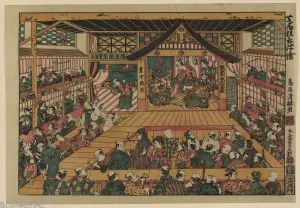
Kamigata performance historically developed in lively outdoor and fairground settings and may use additional sound-making devices or a small table. Edo performance became closely linked to indoor yose. Modern performers travel between regions, so these traditions are distinct but not isolated.
Apprenticeship, names, and yose
A prospective professional normally becomes a disciple of an established master and receives a stage name. Training covers stories, opening jokes, etiquette, kimono, backstage work, and the conventions of the professional community. Names can signal artistic family and succession rather than biological descent alone.
The yose presents Rakugo within a mixed bill that can also include comic dialogue, music, magic, paper cutting, or other variety acts. Rank systems and promotion practices differ among Tokyo organizations and between Tokyo and Kamigata; they should not be reduced to one national ladder.
Modern media and audiences
Radio and television created nationally known performers in the twentieth century, while halls, small independent events, schools, restaurants, and temples expanded the range of live venues. Recordings preserve celebrated performances but also reveal how timing and wording vary from one occasion to another.
Rakugo is now performed with subtitles and in languages including English. Translation must solve more than wordplay: social register, dialect, implied space, and the rhythm of switching characters all carry meaning. The limited physical apparatus makes Rakugo portable, but its apparent simplicity rests on long oral and embodied training.
Sources
Last updated: