
Performing Arts
Kyōgen
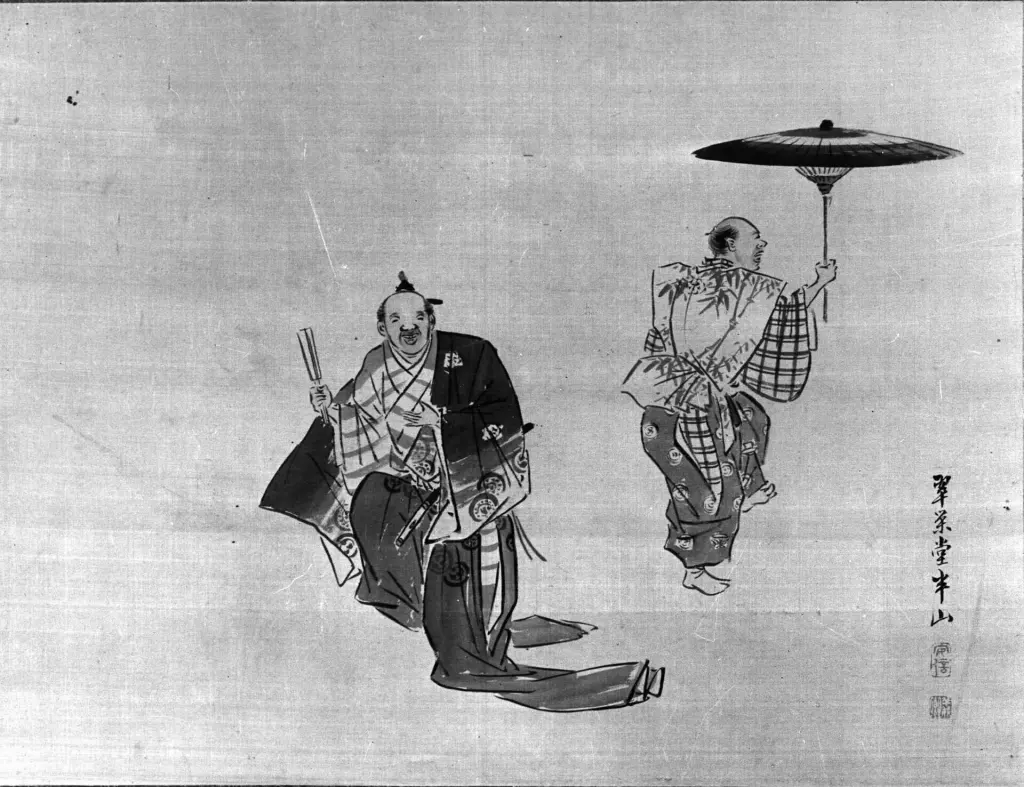
Image: Kawada Shōryō / Wikimedia Commons; Metropolitan Museum of Art · Public domain; digital reproduction CC0
Kyōgen (狂言) is a classical Japanese comic theatre distinguished by spoken dialogue, clear physical characterization, and stories drawn largely from everyday human weakness. It developed alongside Noh and, with Noh, forms the paired tradition known as Nohgaku. Kyōgen is often described as a comic interlude, but that label is incomplete: full Kyōgen plays have their own repertory, performance grammar, schools, and dramatic structure, while shorter ai-kyōgen passages operate inside Noh plays. Masters, servants, spouses, priests, gods, and animals appear through recognizable stage types. Exaggeration makes their motives legible, yet the language and movement remain highly disciplined rather than improvised farce.
Overview
| Japanese name | 狂言 |
|---|---|
| Romanization | Kyōgen |
| Classification | Classical spoken comic theatre; part of Nohgaku |
| Main forms | Hon-kyōgen and ai-kyōgen |
| Principal schools | Ōkura and Izumi |
| International status | Nohgaku inscribed by UNESCO in 2008 |
Name and place in Nohgaku
The word kyōgen historically carried meanings connected with unusual or playful speech. Within Nohgaku it denotes a performance tradition that shares Noh’s stage while relying more heavily on intelligible conversation, comic timing, and direct characterization. The contrast gives a formal programme changes of tone and pace.
Hon-kyōgen are independent plays. Ai-kyōgen are scenes performed within a Noh play, often by a local person who explains the place, legend, or events to the waki. The same specialist actor may therefore work in comic drama and in an expository role inside a serious Noh structure.
Historical development
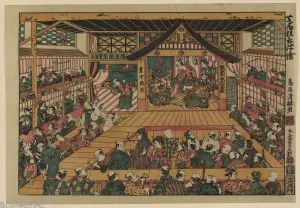
Early documents associated with Izumo no Okuni show that the first kabuki skits drew on the established performance language of Nohgaku, including Kyōgen.
Kyōgen grew from medieval comic performance associated with sarugaku and evolved beside Noh under shared patronage. Scripts and performance patterns became increasingly fixed during the early modern period, when professional families organized repertories and transmitted role types, speech, and movement.
Because Noh and Kyōgen were performed together, each affected the other. Kyōgen retained a plainer theatrical world and vigorous comedy while adopting the formal stage and disciplined training of Nohgaku. Modern scripts preserve linguistic layers from earlier Japanese, though delivery is shaped to remain theatrically clear.
Plots and characters
Many plays begin with a simple imbalance: a master gives an impossible order, servants seek food or drink, a boast is exposed, a couple quarrels, or an opportunist meets someone equally resourceful. The plots usually concern appetite, status, fear, deception, or misunderstanding rather than heroic destiny.
Recurring types include the master and the servants Tarō Kaja and Jirō Kaja, husbands and wives, priests, country visitors, blind men, gods, demons, and animals. These are roles rather than psychologically continuous characters. Their recognizable habits allow an audience to follow shifts of advantage quickly.
Speech, gesture, and stagecraft
Kyōgen speech projects meaning through rhythm, pitch, repeated formulas, and deliberate articulation. Dialogue may be combined with songs, dances, onomatopoeic sound, or stylized descriptions of actions and journeys. Performers use strong posture and economical paths on the open Noh stage.
The art is not normally improvised, even when its energy appears spontaneous. Comedy depends on exact timing between actors and on inherited kata, or performance patterns. Fans and a few simple objects can represent tools, food, drink, or other things that a realistic production might show directly.
Costumes and masks
Most human characters perform without masks, allowing facial expression to support spoken comedy. Masks are used for particular non-human or strongly typed roles, including gods, demons, animals, and some women or old people. Kyōgen masks generally emphasize direct, readable character rather than the shifting ambiguity prized in many Noh masks.
Costumes identify social position and theatrical type through established garments and bold patterns. They do not reproduce everyday dress naturalistically. Together with the bare stage, they let the actor’s speech and movement create the changing scene.
Schools and training
The two principal surviving schools are Ōkura and Izumi. Each maintains versions of scripts, vocal patterns, movement, and repertory choices. Differences can be significant to performers even when the basic story is shared.
Training traditionally begins with short dances, songs, and roles before advancing to longer or more demanding plays. As in Noh, direct instruction transmits timing and bodily form. Family lines remain important, but modern practitioners also teach students through theatres, workshops, universities, and international projects.
Preservation and new work
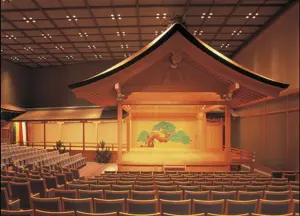
Kyōgen is regularly presented alongside Noh at the National Noh Theatre, whose programs and educational activities make the paired structure of Nohgaku visible to contemporary audiences.
Kyōgen is protected internationally as part of Nohgaku, which UNESCO inscribed in 2008. It continues to be performed in Noh theatres and at shrines, temples, schools, festivals, and overseas venues. Explanatory programmes have helped audiences approach its older language and conventions.
Contemporary performers also adapt Shakespeare, manga, and newly written subjects to Kyōgen technique. These experiments coexist with the classical repertory and make visible a central feature of the form: a small number of disciplined theatrical resources can generate many kinds of comic world.
Sources
Last updated:
.jpg?width=320)
