
Performing Arts
Noh
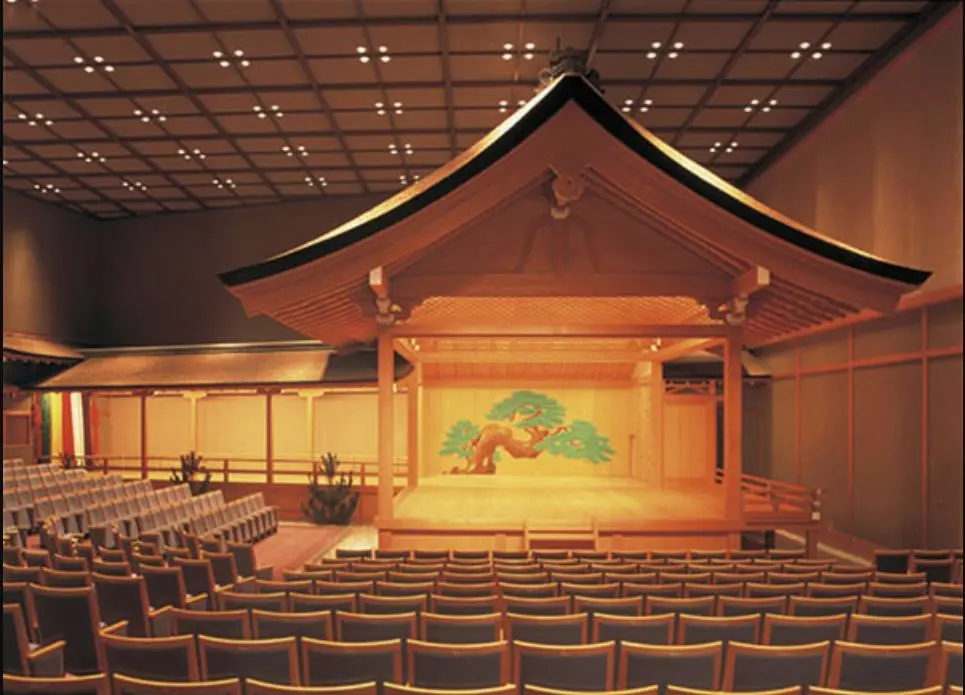
Image: Bokken; later higher-resolution version by Artanisen / Wikimedia Commons · Public domain dedication
Noh (能, nō) is a classical Japanese theatre form in which chant, instrumental music, dance, masks, and spare stage properties create an unusually concentrated drama. Its present performance conventions were shaped chiefly from the fourteenth century onward, especially through the work of Kan’ami and Zeami. Noh is not simply masked theatre: some roles are unmasked, while the dramatic effect also depends on the chorus, musicians, supporting actors, and the architectural discipline of the stage. Together with the spoken comic theatre of Kyōgen, it forms Nohgaku. The two traditions share a performance space and a long institutional history, but use contrasting language, rhythm, characterization, and theatrical purpose.
Overview
| Japanese name | 能 |
|---|---|
| Romanization | Nō; commonly written Noh in English |
| Classification | Classical masked dance-drama; part of Nohgaku |
| Formative period | Fourteenth to fifteenth centuries |
| Principal elements | Utai chant, hayashi ensemble, dance, masks, and costumes |
| International status | Nohgaku inscribed by UNESCO in 2008 |
Name and place in Nohgaku
The character 能 means ability or accomplishment. In modern usage, Noh identifies the serious, music-and-dance-centred half of Nohgaku, while Kyōgen identifies its predominantly spoken comic counterpart. A traditional programme places the two in dialogue: Kyōgen can appear between Noh plays, and a Kyōgen actor may also deliver an explanatory interlude within a Noh play.
Noh is therefore best understood as an ensemble form rather than as the work of a masked soloist. Actors, chorus, instrumentalists, attendants, costumes, stage architecture, and inherited movement patterns all contribute to the performance.
Historical formation
The Tale of the Heike became an important narrative reservoir for Noh. Plays including Atsumori and Kiyotsune do not merely stage battle episodes; they recast fallen warriors through memory, attachment, Buddhist impermanence, and ritual encounter.
Zeami Motokiyo extended Kan’ami’s repertory and performance practice while recording principles of training, composition, and audience response in professional treatises.
Kan’ami Kiyotsugu led a Yamato sarugaku troupe and combined inherited performance with musical and dramatic elements from other contemporary arts before Zeami extended that work.
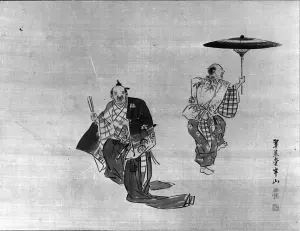
Noh developed from medieval performance practices often grouped under names such as sarugaku, which combined song, dance, mimicry, and comic entertainment. In the late fourteenth century, Kan’ami and his son Zeami won elite patronage and refined a theatre that joined popular performance skills to literary subjects, musical structure, and a disciplined aesthetic.
Zeami’s treatises discuss training, composition, performance, and the elusive quality later associated with yūgen, or subtle depth. Later warrior governments supported Noh as a ceremonial art. That patronage helped stabilize repertories and schools, although performance continued to change across the medieval, early modern, and modern periods.
Roles and stage
The shite is the principal actor and may appear first in an ordinary-looking form before revealing a spirit, deity, warrior, or other identity. The waki receives or questions the shite and often anchors the audience in the world of the play. Companion roles, child roles, stage attendants, a seated chorus called the jiutai, and the instrumental hayashi complete the visible ensemble.
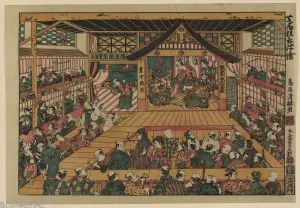
A Noh stage has a roof, an open square playing area, and a bridgeway called the hashigakari. A painted pine on the rear wall and a small number of conventional props establish place without realistic scenery. Entrances, seating positions, and movement routes are tightly organized.
Chant, music, and movement
Utai, the vocal element, is divided between actors and chorus. It carries dialogue, narration, poetic description, and changes of viewpoint. The hayashi normally combines a flute with shoulder, hip, and stick drums; musicians also use patterned calls that help articulate tempo and dramatic intensity.
Movement ranges from formal walking to extended dance sequences. Small shifts of the head, fan, or body can mark emotion or transformation. The apparent slowness of some passages is deliberate: rhythm expands and contracts across speech, chant, instrumental patterns, and dance rather than following the continuous pace of naturalistic drama.
Masks, costumes, and repertory
The principal actor wears a mask in many, but not all, plays. Masks represent categories such as women, old men, deities, spirits, and demons. A fixed carving can appear to change expression as the performer adjusts its angle to the light. Richly patterned costumes enlarge the body’s visual presence and help identify age, status, and dramatic type.
The canonical repertory is often arranged into five broad groups: deity plays, warrior plays, woman plays, miscellaneous or dramatic plays, and concluding demon plays. Many works draw on court literature, warrior tales, temple legends, and poetry. A performance may move between a traveller’s encounter and the revelation of a memory bound to a particular place.
Schools and transmission
Noh technique is transmitted through role-specific lineages. The five principal shite schools are Kanze, Hōshō, Komparu, Kongō, and Kita; separate lineages train waki actors, Kyōgen actors, and each instrumental specialty. Families have been important to this system, but contemporary training also includes pupils outside hereditary households.
Learning proceeds through direct imitation, repeated practice, and the study of prescribed vocal and movement patterns. Printed texts and recordings support transmission, but they do not replace embodied instruction in timing, posture, breath, and ensemble coordination.
Recognition and contemporary performance
The formal qualities of Noh also entered cinema: Akira Kurosawa drew on its performance conventions in Throne of Blood (1957).
Since 1983, the National Noh Theatre in Tokyo has provided a specialist public venue for performances, exhibitions, documentation, and study across Nohgaku schools.
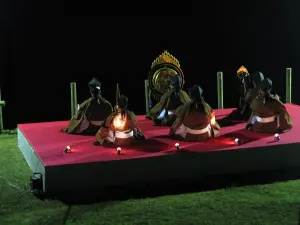
Nohgaku was proclaimed by UNESCO in 2001 and placed on the Representative List of the Intangible Cultural Heritage of Humanity in 2008. Performances take place at dedicated Noh theatres, shrines, temples, outdoor firelit events, schools, and international venues.
Contemporary artists preserve classical plays while also producing new Noh, translations, and collaborations. Such work does not replace the inherited repertory; it demonstrates how the form’s concentrated voice, movement, and spatial conventions can be used to address subjects beyond their medieval settings.
Sources
Last updated:
.jpg?width=320)
