Games
Esports in Japan

Image: OhanaUnited / Wikimedia Commons · CC BY-SA 4.0
Overview
The game is only one part of the competition.
Esports in Japan comprises organised competitive video gaming and the communities, businesses and institutions that support it. It includes different game genres, local and online competition, professional events and school activities. Japan’s role as a major producer of games is part of this history, but producing popular software and developing a competitive scene are different processes. Individual games have their own rules, publishers and tournament structures, so esports should not be treated as a single league or a synonym for all gaming. The Japan Esports Union, commonly known as JESU, is one important institution within a wider field of organisers, companies, teams and players.
The title defines the play and its technical rules.
Organisers create the format and entry conditions.
Players, teams and audiences sustain the scene.
At a glance
- Japanese term
- eスポーツ
- Core activity
- Organised competition through video games
- Institution
- Japan Esports Union (JESU)
- Institutional milestone
- JESU began activities on 1 February 2018
- Current Japanese organisation name
- 日本eスポーツ協会
- Rules
- Specific to the game, organiser and competition
01
One field, many competitive systems
Esports describes a competitive setting rather than a particular game mechanic. Fighting games are a prominent example in Japan, but the field is wider. A match, a tournament and a season are different organisational units. A game can support casual play and formal competition at the same time; simply playing it does not make every session an esports event.
02
Competitive communities and institutional growth
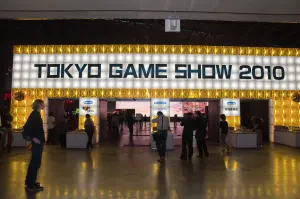
JESU’s historical account places its establishment in 2018 within a longer history of competitive gaming. Capcom’s February 2018 announcement linked its planned Japanese esports expansion with the new organisation, while noting its existing North American activities. The company also announced a Japan Premier Tournament at Tokyo Game Show. This is evidence of a particular publisher’s development, rather than a starting date for all Japanese competition.
03
Who makes a competition possible?
Capcom’s announcement shows several roles meeting around one title: the game’s publisher, a tournament circuit, an event venue and participating competitors. Keeping these roles separate helps explain why an event’s commercial organiser and its sporting or community identity need not be the same.
Game publisher
- Contribution
- Creates and maintains the game and its intellectual property
- What to check
- Official tournament and community-use conditions.
Event organiser
- Contribution
- Sets the format and administers the competition
- What to check
- Current rulebook, schedule and eligibility.
Players and teams
- Contribution
- Prepare and compete under the event rules
- What to check
- Registration requirements and competitive format.
Spectators and broadcasters
- Contribution
- Follow, present and interpret matches
- What to check
- Official viewing arrangements and broadcast rules.
04
JESU’s identity and remit have evolved
The organisation announced a change of Japanese legal name from 日本eスポーツ連合 to 日本eスポーツ協会, effective 1 August 2025. Its English name remains Japan Esports Union, with the abbreviation styled JESU. Its work includes recognising competitive titles, operating a professional licensing system and sending representatives to international competitions. These institutional functions do not make every Japanese gaming community part of one centrally run league.
05
A licence is not a universal permission to compete
JESU’s explanation, updated in February 2026, describes licensing in relation to professional activity and the organisation of prize competitions. It also discusses circumstances in which competitors without its licence can receive substantial prizes. A licence should therefore not be presented as a universal legal requirement for every player or event. Prize arrangements depend on the event’s actual structure.
06
School activity and youth participation need context
A 2023 study by Seino and colleagues examined Japanese high-school esports activities using a survey conducted in 2022. Its 84 valid responses came from schools affiliated with NASEF JAPAN, not from a representative census of every school in Japan. The researchers found that organisational issues varied with school type, size and the presence of curricular activities.
JESU states that it removed its own professional-licence age restriction on 16 February 2026 and abolished the separate junior-licence category. It also states that individual competitions may retain age restrictions. Licence policy, game age ratings and tournament eligibility are therefore separate matters.
07
Read the event, not just the headline
The practical starting point is the named title and the organiser’s current rules. Check the competition format, entry conditions and whether the information concerns a past edition. Market estimates, participant totals and audience figures also need dates and definitions before they can be compared. Tokyo Game Show is an industry exhibition that can host competitive events; it is not another name for the entire esports field.
Sources
- JESU, History of esports
- Capcom, Capcom to Officially Enter the Esports Market in Japan (2018)
- JESU, Notice of corporate name change and joint representative structure (2025)
- JESU, Professional licensing system (updated February 2026)
- Seino et al., Current Status of Esports Activities and Issues for Establishing Esports Club Activities at High Schools in Japan (2023)
Last updated: