Karate
Japan Karate Association
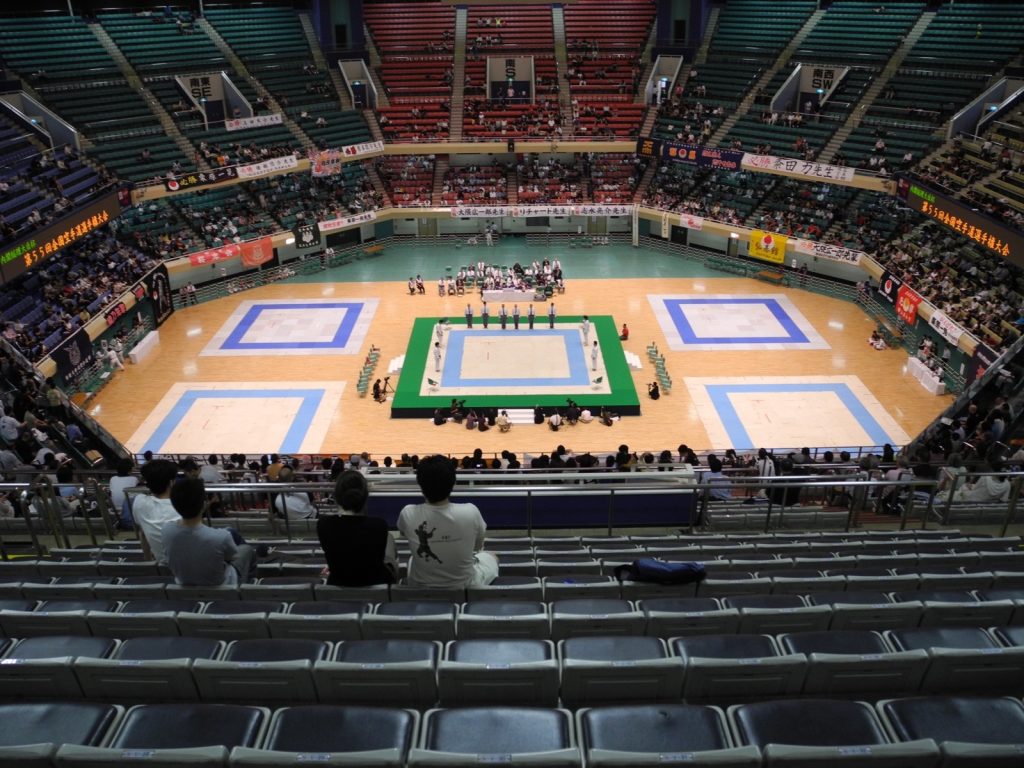
Image: Douglas P. Perkins / Wikimedia Commons · CC BY-SA 3.0
Overview
| Japanese name | 日本空手協会 |
|---|---|
| Abbreviation | JKA |
| Founded | 1949 |
| Style | Shotokan karate |
| Headquarters | Tokyo, Japan |
| First chief instructor | Masatoshi Nakayama |
The Japan Karate Association (JKA; Nihon Karate Kyokai) is a Japanese organisation devoted to teaching, researching, and sharing Karate-do. It is closely associated with the Shotokan tradition developed from the teaching of Gichin Funakoshi, but the JKA is an organisation—not the name of a style, and not a governing body for every form of Karate.
Definition and institutional role
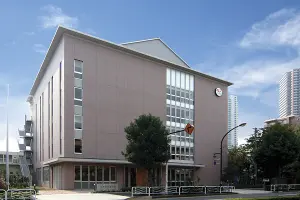
The JKA operates as a public interest incorporated association in Japan. Its headquarters dojo is in Tokyo, while affiliated groups and instructors form an international network. The organisation presents Karate as a lifelong martial way in which technical study, physical development, etiquette, and character belong together.
This identity matters because the words Karate, Shotokan, and JKA describe different things. Karate is the wider martial art; Shotokan is a family of practice descended from Funakoshi’s teaching; and the JKA is one institution within that family.
Origins in the late 1940s
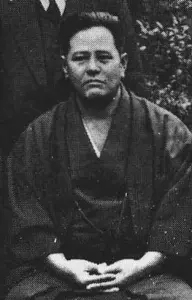
The JKA traces its beginnings to the late 1940s, when students and supporters of Gichin Funakoshi formed an association to organise instruction and promote Karate after the disruption of the Second World War. Funakoshi served as Supreme Master, providing a link to the Okinawan art he had introduced to mainland Japan in 1922.
A headquarters dojo opened in Yotsuya, Tokyo, in the mid-1950s. Around the same period the association began a specialist instructor training programme and received legal recognition from Japan’s education authorities. These developments gave the JKA a stable base for teaching, examinations, research, and national events.
Funakoshi and Nakayama
Funakoshi supplied the educational and ethical foundation: Karate as a path of self-cultivation, restraint, and respect. Masatoshi Nakayama and other senior teachers then helped organise instructor education, technical standards, and competition methods for a rapidly expanding post-war community.
The relationship is best understood as continuity with development. The JKA did not simply preserve a fixed snapshot of Funakoshi’s practice. Successive generations studied how Karate could be taught consistently in schools, universities, local dojo, and overseas communities.
Kihon, kata, and kumite
JKA training is commonly organised around three connected areas:
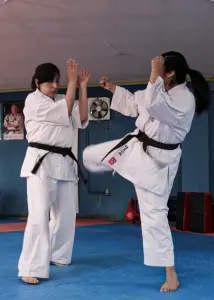
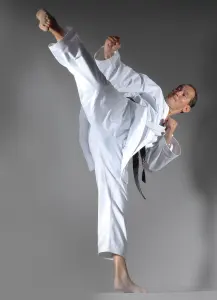
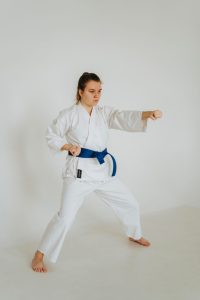
- Kihon develops fundamentals such as posture, stances, stepping, punches, kicks, and receiving techniques.
- Kata preserves structured sequences through which students study direction, rhythm, balance, breathing, and technical meaning.
- Kumite places technique in a partner relationship, progressing from arranged exercises toward freer practice and competition.
The three areas are intended to support one another. Fundamentals give movements clarity, kata connects techniques into a larger grammar, and partner practice tests distance, timing, control, and composure.
The instructor programme
The JKA’s instructor programme became one of its most influential projects. Trainees studied Karate intensively while learning how to teach, demonstrate, assess, and communicate the same principles in different settings. Graduates were sent to communities outside Japan and played an important role in the worldwide spread of Shotokan Karate.
International expansion also created variety. Local cultures, teachers, organisations, and competition systems shaped practice in different ways, even when they shared a historical connection to the JKA.
Competition and lifelong practice
The JKA began a national championship system in the 1950s and developed events for kata and kumite. Competition provides one way to test preparation, judgement, and control, but the organisation also describes Karate as lifelong practice. Children, university students, working adults, senior practitioners, competitors, and non-competitors may therefore train for different reasons within the same broad tradition.
JKA and the wider Karate world
The Japan Karate Association should not be confused with the Japan Karatedo Federation (JKF), which brings together several major Karate traditions within Japan’s broader national sport structure. Nor does the JKA represent every Shotokan organisation. Historical disagreements and new associations have produced several independent groups that trace their practice to Funakoshi and the early Shotokan community.
Recognising these distinctions makes the landscape easier to understand: one art can contain several styles, and one style can contain several organisations.
The JKA is important not only because of its size or tournament history, but because it helped turn a teacher-to-student tradition into an international educational network. Its story shows how a martial art changes when methods are standardised, instructors travel, and communities reinterpret shared principles across languages and borders.
Rank, qualification, and membership are different
Within the JKA, a kyu or dan grade, a professional qualification, and organizational membership answer different questions. Rank records progression as a Karate practitioner. Instructor, judge, and examiner certifications authorize specified functions at defined classes. Membership identifies a person or organization’s relationship to the association, but does not by itself establish teaching, judging, or examination authority.
The JKA qualification system lists separate certification types, classes, prerequisites, testing locations, authorized functions, and renewal expectations. When checking a claim, ask for the exact credential, grade or class, issuing body, territory, issue or renewal date, and authorized scope. Also distinguish JKA headquarters, a recognized national organization, a branch dojo, and an unaffiliated Shotokan group. This avoids using the broader history of Karate or the legacy of Gichin Funakoshi as proof of a current institutional status.
Sources and further reading
Last updated: