Social Customs
Suica
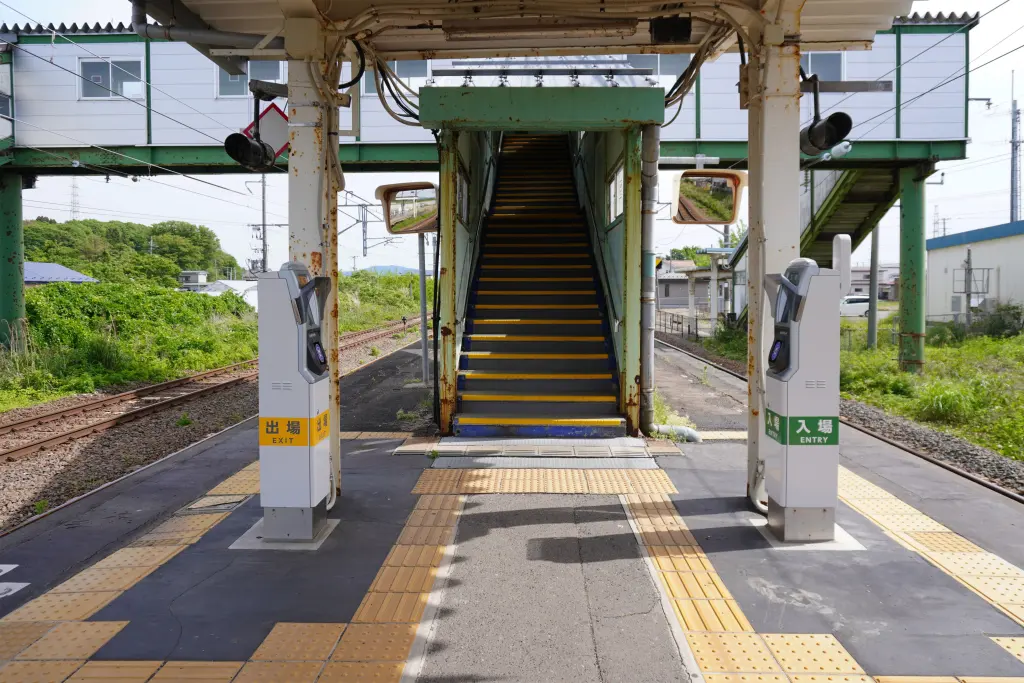
Image: Mister0124 / Wikimedia Commons · CC BY-SA 4.0
Suica (スイカ) is East Japan Railway Company's rechargeable contactless IC fare and electronic-money system. Launched on 18 November 2001 in the greater Tokyo area, it lets a reader exchange fare information with a card or compatible mobile device when the user taps a gate or payment terminal. Suica can hold stored fare, support commuter-pass products, and pay at participating shops, vending machines, and other services. Interoperability allows it to work across many other Japanese transport IC areas, but it is not a universal ticket for every railway, route, reservation, or journey. Physical cards, Mobile Suica, Apple Pay services, and visitor products have different eligibility, refund, device, and validity rules. Current conditions must be checked with JR East.
Overview
| Japanese | Suica; スイカ |
|---|---|
| Operator | East Japan Railway Company (JR East) |
| Classification | Rechargeable contactless transport IC and electronic-money system |
| Launch | 18 November 2001 |
| Underlying technology | Sony FeliCa contactless IC platform |
| Mobile service | Mobile Suica launched 28 January 2006 |
| Nationwide interoperability | Ten-card mutual-use network launched in March 2013 |
| Current physical-card limit | Maximum stored balance ¥20,000; standard card includes a ¥500 deposit |
Name and scope
Suica is the registered name of JR East's IC fare system. Contemporary corporate explanations expand the name as “Super Urban Intelligent Card.” It identifies a service and account medium, not the generic category: PASMO, ICOCA, Kitaca, TOICA, manaca, SUGOCA, nimoca, and Hayakaken are separate systems operated by other organisations.
A Suica can represent stored fare, a commuter-pass entitlement, or other linked tickets depending on product and registration. The physical green card is only one form. Mobile services place equivalent fare functions on supported phones or watches, while Welcome Suica products have special visitor conditions.
Development and the 2001 launch
JR East developed Suica through a long programme of contactless-ticket trials. The system had to read cards rapidly at busy gates, calculate fares, update stored value, and keep operating across a large network. A technical history in Japan Railway & Transport Review describes a central server, unique card identifiers, upgraded gates, and staged deployment.
The first service began on November 18, 2001 around Tokyo. JR East's historical record treats the launch as a company milestone. Suica initially combined commuter-pass and stored-fare functions that magnetic cards had handled separately, making repeated ticket purchase unnecessary for covered journeys.
How contactless fare collection works
A user briefly presents the card or device to a compatible reader. The system records entry and exit information and deducts the appropriate fare when the journey can be processed within its rules. Communication uses the FeliCa contactless IC platform; a tap is still required for ordinary gates even though no exposed electrical contact is used.
Successful operation depends on more than the card. Gate readers, station networks, fare tables, back-office servers, and procedures for incomplete journeys work together. Tapping two IC cards or a wallet containing several active cards can cause an error, and a journey that crosses unsupported boundaries may require a different ticket or staff assistance.
Cards, commuter passes, and mobile forms
JR East offers registered and unregistered physical Suica products, child cards, and commuter-pass forms under current sales rules. Standard physical cards include a refundable deposit. A registered card can support identity-linked services and replacement conditions that an unregistered card cannot.
Mobile Suica began on January 28, 2006, combining touch-through gates, electronic money, remote charging, account display, and ticket purchase on supported phones. Later smartphone and watch services changed device access, but compatibility, registration, payment methods, and transfer procedures remain product-specific.
Electronic money and nationwide interoperability
Suica electronic money began in 2004, extending the stored balance from transport fares to participating retail payments. The same tap action can therefore occur at a gate, shop, vending machine, locker, or other terminal, but acceptance logos and product rules determine where it works.
Suica and ICOCA first became interoperable for transport in 2004. The nationwide mutual-use service linking ten major transport IC systems launched in March 2013. Interoperability lets one card work in many other areas; it does not merge the operators, guarantee every service, or permit every through-journey across area boundaries.
Service areas, limits, and separate tickets
JR East divides its Suica coverage into service areas and publishes maps for stations and routes. Other operators accept Suica through mutual-use agreements. Some rural lines, transport companies, reserved services, and long journeys require separate arrangements, even when Suica is accepted at one endpoint.
As checked in September 2026, an ordinary physical Suica can hold no more than ¥20,000 and a new standard card includes a ¥500 deposit. These operational details can change. Shinkansen e-tickets, Green Car tickets, commuter passes, and limited-express products use reservations or entitlements linked to Suica rather than turning stored fare alone into every kind of train ticket.
Visitor products
Welcome Suica is designed for visitors and differs from an ordinary refundable physical Suica. Welcome Suica Mobile launched for supported Apple devices on March 6, 2025, allowing eligible overseas visitors to issue and charge a card in an English-language app and use it for participating transport and shopping.
Visitor products have their own validity periods, supported devices, refund rules, and regional or legal restrictions. A familiar Suica logo does not mean that every visitor product behaves like a standard resident card. JR East's current comparison pages should be checked before purchase or transfer.
Suica Renaissance in 2026
JR East uses “Suica Renaissance” for a multi-year plan to move fare calculation and other value management toward central servers and broaden Suica beyond its existing model. In a release dated September 8, 2026, the company said it planned to integrate its six Suica areas at the end of fiscal 2026 once the new gate system is complete.
The same release states an aim of making Suica available at every JR East station in the early 2030s through new gate methods. These are corporate plans, not present coverage. Service start dates, supported stations, technical methods, and user conditions remain subject to later announcements.
Everyday infrastructure and cultural meaning
Holiday travel peaks such as Silver Week make this infrastructure especially visible: ordinary fare media support concentrated movement, while reservations, service areas, and crowd management still require separate planning.
Suica changed a small repeated action in urban life: buying and presenting a ticket became a brief tap whose fare calculation is largely hidden. Its spread into shops and phones connected railway travel with convenience retail, commuting, station design, and personal device habits.
Convenience should not be romanticised as a timeless national trait. Suica is a designed commercial infrastructure developed by particular companies, engineers, standards, and agreements. Access depends on money, devices, language, disability support, station equipment, and operator policy, while cash and other ticket systems remain necessary in some situations.
Sources
- JR East, Suica.
- JR East, History Since the Establishment of JR East—2000s.
- Japan Railway & Transport Review, Introduction and Future Development of Suica.
- JR East, 2013 Annual Report.
- JR East, Mobile Suica Service to Start January 28, 2006.
- JR East, Releasing the Welcome Suica Mobile App.
- JR East, Suica Renaissance Fifth Initiative.
- FeliCa Networks, History of Mobile FeliCa.
Last updated: