Shinto
Shinto Rituals
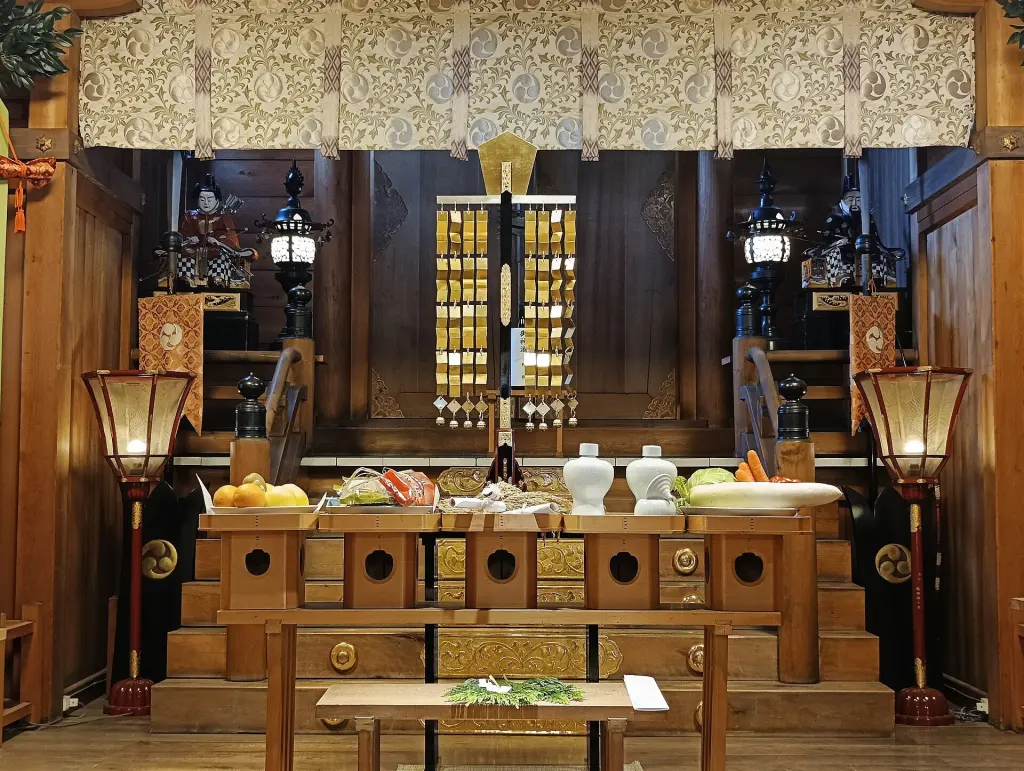
Image: OraMAAG / Wikimedia Commons · CC BY 4.0
Shinto rituals are patterned acts through which people address kami, prepare a place or participants, make offerings, recite words, and mark relationships among shrines, households, communities, and the natural world. The English phrase “Japanese religious rituals” is broader: Japan also has Buddhist, Christian, new-religious, folk, and mixed practices, so it should not be treated as a synonym for Shinto. Within Shinto, rites range from a priest’s formal ceremony and a community matsuri to household observance and an individual request at a shrine. No single sequence fits every institution. This article therefore explains recurring elements—harae, offerings, norito, music or movement, and closure—while keeping local rules and historical change visible.
Overview
| Japanese terms | 神道祭祀 (Shintō saishi); 祭り or 祭 (matsuri) in many contexts |
|---|---|
| Primary focus | Ritual practice concerning kami in shrine, household, and community settings |
| Recurring elements | Purification, offerings, norito, gestures, music or dance, and closure |
| Principal specialists | Shinto priests, shrine attendants, ritual musicians, and community participants |
| Time scales | Daily observance, personal requests, life events, seasonal festivals, and major periodic rites |
| Important limit | Shinto ritual is not a complete synonym for religion or ritual in Japan |
Terms and scope
The word matsuri can mean a rite offered to kami, the larger festival surrounding that rite, or both. Saishi is a more formal term for rites or ritual observances, while shinsai can refer to a ceremony for kami. English “ceremony,” “rite,” “festival,” and “worship” overlap but do not divide the Japanese vocabulary perfectly.
Shinto practice has no single weekly service required of all adherents and no central liturgy applied identically at every shrine. Jinja Honcho provides shared guidance and shrine priests receive formal training, yet individual shrines preserve their own enshrined kami, calendars, histories, ranks of offering, music, costumes, and local participation. Household and community practice can also continue outside a formal shrine building.
Five questions for reading a rite
A Shinto rite can be approached through five questions: What is its stated purpose? Who conducts and sponsors it? Where does each action occur? What sequence connects preparation, address, offering, and closure? Which parts are public, restricted, or participatory? This is an editorial reading method, not a universal liturgical formula.
The method prevents the most visible element from replacing the whole event. A procession may follow a restricted shrine rite; public dance may be an offering rather than entertainment alone; and a short personal prayer may occur within an institution’s daily ritual schedule. Official notices, programs, signs, and staff guidance should take priority over assumptions based on costume or photography.
Purification and readiness
Harae is a central family of purification rites. A priest may perform shubatsu with a purification wand and a norito before a ceremony, while the Great Purification, or Ōharae, is observed at midyear and year-end in many places. Misogi uses water and has its own forms, disciplines, and safety requirements.
The hand-and-mouth cleansing called temizu or chōzu prepares an ordinary visitor to approach a shrine, but it is not a miniature version of every priestly purification rite. The underlying concern is readiness to enter a relationship with kami and sacred space. Procedures can be modified when water is unavailable, a basin is closed, or the shrine provides different instructions.
Offerings, norito, and mediation
Offerings called shinsen commonly include rice, sake, salt, water, vegetables, fruit, fish, or other foods selected according to the shrine and occasion. Branches of sakaki fitted with paper or cloth streamers may be presented as tamagushi. The items, order, vessels, and officiants vary with the rite; offerings are not merely decorations around a verbal prayer.
Norito are formal words recited in ceremonies concerning kami. They may announce the occasion, identify participants or requests, praise kami, and express gratitude or petition. Historical norito survive in texts such as the Engishiki, while living shrines compose and transmit liturgies for present circumstances. Sound, posture, silence, and timing are part of the communication alongside words.
Matsuri, calendar, and community
A shrine calendar may include daily offerings, monthly observances, seasonal festivals, harvest rites, memorial dates connected with the shrine, and special ceremonies held only at long intervals. Ise Jingū performs more than 1,500 rites each year, but its calendar and imperial associations should not be projected onto every local shrine.
A matsuri can join a rite inside the shrine with an omikoshi procession, kagura, neighborhood organization, food stalls, tourism, and reunion. These layers may have different organizers and rules. Identifying the ritual center helps explain why a seemingly public festival includes moments or spaces that remain restricted.
Personal, household, and life-event rites
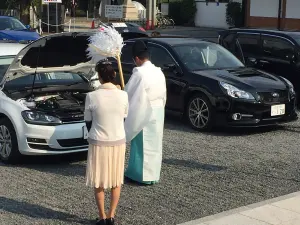
Shrines conduct prayers and blessings for concerns such as safe travel, health, study, business, childbirth, children’s growth, marriage, construction, vehicles, and protection from misfortune. A requested rite is often called gokitō or kigan. The fee, reservation, clothing, accompanying family, photography, and items received afterward differ by shrine.
At home, a kamidana may hold ofuda and receive simple offerings and greetings. Household practice is not a compressed copy of a grand shrine festival, and not every household maintains a kamidana. Life events in Japan may also combine Shinto, Buddhist, secular, and other practices without requiring one exclusive religious identity.
Visiting, photography, and participation
For ordinary visits, follow the approach, purification, and worship guidance provided by the shrine. Do not cross barriers, enter a ceremony, imitate participants, touch ritual objects, or assume that a visible procession is open to anyone. Japanese Shrine Etiquette explains a respectful baseline, but posted local instructions always control.
Ask before photographing a formal rite, priest, family ceremony, or interior worship space. Silence a device, avoid blocking the route, and do not treat a refusal as an inconvenience to negotiate. When describing an event, name the shrine, date, stated rite, and observed role rather than guessing rank, belief, or symbolism from clothing alone.
Sources
Last updated: