Japanese New Year
Shōgatsu
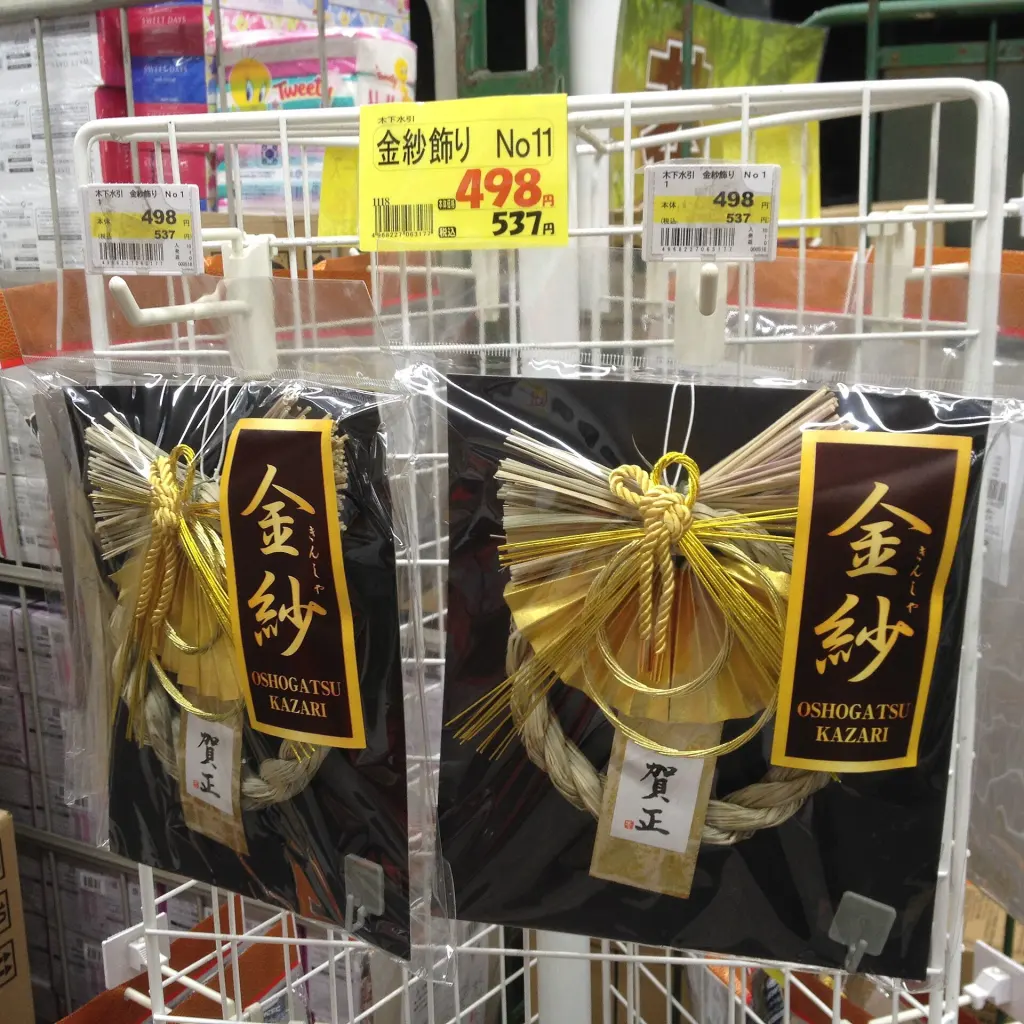
Image: nesnad / Wikimedia Commons · CC BY 3.0
Shōgatsu is the Japanese New Year season and one of the country's most important annual observances. The term can refer narrowly to the first days of January or more broadly to a cycle that begins with year-end cleaning and preparations. Homes and businesses may display kadomatsu and other decorations; families prepare osechi ryōri, exchange nengajō, and make first visits to shrines or temples. Older ritual interpretations welcome Toshigami, a visiting New Year deity associated with renewal and well-being. Yet Shōgatsu is not one uniform ceremony: practices vary by region, household, religious affiliation, and generation, and contemporary holidays combine ritual, family reunion, leisure, commerce, and mass travel.
Overview
| Japanese name | 正月 |
|---|---|
| Romanization | Shōgatsu |
| Core period | First days of January, with preparations beginning in December |
| Religious context | Household rites, Shinto and Buddhist observances |
| Common practices | Decorating, visiting, special foods, greetings, gifts, and first activities |
| Key idea | Renewal at the opening of the year |
Scope and calendar
Shōgatsu literally denotes the first month, but ordinary usage often centers on New Year's Day and the opening days of January. The national holidays and household observances do not all share the same endpoint. The first three days are commonly called sanganichi, while matsu no uchi, the period in which pine decorations remain displayed, may end on January 7 or later depending on region.
Japan officially adopted the Gregorian calendar in 1873. Most New Year observances consequently shifted to January, although traces of the older lunisolar calendar remain in local events and in Koshōgatsu, the “Little New Year” associated with mid-January practices. Calendar terms should therefore be read historically as well as literally.
Year-end preparations
Preparations traditionally begin well before January 1. Susuharai, a thorough cleaning, removes accumulated dust and symbolically readies a place for the coming year. Shopping, cooking, debt settlement, gift delivery, and the preparation of decorations also concentrate in late December.
The thirteenth day of December was historically associated with beginning New Year preparations in many settings. Current schedules are more flexible, but timing still carries meaning. Decorations are commonly put up before the last day of the year, because hurried display on December 31 is often described as ichiya-kazari, or one-night decoration, and considered inauspicious.
Toshigami and household rites
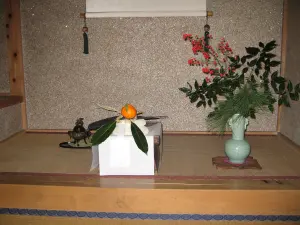
One influential explanation of Shōgatsu centers on Toshigami, a deity believed to visit at the turn of the year. Kadomatsu at an entrance, shimenawa and shide, and offerings such as kagami mochi prepare and mark spaces for the divine guest.
Beliefs and terminology differ across Japan, and not every household interprets its decorations in explicitly theological terms. The Toshigami framework nevertheless helps explain why cleaning, welcoming, offering, eating, and removal of decorations form a connected ritual sequence rather than a collection of unrelated ornaments.
New Year's Day and first activities
January 1 is ganjitsu, while gantan properly refers to its morning. People may watch the first sunrise, offer New Year greetings, share a special meal, and visit relatives. Many also make hatsumode, the first shrine or temple visit of the year, during the opening days rather than at one fixed hour.
A vocabulary of first activities gives ordinary acts seasonal significance: hatsuyume is the first dream, kakizome the first calligraphy, and hatsu-uri the first sales. These expressions turn the opening of the calendar into a series of beginnings whose timing and importance vary among people and institutions.
Food, greetings, and exchange
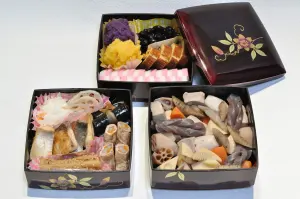
Osechi ryōri, zōni soup containing mochi, and other regional foods distinguish the New Year table. Their ingredients and interpretations vary, and commercially prepared sets now coexist with household cooking. Kagami mochi begins as a display and offering before being opened and eaten later in the season.
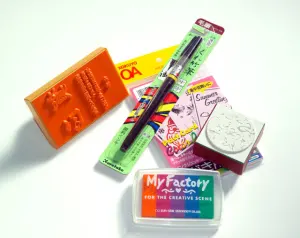
New Year greetings circulate in person, by telephone and online, and through nengajō. Children may receive otoshidama, usually money in small envelopes. These exchanges confirm family, neighborhood, school, and workplace relationships while also revealing changing household patterns.
Duration and regional variation
The New Year season closes through several local and household schedules rather than one national rite. Decorations are removed at the end of matsu no uchi; kagami biraki opens the rice-cake offering on a later date; and some communities burn decorations in a fire ceremony often called dondoyaki or sagichō.
Dates, food, decoration forms, and ritual names differ among regions. Eastern and western Japan may follow different dates for ending matsu no uchi or holding kagami biraki, while zōni broth and mochi shapes show strong local variation. Descriptions of Shōgatsu should avoid presenting one region's sequence as universal.
Modern change and public life
Modern Shōgatsu is shaped by rail and road travel, television programming, retail campaigns, postal services, convenience foods, and changing work calendars. Shrine and temple precincts can receive large crowds, while department stores and online retailers promote osechi, lucky bags, and seasonal gifts.
These changes do not simply replace tradition. Families select among inherited, religious, commercial, and newly invented practices. Smaller households may buy compact decorations or prepared food, and digital messages may supplement cards, while the desire to mark renewal and maintain relationships continues in altered forms.
Sources
Last updated: