Gardens
Roji
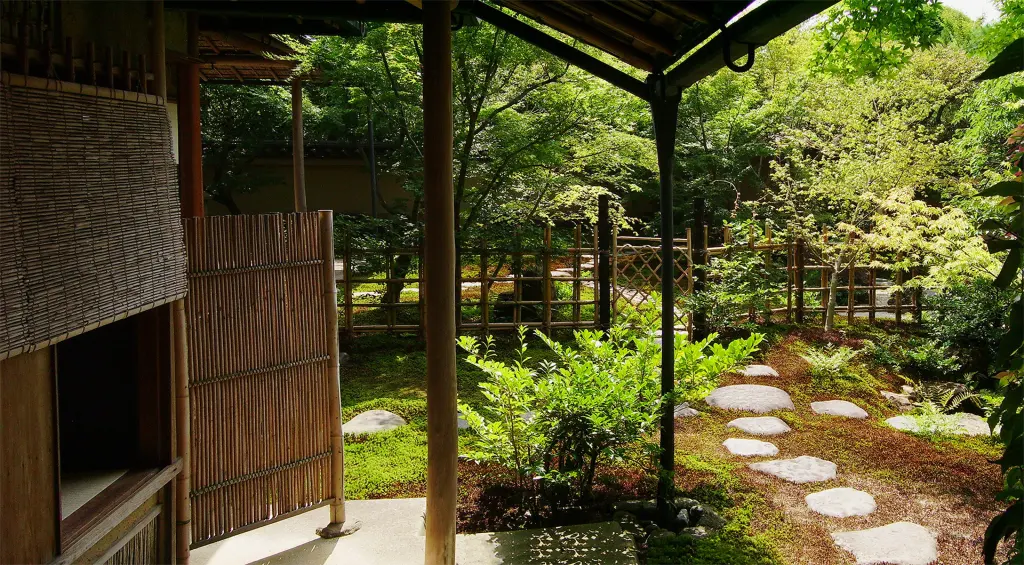
Image: Bjoernord / Wikimedia Commons · CC BY-SA 3.0
A roji is the garden through which guests pass on the way to a tea house. Often translated as “dewy ground” and also called a tea garden, it is part of the spatial and social sequence of Japanese tea ceremony, not simply landscaping around a building. Stepping stones lead from an entrance and waiting place toward a middle gate, water basin, and tea-room entrance. Planting, shade, moisture, sound, and restricted views can create a transition from ordinary surroundings to the focused setting of a tea gathering. Roji layouts vary by school, site, date, and scale; later examples may divide the approach into outer and inner gardens, while small tea spaces use a more compressed arrangement.
Overview
| Japanese name | 露地 |
|---|---|
| Romanization | Roji |
| Common translation | Dewy ground or tea garden |
| Primary function | Approach from waiting area to tea house |
| Common elements | Stepping stones, gates, waiting shelter, water basin, and planting |
| Prominent development | Sixteenth century and later |
Name and function
Earlier spellings of roji emphasized a route or place through which one passes. The characters now commonly used can be read as dewy ground, a wording that acquired religious and poetic associations. Chaniwa, or tea garden, is a near synonym, though practitioners may use the terms with different emphasis.
The roji connects the arrival of guests, a waiting interval, cleansing, and entry into the tea room. Its meaning therefore comes from movement and use. A photographed lantern or basin outside that sequence does not by itself define a roji.
Historical formation
Tea gatherings before the sixteenth century often took place in reception rooms and temple spaces. As detached rustic tea houses and wabi-cha developed, the approach became a more deliberately organized environment. Sources associate the formative phase with tea figures including Takeno Jōō and Sen no Rikyū, though later accounts shaped their reputations.
Practical stepping stones that kept feet from mud gained compositional and ceremonial importance. By the Edo period, roji could include differentiated outer and inner sectors, more elaborate paving, several waiting places, and carefully placed garden furnishings.
Route and guest sequence
Guests normally gather at a waiting place before the host signals that preparations are complete. They then move along stepping stones, pass a gate, and approach the tea house. The route moderates speed, directs attention downward and outward, and creates pauses rather than providing the shortest possible access.
Formal procedures differ among schools and gatherings. The roji is designed to support those procedures, but it does not erase hierarchy or turn every movement into a fixed symbolic code.
Stones, gates, and waiting places
Tobiishi stepping stones and nobedan paving establish the path. A koshikake machiai provides a sheltered bench, while a chūmon may divide the outer roji from the inner roji. Functional stones can mark positions for host, guests, footwear, lanterns, or utensils.
These elements vary in formality and regional material. Irregular natural stones, bamboo gates, modest fences, and low roofs often support the rustic character of wabi-cha, yet surviving tea estates also preserve highly sophisticated workmanship.
Water and cleansing
A tsukubai arrangement provides water for guests to rinse their hands and mouth before entering the tea room. The low basin requires a crouching posture, while surrounding stones organize where participants stand and where water vessels or lanterns are placed.
The host traditionally waters and cleans the roji before guests enter. Wet stones, fresh surfaces, and controlled traces of leaves create an intentionally prepared appearance; the effect depends on labor rather than untouched nature.
Planting, light, and atmosphere
Evergreens, moss, groundcovers, bamboo, and restrained flowering plants are often used to shape shade, seasonal detail, and a woodland impression. Planting controls views and helps separate the tea space from surrounding streets or buildings. Bright display is generally subordinate to the route.
Lanterns were historically practical for evening gatherings and later became common garden features. Their number and placement vary; the widespread decorative use of stone lanterns in modern gardens should not be projected unchanged onto early roji.
Variation and preservation
Small urban tea rooms may compress the roji into a narrow passage, while large estates create multiple sectors and routes. Schools of tea transmit preferences for stones, gates, basins, and guest movement, but individual tea masters and patrons also introduced distinctive designs.
Preservation requires attention to drainage, stone stability, moss and plant growth, fences, water systems, and the relationship to the tea buildings. Because the roji is activated by practice, conserving its use and maintenance knowledge is as important as retaining visible objects.
Sources
- Web Japan, Gardens Fact Sheet.
- Government of Japan, Japanese Gardens as Living Organisms.
- Japan National Tourism Organization, Japanese Gardens and Zen Gardens Around Japan.
- Nara National Research Institute for Cultural Properties, Japanese Garden Dictionary: Roji.
- Urasenke Konnichian, The Roji Garden.
- Omotesenke, Chanoyu Glossary: Roji.
- Japan Tourism Agency, Building a Hermit's Retreat: Tea Houses and Roji.
Last updated: