Gardens
Japanese Gardens
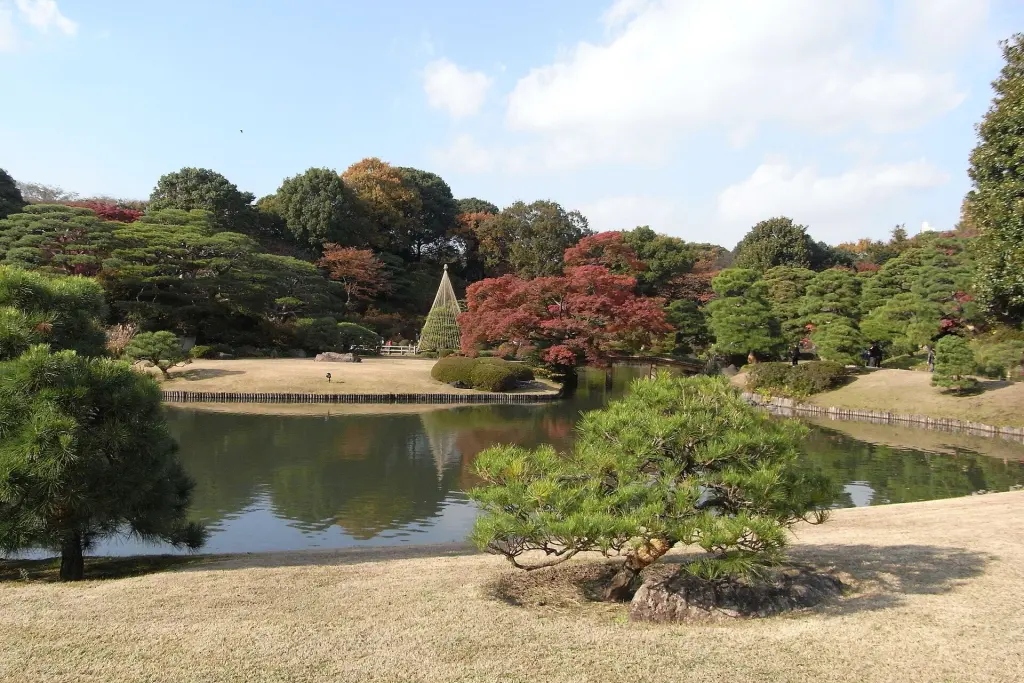
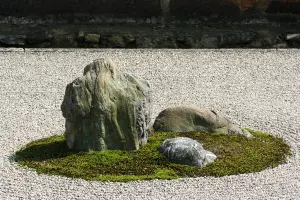
Image: Katsutoshi Seki / Wikimedia Commons · CC BY-SA 3.0
Japanese gardens are designed landscapes developed in Japan for residences, palaces, temples, shrines, tea practice, public institutions, and private enjoyment. They do not follow one timeless national formula. Across different periods, garden makers organized water, stones, plants, paths, buildings, and views to support ceremony, representation, movement, contemplation, and seasonal experience. Some gardens center on ponds and constructed hills; others use gravel and rock to evoke landscape without visible water. A roji guides tea guests through a sequence, while shakkei visually incorporates scenery beyond the site. Understanding Japanese gardens therefore requires attention to patronage, religious and literary ideas, local ecology, architecture, maintenance, and historical change.
Overview
| Japanese name | 日本庭園 |
|---|---|
| Romanization | Nihon teien |
| Classification | Designed landscape traditions |
| Historical settings | Palaces, residences, temples, shrines, tea spaces, and public gardens |
| Common elements | Water, stones, plants, paths, earthworks, architecture, and framed views |
| Major approaches | Pond gardens, hill gardens, dry landscapes, tea gardens, and strolling gardens |
Scope and diversity
Japanese garden is an umbrella term for many designed landscapes rather than a single style. Court gardens, Pure Land temple gardens, dry landscapes, tea gardens, daimyo strolling gardens, courtyard gardens, and modern public gardens were made for different users and activities. Their forms overlap, and one site may contain several approaches.
Features often presented as universal—stone lanterns, raked gravel, clipped pines, red bridges, or moss—belong to particular contexts. A garden is better understood through its date, patron, setting, intended movement, and maintenance history than through a checklist of supposedly Japanese objects.
Early gardens and continental exchange
Archaeology has revealed garden-like waterside facilities and stone-lined ponds from ancient Japan. By the Asuka and Nara periods, court culture and exchange with the Korean Peninsula and China contributed new techniques for ponds, streams, rock arrangements, and palace landscapes. These models were adapted to local topography and ceremony.
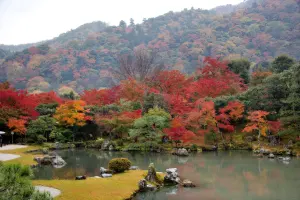
Heian-period aristocratic residences often placed a large pond south of the main hall. Gardens supported banquets, poetry, boating, ritual, and seasonal viewing. Buddhist Pure Land gardens used ponds, islands, and temple buildings to give spatial form to ideas of Amida Buddha's paradise.
Medieval temple gardens
From the medieval period, temple patrons, monks, skilled laborers, and specialist garden makers developed influential compositions around abbot's quarters and religious precincts. Rockwork, ponds, waterfalls, and views could refer to sacred mountains, islands, or landscape painting while also organizing drainage, access, and the relationship between buildings and grounds.
Karesansui became especially prominent in later medieval Zen temple settings, but Japanese temple gardens were never exclusively dry or exclusively Zen. Many Buddhist traditions used ponds, planted landscapes, and combinations of wet and dry features.
Tea and strolling gardens
Kenrokuen in Kanazawa developed beside the Maeda castle over successive generations. Its ponds, streams, bridges, tea houses, and seasonal maintenance make it a major strolling garden, but its present form was not produced in a single moment.
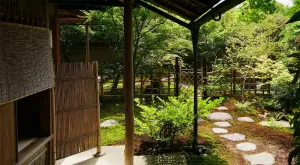
The growth of chanoyu in the sixteenth century encouraged the development of the roji, a garden route linking waiting areas and a tea house. Stepping stones, gates, water basins, planting, and controlled transitions helped prepare guests for the gathering rather than serving only as decoration.
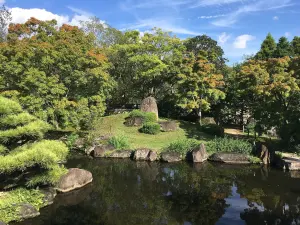
Large strolling gardens flourished under early modern warrior and domainal patrons. Ponds, bridges, islands, tsukiyama, tea houses, and paths created changing scenes encountered in sequence. Some incorporated literary or famous-place references, making walking a form of cultural interpretation.
Materials and design methods
Garden makers shape terrain and water while arranging stones, plants, gravel, paths, fences, and architectural edges. Techniques include asymmetry, concealment and reveal, changes of scale, framed views, miniature representation, and shakkei. These are compositional methods, not fixed rules applied identically at every site.
Materials are selected for structure, drainage, durability, seasonal effect, and cultural association. A stone may function as edging, a crossing, a symbolic form, or a visual anchor. Plants are continually pruned, replaced, and trained, so the garden's appearance depends on skilled intervention as much as on its initial design.
Buildings, viewpoints, and movement
Gardens and Japanese architecture are often composed together. Verandas, rooms, openings, gates, and paths determine where a scene is framed and how a visitor moves. Some gardens privilege a seated view from a hall; others unfold through a circuit or ceremonial approach.
The distinction between viewing and moving is not absolute. Even a garden intended for appreciation from a building has service paths and changing seasonal viewpoints, while a strolling garden also contains carefully positioned stopping places and framed scenes.
Preservation and living practice
Historic gardens survive through continuous maintenance, documentation, repair, water management, and adaptation. Trees grow and die, stones shift, ponds silt, sightlines close, and surrounding development can alter a composition. Conservation must decide how to balance historical evidence, living material, visitor access, and ecological change.
Japanese garden traditions also continue in new public, institutional, and private landscapes in Japan and abroad. These gardens may transmit techniques and cultural relationships, but they are contemporary works shaped by different climates, plants, labor systems, and audiences rather than exact replicas of a single Japanese original.
Sources
- Web Japan, Gardens Fact Sheet.
- Government of Japan, Japanese Gardens as Living Organisms.
- Japan National Tourism Organization, Japanese Gardens and Zen Gardens Around Japan.
- Nara National Research Institute for Cultural Properties, Heian Period Gardens.
- Nara National Research Institute for Cultural Properties, Archaeologically Investigated Japanese Gardens.
Last updated: