Judo
Keito-waza
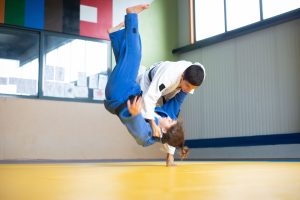
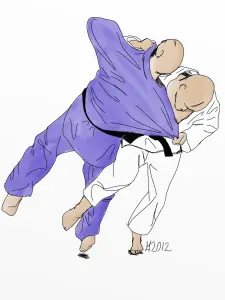
Image: Schnuffel2002 / Wikimedia Commons · CC BY-SA 3.0
Keitō-waza (系統技, “technique lineages” or “technique families”) is the title used by TokyoWaltz for an editorial learning index in Judo. It groups selected named techniques around five practical starting points: Seoi-nage, Uchi-mata, O-soto-gari, O-uchi-gari, and Ko-uchi-gari. The page helps readers compare related names, formal variations, and documented combinations without altering the Kodokan system. Kodokan classification remains primary: each technique keeps its official place within Nage-waza or Katame-waza and the appropriate technical category. Family membership is therefore a navigation aid, not a rank requirement, official taxonomy, or claim that two techniques are equivalent. Evidence-backed relationships may cross official categories because teaching, movement, and tactical response answer different questions from classification.
Overview
| Japanese label | 系統技 |
|---|---|
| Romanisation | Keitō-waza; page title: Keito-waza |
| Page type | Editorial learning index |
| Starting families | Seoi-nage, Uchi-mata, O-soto-gari, O-uchi-gari, and Ko-uchi-gari |
| Official reference | Kodokan classification remains unchanged |
Name and scope
TokyoWaltz uses Keitō-waza as a compact label for technique families. It is an editorial term on this Wiki, not a category published in the Kodokan list of 100 recognised techniques. The family cards below gather names that are useful to compare while learning.
The word keitō can indicate a line, system, or family. Here it describes a path through related material rather than descent from one original technique. Inclusion does not establish historical lineage or technical identity.
Official classification comes first
The Kodokan classifies 100 techniques as 68 Nage-waza and 32 Katame-waza, with further categories such as Te-waza, Koshi-waza, Ashi-waza, Osaekomi-waza, Shime-waza, and Kansetsu-waza. Those categories describe the official technical catalogue.
A Keito-waza family never replaces those fields. A technique can remain Ashi-waza, for example, while appearing beside a technique from another category when the comparison has a clear learning purpose.
Five starting families
The index begins with five widely documented hubs: Seoi-nage, Uchi-mata, O-soto-gari, O-uchi-gari, and Ko-uchi-gari. Each card identifies the hub, related named forms, and every member’s official category.
The selection is intentionally limited. It offers several clear routes into throwing relationships without suggesting that all Judo techniques belong to one of these five groups.
How membership is chosen
Membership is assigned only when the relation can be stated precisely. Typical grounds include an official name that denotes a recognised variation, a definition that distinguishes a closely related action, or published teaching material that presents a combination or comparison.
Each technique keeps a stable identifier so editorial grouping cannot silently change its official name or category. The evidence for directional combinations and counters belongs on Renraku-waza.
Variations and comparisons
A named variation and a similar-looking technique are not the same relation. A variation can belong to the naming structure of another technique, while a comparison may only help a learner notice a different grip, direction, support point, or attacking leg.
The cards therefore support comparison but do not erase distinctions found in Kodokan definitions. Readers should open each technique guide and check its official description before treating the family view as a summary of execution.
How to use the index
Start with one hub and compare the Japanese names, official categories, and defining actions of its members. Then use the linked guides to study entries and reactions appropriate to the learner’s level and local syllabus.
Grading sequences differ between organisations and age groups. The order shown here is not a belt syllabus or difficulty scale. Practice throwing techniques with suitable ukemi, space, mats, and qualified supervision.
Editorial boundary and revision
The index can be revised when stronger evidence clarifies a relationship. A changed family membership affects only this learning view; it does not revise Kodokan terminology, competition rules, kata membership, or grading requirements.
This separation lets the Wiki add useful navigation while keeping official facts and editorial interpretation visibly distinct.
Sources
Learning guide
Technique families
These groups connect related names, movements, and variations across the official categories.
Not an official classification: Technique Families are unofficial learning groups, not Kodokan classifications.
Seoi family
An unofficial learning group centered on Seoi-nage and its named forms.
Te-waza手技Core hub
Te-waza手技Family member
Te-waza手技Family member
Uchi-mata family
An unofficial learning group connecting Uchi-mata with named variations and counters across official categories.
Ashi-waza足技Core hub
Yoko-sutemi-waza横捨身技Family member
Ashi-waza足技Family member
Te-waza手技Family member
O-soto family
An unofficial learning group centered on O-soto-gari and closely named forms.
Ashi-waza足技Core hub
Ashi-waza足技Family member
Ashi-waza足技Family member
Yoko-sutemi-waza横捨身技Family member
Ashi-waza足技Family member
O-uchi family
An unofficial learning group centered on O-uchi-gari and its named counter.
Ashi-waza足技Core hub
Ashi-waza足技Family member
Ko-uchi family
An unofficial learning group centered on Ko-uchi-gari and closely named forms.
Ashi-waza足技Core hub
Yoko-sutemi-waza横捨身技Family member
Te-waza手技Family member
Last updated: