
Judo
Shido and Hansoku-make
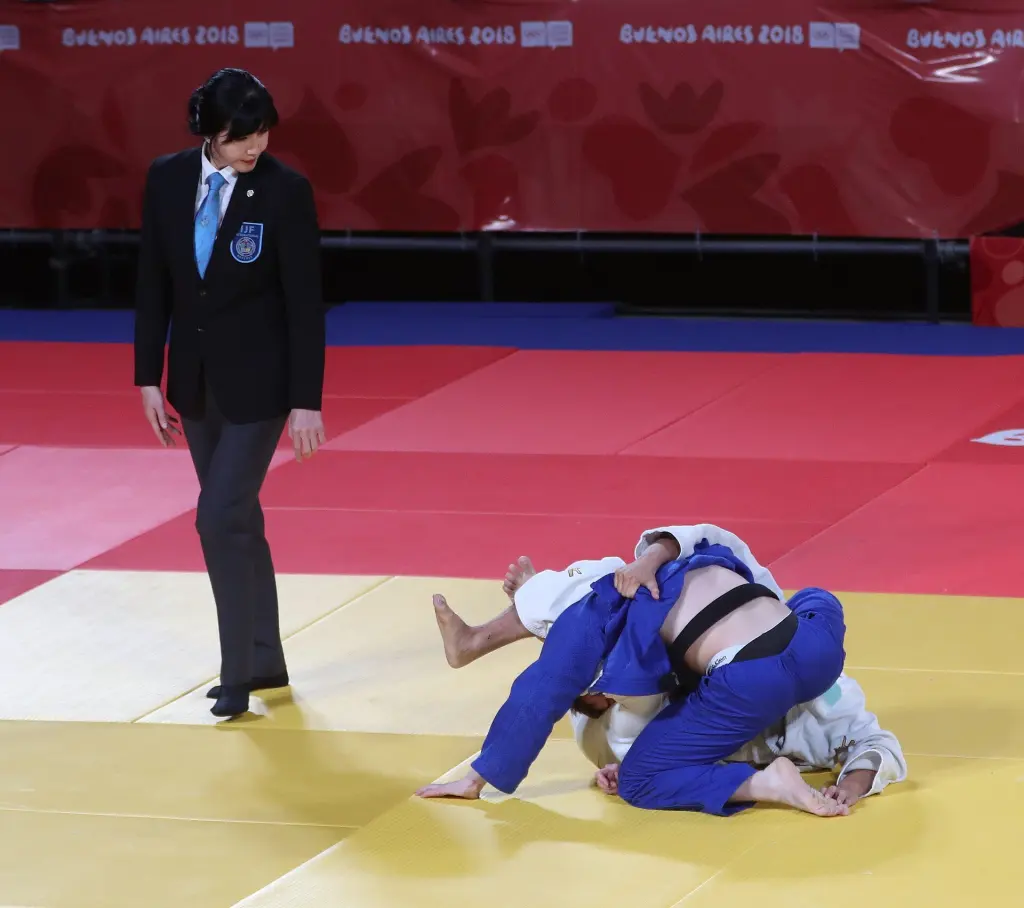
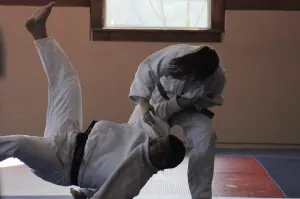
Image: Martin Rulsch, Wikimedia Commons / Wikimedia Commons · CC BY-SA 4.0
Shido (指導) and hansoku-make (反則負け) are the principal penalties in current International Judo Federation competition. Shido is given for a slight infringement such as passivity, false attack, negative gripping, or a non-dangerous illegal action. Two shido may accumulate; the third becomes hansoku-make, disqualifying the athlete from the contest. Hansoku-make can also be imposed directly for a grave or dangerous offence. The distinction matters because penalties do not add technical points to the opponent's score, a tied contest is not decided merely by one or two shido, and the consequences of direct hansoku-make can extend beyond the current match. This article describes the IJF SOR dated 14 August 2026 and notes Japanese application differences.
Overview
| Japanese | 指導; 反則負け |
|---|---|
| Reading | しどう; はんそくまけ |
| Romanisation | shido; hansoku-make |
| Meaning | Guidance/warning; loss by infringement |
| Martial art | Judo |
| Governing rules researched | IJF SOR, 14 August 2026 |
| Accumulation | Third shido becomes hansoku-make |
Shido
Shido is the sanction for the IJF's slight-infringement group. It covers lack of combativity, illegal actions judged non-dangerous, and repeated problems with attire, hair, or time-wasting. The referee stops the action when necessary, identifies the athlete, and demonstrates the reason.
Shido is not a score. If the opponent throws during an advantage sequence, the technical score is recorded and the penalty is applied according to the continuation rules.
Hansoku-make
Hansoku-make means loss by infringement and gives the opponent an ippon-equivalent victory. It can be indirect, through accumulated shido, or direct for a grave act.
Before direct hansoku-make at IJF level, the referee consults the head referee director or supervisor. The rules distinguish offences after which an athlete may continue in later rounds from acts against the spirit of Judo that remove the athlete from the competition.
Three shido
The first and second shido are warnings. The third is indirect hansoku-make: the athlete loses the contest but ordinarily may continue in the competition if the format offers another match.
A contest cannot be decided by one or two shido. If technical scores are tied at the end of regular time, the contest enters golden score with existing shido carried forward; the next relevant infringement may then produce the third penalty.
Direct hansoku-make
Dangerous head diving during a throwing action brings direct hansoku-make, but the 2026 SOR places it in a category that can allow the athlete to continue later in the competition. The immediate contest is still lost.
Kawazu-gake, kani-basami, dō-jime, joint locks to joints other than the elbow, high-risk standing arm locks or chokes, and actions endangering the neck or spine are listed among acts against the spirit of Judo. These direct disqualifications prevent further participation in the competition.
Common penalty situations
Common shido situations include avoiding kumi-kata, adopting an excessively defensive posture after gripping, stepping out without an attack, false attack, negative use of a non-classical grip, illegal leg contact, and repeatedly failing to correct judogi or hair after warning.
The rulebook evaluates context and intention. A grip, body position, or movement that is permitted as part of a genuine attack may be penalised when used only to block, delay, or mislead.
False attacks
A false attack gives the appearance of attacking without a realistic intention or possibility to throw. IJF examples include entering without kumi-kata and immediately releasing, repeated fake attacks that do not break balance, or inserting a leg only to block the opponent's attack.
A failed genuine technique is not automatically false. Referees assess grip, direction, balance breaking, continuation, and whether the action had a realistic throwing purpose.
Passivity
After conventional kumi-kata is established, the current SOR allows up to 45 seconds before attack when there is positive progression. An athlete who does not seek attack, remains excessively defensive, or avoids being gripped can receive shido sooner.
The number is not a guaranteed possession period. Positive movement and technical intention determine whether time is allowed; negative conduct can be penalised independently.
Gripping infringements
Current rules allow same-side, cross, belt, pocket, pistol, and collar-and-lapel grips when the athlete is positive. Holding one of these grips to force a bent posture or block action is shido. Breaking with one hand is allowed; breaking with two hands without retaining a grip is shido.
Other shido include defensive sleeve-end holding, finger interlocking to prevent action, covering the lapel, blocking the opponent's gripping hand, breaking with the knee or leg, and gripping inside the trouser cuff while standing. Kumi-kata explains the technical context.
Dangerous actions
The sanction depends on risk. A lower-risk standing arm lock or kata-sankaku throwing action may receive shido; the same family of action with a high risk of injury or no escape becomes hansoku-make. Referees are required to protect the neck, spine, and joints rather than apply a technique name mechanically.
Cadet rules add specific safety penalties: use of the head to throw or defend receives shido, and reverse seoi-nage is not scored and is penalised. Youth and national rules may add further restrictions.
Historical rule changes
Penalty structures have changed repeatedly. Earlier international rules used several penalty levels and sometimes converted penalties into scoring advantages. The modern shido system separates penalties from technical points and reserves the contest result for the third shido or direct hansoku-make.
Gripping and leg-grab interpretations have also changed. A historical match should be analysed under the rule version in force at the time; present sanctions should not be projected backward as timeless Judo law.
Current rules
Current IJF rules researched: 14 August 2026. The AJJF applied its 2026 interpretation to hosted events from 1 April 2026, while individual Japanese event notices may adjust details, especially for youth and non-AJJF-hosted competition.
This article is an explanatory summary, not a substitute for the SOR's illustrated examples and supervisory interpretations. Coaches, referees, and competitors should use the current official PDF and event outline.
Sources
- International Judo Federation, Sport and Organisation Rules, version 14 August 2026.
- International Judo Federation, Rules documents.
- All Japan Judo Federation, Refereeing regulations and rules.
- All Japan Judo Federation, Application of the 2025–2028 IJF rules from 1 April 2026.
- All Japan Judo Federation, Handling of yuko at non-AJJF-hosted competitions, 21 April 2026.
- All Japan Judo Federation, 2025–2028 IJF rule changes.
- Murayama Terushi, Changes in the refereeing rules of Judo and Kendo, Japan Journal of Budo.
- Kodokan Judo Institute, Promotion Examination Text: Kodokan Judo, 2026.
- Ito Kiyoshi, Hirose Nobuyoshi and Maekawa Naoya, Tactical gripping actions in Judo, J-STAGE.
- Ito Kiyoshi et al., Changes in gripping tactics after IJF rule revisions, J-STAGE.
Last updated:
_34.jpg)