Dojo & Institutions
Ryōgoku Kokugikan
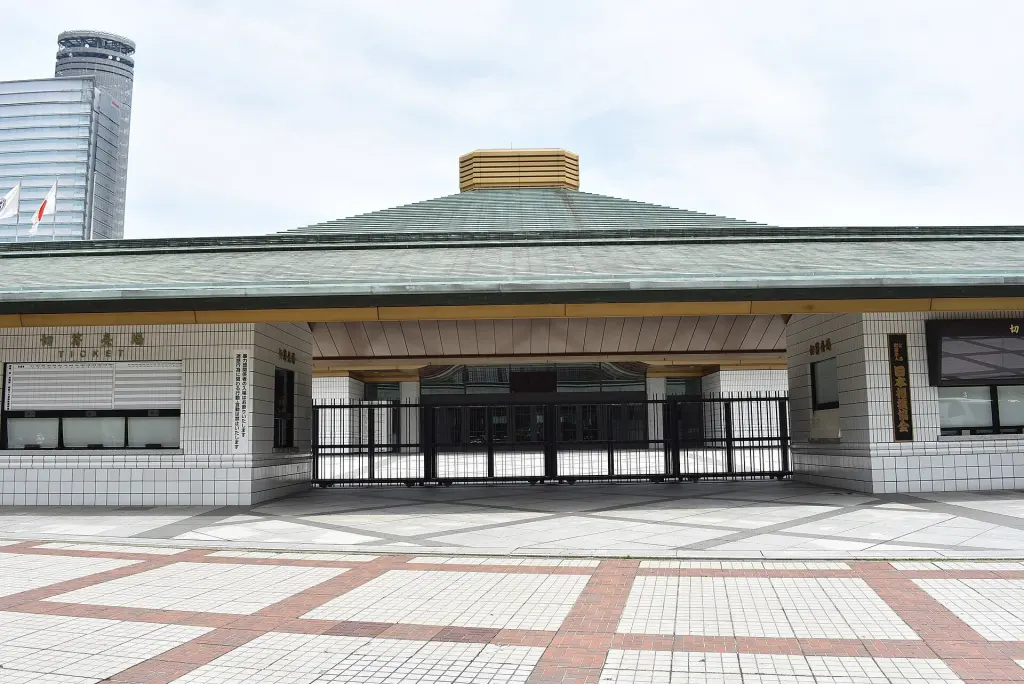
Image: 江戸村のとくぞう / Wikimedia Commons · CC BY-SA 4.0
The 30-second model
One arena connects the bout, the institution, and the city.
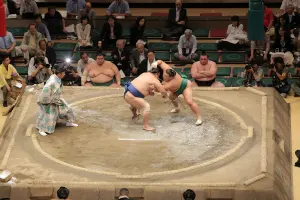
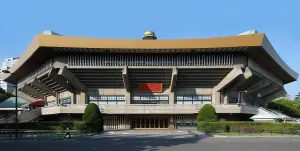
Ryōgoku Kokugikan is the Japan Sumo Association’s main arena and headquarters. The current building opened in January 1985 beside JR Ryogoku Station. It hosts Tokyo’s January, May, and September Grand Tournaments, contains the Sumo Museum, and can operate as a multipurpose hall outside association events. Read it at three scales: the central dohyō where a bout is decided; the building where ranking, ceremony, administration, and preservation meet; and the Ryōgoku neighbourhood that has framed organised sumo for centuries.
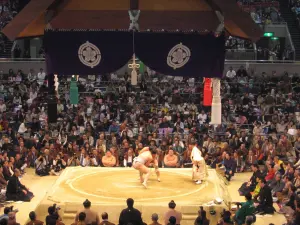
One elevated clay platform focuses every sightline.
Arena, headquarters, museum, and event infrastructure.
Stations, stables, museums, restaurants, crafts, and river history.
- Japanese
- 両国国技館
Ryōgoku Kokugikan - Current hall
- Opened January 1985
- Capacity
- 11,098
- Tokyo honbasho
- January · May · September
- Institution
- Japan Sumo Association headquarters
- Access
- About one minute from JR Ryogoku Station
01Annual rhythm
Tokyo returns to the same arena three times a year.
Grand Sumo’s six official tournaments rotate through four cities. Kokugikan hosts the three Tokyo events; Osaka, Nagoya, and Fukuoka host the other three.
Tokyo · Kokugikan
Tokyo · Kokugikan
Tokyo · Kokugikan
Each Grand Tournament lasts fifteen days. Exact dates, ticket releases, and access conditions change; use the official tournament schedule for the current year.
02Inside a honbasho
The same ring grows in status through the day.
The arena does not present unrelated matches in a random order. The schedule rises through the banzuke, connecting time of day to professional hierarchy.
Developmental divisions begin while the building is still relatively quiet.
The programme crosses the salaried sekitori boundary.
Ring-entering ceremonies and the highest-ranked wrestlers bring the day to its climax.
Use Sumo Ranks — Yokozuna to Jonokuchi to decode this progression, and Great Sumo Tournaments for the complete event cycle.
03Building logic
Everything points back to the central dohyō.
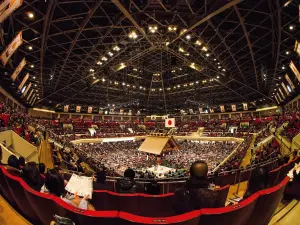
The arena’s floor, traditional box seating, and upper chair seating create different relationships to the ring while preserving a single visual centre.
11,098 capacity
A purpose-built setting for Grand Sumo’s Tokyo tournaments and association ceremonies.
Headquarters & museum
Administration and historical preservation occupy the same complex as the public spectacle.
Movable floor seating
The arena can be reconfigured for other events when the association calendar permits.
04Place history
The current building is one chapter in a longer Ryōgoku story.
Organised sumo, purpose-built halls, wartime disruption, the Kuramae era, and the 1985 return belong to distinct periods. The name “Kokugikan” should not collapse those buildings into one continuous structure.
- 1781–1909
Ekōin tournaments
Fund-raising sumo events at Ekōin established Ryōgoku as an important place for organised public competition.
- 1909
First Ryōgoku Kokugikan
A permanent hall replaced the vulnerability and expense of repeated temporary outdoor venues.
- 1954
Kuramae Kokugikan
The post-war arena opened in Kuramae together with the Sumo Museum.
- January 1985
Current Ryōgoku Kokugikan
The present hall opened and the museum moved with it, returning the main Tokyo arena to Ryōgoku.
- Today
Three Tokyo honbasho
January, May, and September tournaments anchor the building’s public calendar.
05Preservation
The Sumo Museum keeps the institution’s material memory inside the arena.
Its collections turn the building from an event shell into a research and preservation site. Displays change because one gallery cannot show the full collection at once.
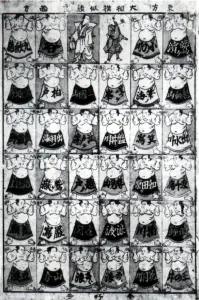
Prints, rankings, and ceremonial objects
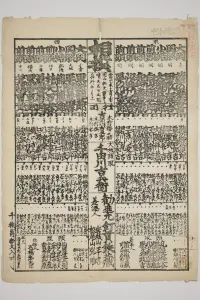
Nishiki-e woodblock prints, banzuke, kesho-mawashi, and other historical materials document how sumo has been represented, organised, and performed.
Check the calendar first
Admission is generally free on scheduled non-tournament opening days. During a Tokyo Grand Tournament, an arena ticket is required. Displays, closures, and hours can change.
The museum’s official calendar is the reliable visit check. The gallery is on the first floor of Kokugikan and has no separate car park.
06Orientation
Separate the district name from the street address.
The venue is universally associated with Ryōgoku, but its official postal address is in Yokoami, Sumida. Both names can appear in reliable directions without contradiction.
- Address
- 1-3-28 Yokoami, Sumida-ku, Tokyo 130-0015
- JR access
- About one minute from JR Ryogoku Station
- Subway access
- About five minutes from Toei Oedo Line Ryogoku Station, Exit A4
- Before travelling
- Check the current tournament schedule, ticket terms, seat plan, museum calendar, and event restrictions.
The official pages provide the changing details: tournament schedule, seat views, and Sumo Museum information.
Sources and further reading
Last updated: