Everyday Life
Ramen Shop Culture in Japan

Image: ウィキ太郎 (Wiki Taro) / Wikimedia Commons · CC0 1.0
Overview
The bowl is part of a larger encounter.
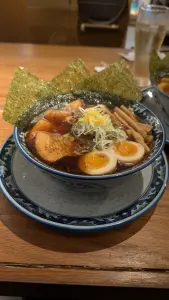
Ramen shop culture in Japan comprises the social practices, spaces and working routines surrounding restaurants that serve ramen. The subject extends beyond a bowl’s ingredients to include ordering, seating, the pace of a meal and the identity of a particular shop. Ticket machines, counters and regional specialities are familiar features, but they are not universal requirements. Ramen developed through Chinese noodle traditions, modern urban life and postwar economic change; later restaurants and tourism gave individual styles new prominence. Understanding that history helps place the meal within everyday Japanese life. The most useful practical principle is to follow the restaurant’s own instructions rather than assume that every shop uses the same system.
The shop sets the service sequence.
Counters and tables shape how people eat.
Attention to staff and neighbours matters more than performance.
At a glance
- Japanese term
- ラーメン店; rāmen-ten
- Focus
- Restaurant practices and social setting
- Common ordering methods
- Meal tickets or orders taken by staff
- Common seating
- Counters, tables or a mixture
- Sources of variation
- Region, shop, menu and service model
- Historical setting
- Modern urban food culture with Chinese roots
01
Urban meals became a field of specialisation
George Solt’s historical study traces ramen’s movement from food associated with urban workers to a symbol of Japanese cuisine. His account links that change to wheat supplies, postwar conditions, industrial labour and later national representation. Shop culture is therefore more than a timeless etiquette: it developed alongside changes in work, cities and the food economy.
02
Ordering follows the shop’s service system
Many ramen restaurants use a ticket machine, while others take orders directly. Japan National Tourism Organization describes buying a ticket, collecting change and handing the ticket to staff. The position of the machine, queue and seating arrangements varies. Waiting for a staff instruction is often more reliable than copying a sequence seen at another restaurant.
Choose
- Typical action
- Read the menu and local instructions.
- What varies
- Confirm how this shop handles ordering.
Order
- Typical action
- Buy a ticket or speak to staff.
- What varies
- Use the method the restaurant provides.
Sit
- Typical action
- Follow the seating arrangement.
- What varies
- Counters and shared space affect service.
Finish
- Typical action
- Follow payment and clearing instructions.
- What varies
- Advance payment does not apply everywhere.
03
Counters and tables shape the encounter
A counter can place cooking and dining close together, making the preparation of bowls visible. Tables allow a different arrangement for groups. Neither form defines authenticity. The same general dish can be served in a small specialist restaurant, a larger chain or a museum setting, with different expectations about waiting, conversation and the length of a visit.
04
Regional names and individual shops coexist
Shin-Yokohama Ramen Museum brings restaurants with different regional and individual identities into one setting. Its account of Kumamoto ramen, for example, connects a regional name with the history of a particular shop. Such examples show why a regional label is an introduction rather than a complete recipe: individual cooks still make distinctive choices.
05
Courtesy is situational rather than theatrical
JNTO notes that slurping noodles is not considered rude, but that does not make loud slurping a test of correct participation. Consideration for other diners and attention to staff instructions are more useful than performing an imagined ritual. Photography, sharing, extra orders and seating requests should follow the specific shop’s stated policy.
06
Restaurants can also become destinations
Opened in 1994, Shin-Yokohama Ramen Museum combines regional restaurants with an exhibition on ramen history. Its recreated streetscape refers to 1958, linking the restaurant experience with postwar memory and the development of instant noodles. This is a curated visitor setting, not a claim that all contemporary ramen shops resemble a mid-century street.
07
The shop and the packaged product have different stories
Restaurant ramen and instant noodles are historically connected but involve different production and eating arrangements. A shop meal brings cooks, service systems and a particular place into the experience. Regional discussions, including Hokkaido Food Culture, help explain how noodle restaurants fit within a wider local food landscape.
Sources
Last updated: