Karate
Pinan Shodan
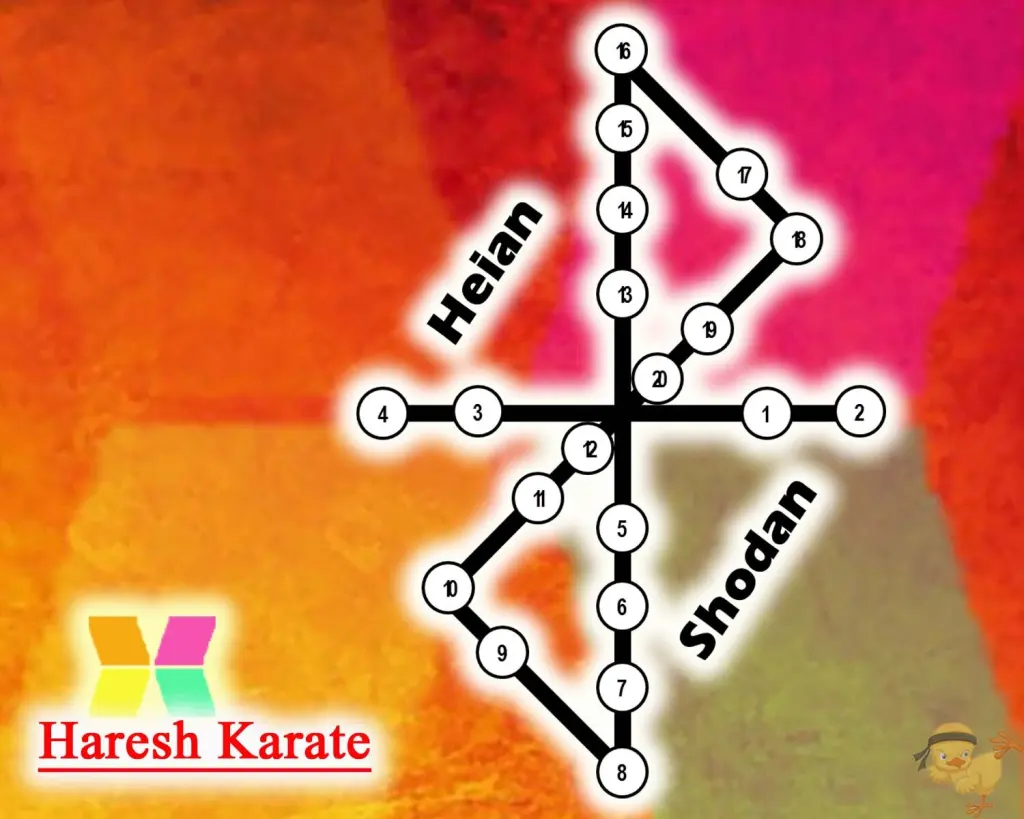
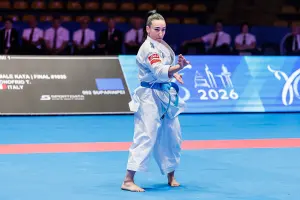
Image: Haresh karate / Wikimedia Commons · CC BY-SA 4.0
Pinan Shodan (平安初段) is the first-named form in the five-kata Pinan family associated with Itosu Ankō and Shuri-te. It remains visible in Okinawan schools and in organisations such as Wadō-ryū, while Shotokan and some Shitō-ryū federation curricula use the reading Heian for related material. Modern ordering and technique are not uniform: a kata called Pinan Shodan should not automatically be performed or described as Heian Shodan. The All Japan Karatedo Federation's educational material explicitly separates Wadō-ryū Pinan Shodan–Godan from Shotokan and Shitō-ryū Heian groups, and current Okinawa tournament rules list Pinan Shodan in the Shuri/Tomari category. This entry preserves that distinction while explaining the historical relationship.
JKF official kata videos
Official reference
Use these federation reference films to compare named versions. Each video documents one JKF-published model for the named tradition; it does not define every dōjō or lineage.
Wadō-ryū和道流
Pinan Shodan
Karate Kihon Kata #4
JKF framework
Where this kata sits
Official competition placement and broader guide context are shown separately.Official JKF position
Basic kata
- Wadō
The JKF Basic Kata reference places the five Pinan forms in the Wadō-ryū column.
Guide context
Heian / Pinan
- Wadō
Heian and Pinan are historically related name families. Modern sequence, numbering and execution remain version-specific.
Overview
| Japanese | 平安初段 |
|---|---|
| Reading | ピンアンしょだん |
| Romanisation | Pinan Shodan |
| Classification | Karate kata; Pinan family |
| Attributed creator | Itosu Ankō, according to JKF |
| Historical setting | Meiji-period Okinawa; Shuri-te line |
| Current JKF example | Wadō-ryū basic kata |
| Related mainland name | Heian Shodan, with version and order differences |
Name and scope
Pinan Shodan is commonly written with the same 平安初段 characters used for Heian Shodan. The reading Pinan marks an Okinawan or style-specific transmission, while shodan means first level.
The same characters do not guarantee the same modern sequence. School, teacher and organisation should be named before giving counts, stance dimensions or an authoritative embusen.
Itosu and the Pinan family
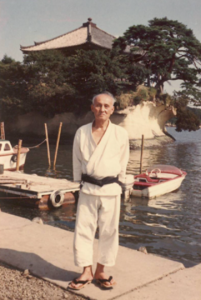
The JKF attributes the Pinan family to Itosu Ankō in the Meiji period and identifies the five forms as Shuri-te-line basics adopted by many schools and associations.
This modern educational role is central to their history. It also means that transmission through schools and organisations produced editing, standardisation and different teaching orders.
Relationship with Heian Shodan
The JKA manual states that the Heian forms were originally called Pinan, documenting the historical relationship in Shotokan teaching. Funakoshi's mainland publications helped establish the Heian name and particular modern presentation.
Relationship is not identity. Present-day Wadō Pinan Shodan and JKA Heian Shodan should not be compared by name alone, and even the order attached to “first” and “second” can differ among traditions.
Wadō-ryū Pinan Shodan
Continue the JKF Wadō-ryū Basic Kata sequence with Pinan Nidan; the separate guide keeps its Heian relationship and version boundaries explicit.
The JKF's 2022 educational videos identify Pinan Shodan through Godan as Wadō-ryū Basic Kata 4. Its 2025 style seminar again taught those five Pinan forms as the Wadō basic group.
This is a clear current reason to retain a separate Pinan Shodan entry. It does not mean that JKF competition presentation defines all Wadō-ryū Karate branches.
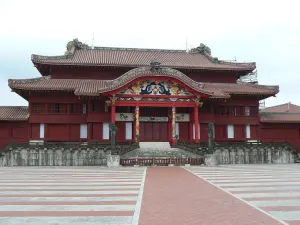
Okinawan and Shuri/Tomari context
The Okinawa Karate Information Center lists Pin-an Shodan among recorded Shuri/Tomari kata while cautioning that many more kata and versions are practised in Okinawa than its competition set.
The 2026 Okinawa tournament also lists Pinan Shodan in the Shuri/Tomari appendix for all of its stated junior groups. That establishes event recognition, not a universal rank requirement.
Embusen and technical comparison
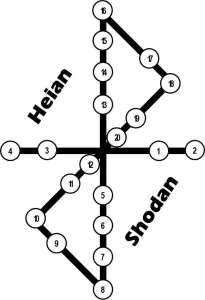
Pinan Shodan is often introduced through a compact directional pattern that connects turns, receiving actions, stepping and counterattacks. Exact technique names, starting side, stance and count depend on the version.
An illustrative pattern diagram helps organise travel but cannot show posture, gaze, breathing, tempo or transitional body movement. It should be checked against the student's own curriculum.
Bunkai and beginner pedagogy
As a teaching kata, Pinan Shodan reconnects isolated basics into a continuous sequence. That does not reduce every turn or receiving form to a single simple block-and-punch explanation.
Bunkai can introduce distance, angle, control and counteraction progressively. The drill should be attributed to the teacher or lineage when it goes beyond what the solo form alone establishes.
How to study it safely
Confirm whether the curriculum uses Pinan or Heian names and which form it calls Shodan before memorising a sequence. Practise turns slowly with enough space and keep stance depth within comfortable ankle, knee and hip range.
Partner applications need agreed targets, resistance and contact. Avoid correcting one style solely with another style's video or diagram, even when the kanji and family history overlap.
Sources
- All Japan Karatedo Federation, Heian and Pinan.
- All Japan Karatedo Federation, Free-viewpoint educational videos.
- All Japan Karatedo Federation, 2025 style-specific basic and kata seminar.
- 3rd Okinawa Karate World Tournament 2026, Competition Rules and Regulations.
- Japan Karate Association, Technical Manual for the Instructor.
- Tooru Kadekaru, The origins of the modern kata in karate-do.
Last updated: