Other Martial Arts
Mixed Martial Arts in Japan
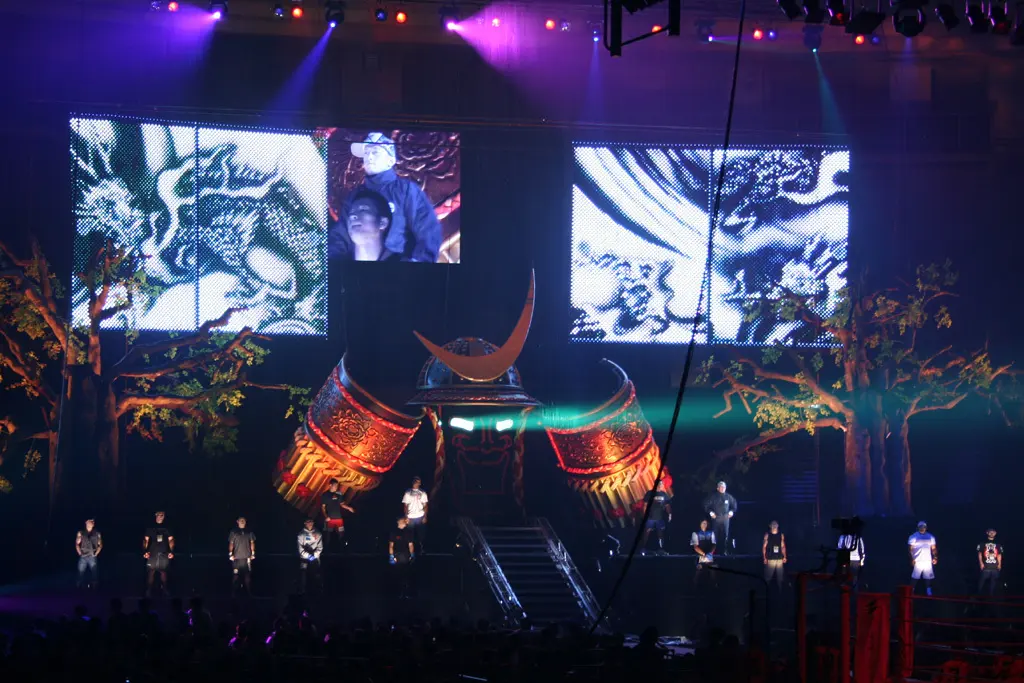
Image: thiswholeworld / Wikimedia Commons, originally published on Flickr · Creative Commons Attribution-ShareAlike 2.0 Generic
Mixed martial arts in Japan refers to combat sports that permit a regulated combination of striking, throws, takedowns, and submission grappling. In Japanese it is commonly called sōgō kakutōgi, meaning “comprehensive” or “combined” combat sport. The modern scene developed through several routes, including shoot-style professional wrestling, Shooto’s attempt to codify a competitive system, Pancrase’s hybrid-wrestling format, international vale tudo, and large-scale promotions such as PRIDE. These lineages overlap, but they are not interchangeable, and modern bouts are contests governed by promotion- or commission-specific rules rather than unrestricted fights. Japan’s MMA history also intersects with judo, wrestling, karate, kickboxing, sambo, and Brazilian jiu-jitsu while remaining distinct from each of them. Rings, cages, scoring systems, legal techniques, and event presentation have varied substantially by organization and period.
Overview
| Japanese name | 総合格闘技 |
|---|---|
| Romanization | Sōgō kakutōgi |
| Common abbreviation | MMA |
| Core technical ranges | Striking, clinch, takedowns, and ground grappling |
| Formative organizations | Shooto and Pancrase |
| Major event eras | PRIDE Fighting Championships and RIZIN Fighting Federation |
Definition and scope
MMA is a full-contact combat sport in which competitors can use techniques from several established striking and grappling systems within a written ruleset. Victory may come by knockout, technical knockout, submission, judges’ decision, disqualification, or another result defined by the organizer. Weight classes, round length, equipment, medical checks, judging, and prohibited actions make the contest a regulated sport rather than “fighting without rules.”
The Japanese term sōgō kakutōgi became a broad label covering organizations with different histories. Shooto also names its own competitive system; Pancrase began with a distinctive hybrid-wrestling identity; PRIDE used a ring and rules unlike the unified rules common in North America; and RIZIN presents MMA together with other combat-sport bouts. Treating all of these formats as identical obscures important changes in technique and governance.
Mixed contests and shoot-style roots
Japan had long staged contests and exhibitions across style boundaries, but these should not be retroactively grouped into one continuous MMA institution. Professional wrestling was especially important to the modern scene. From the 1970s and 1980s, promoters and wrestlers cultivated interest in matches presented as tests between martial systems, while shoot-style wrestling emphasized realistic striking, throws, and submissions within professional-wrestling performance.
The border between performance and competition was historically contested. Some organizations moved toward independently regulated competitive bouts, while others retained staged or hybrid presentation. Modern MMA in Japan emerged from this environment together with international exchanges in kickboxing, catch wrestling, judo, sambo, karate, and Brazilian vale tudo. No single match or school alone created the sport.
Shooto and codification
Satoru Sayama founded Shooto in 1984 with the stated aim of developing an organized competitive system that combined striking and grappling. Its official account emphasizes written rules, purpose-built equipment, separated roles for association, commission, and promoter, and a pathway from amateur competition to ranked professional classes and world championships. The first professional events followed in the late 1980s.
Shooto’s importance lies not only in allowing varied techniques but in treating the format as a sport that required officiating, athlete development, rankings, and repeatable rules. Its specific regulations have changed over time and by class. “Shooto” therefore refers both to a historical movement and to institutions that continue to sanction bouts; it is not simply an old synonym for every Japanese MMA event.
Pancrase and hybrid wrestling
Masakatsu Funaki and Minoru Suzuki founded Pancrase in 1993 after careers in shoot-style professional wrestling. The organization described its approach as hybrid wrestling or “total fight,” combining elements of wrestling, judo, boxing, sambo, karate, jujutsu, kempo, and Muay Thai. Its first event was held on 21 September 1993, and the King of Pancrase championship followed in 1994.
Early Pancrase rules and presentation differed from later mainstream MMA: open-hand strikes to the head, rope escapes, knockdown counts, and boots were among its recognizable features. Pancrase later adopted rounds, gloves, revised weight divisions, and other changes. Its history demonstrates that MMA rules evolved through particular organizations rather than appearing as a single finished global standard.
PRIDE and the mass-event era
PRIDE Fighting Championships began in 1997 and became the most visible symbol of Japan’s large-arena MMA era. It brought Japanese and international fighters into elaborate ring-based events and staged tournaments as well as divisional contests. Long opening rounds, whole-fight judging, and a set of legal attacks that differed from North American rules gave PRIDE a distinct sporting identity and tactical environment.
PRIDE also connected MMA to Japanese television, professional-wrestling spectacle, and New Year combat-sports programming. Its commercial history should not be confused with a neutral governing body: it was a promotion. The company was sold to the owners of the Ultimate Fighting Championship in 2007, ending its original operation, but its event aesthetics, rule debates, and fighter histories remain central to accounts of Japanese MMA.
Rules, rings, and cages
Japanese MMA has no single timeless ruleset. Organizations have differed over ring or cage boundaries, round structure, judging by round or across the whole contest, rope escapes, footwear, elbow strikes, knees or kicks to grounded opponents, and procedures after an athlete moves outside the competition area. These differences change strategy as well as visual presentation.
RIZIN, for example, identifies the ring and its MMA rules as defining features of its events, and its current rules prioritize damage, then aggressiveness, and then control when judging the fight as a whole. Shooto and Pancrase use their own regulations and competitive structures. A bout should therefore be described with its date and governing rules rather than judged by a generic idea of “Japanese rules.”
After PRIDE and the current promotion ecology
The end of PRIDE did not end MMA in Japan. Shooto and Pancrase continued, while other promotions and regional circuits developed athletes and events. RIZIN Fighting Federation launched in the mid-2010s as a federation and event producer presenting MMA together with kickboxing and other formats. Its large-event model consciously recalls parts of Japan’s earlier spectacle tradition while operating in a different media and international environment.
Contemporary Japanese fighters may move among domestic organizations and overseas promotions, and gyms commonly train the combined skills required by MMA rather than representing only one inherited style. Amateur pathways, women’s divisions, streaming, international matchmaking, and rule alignment coexist with organization-specific practices. The scene is therefore plural: no single promotion represents all MMA in Japan.
Judo, jujutsu, wrestling, and striking lineages
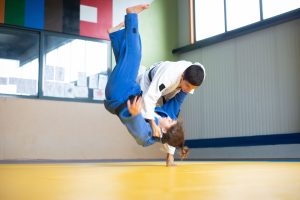
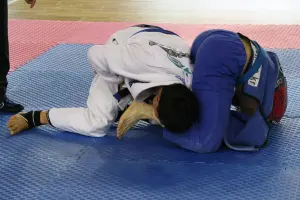
Japanese MMA draws techniques and athletes from judo, wrestling, karate, kickboxing, sambo, catch wrestling, Brazilian jiu-jitsu, and other systems. Throws and pins may resemble judo or wrestling, and submissions may share mechanics across jujutsu, catch wrestling, and Brazilian jiu-jitsu. Their tactical meaning changes when strikes, cage or rope boundaries, time limits, and MMA scoring are added.
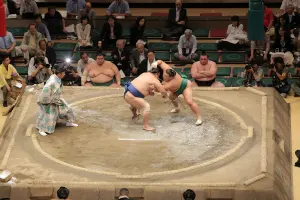
This borrowing does not make the source arts obsolete or interchangeable. Judo, sumo, karate, and other disciplines have independent rules, institutions, pedagogies, and cultural histories. Likewise, MMA training increasingly functions as its own integrated practice. Athlete biographies can reveal lineages, but a familiar technique alone does not establish that an entire promotion descends from one traditional art.
Safety, regulation, and public debate
MMA permits intentional techniques that can cause injury, making medical supervision, stoppages, matchmaking, weight management, recovery periods, equipment, and enforcement central to its legitimacy as a sport. Formal rules reduce risk but cannot remove it. Standards have varied historically among promotions, and promotional claims should not be treated as independent evidence of safety.
Scholarly debate also distinguishes regulated combat sport from interpersonal violence while questioning whether consent and rules are sufficient ethical justification. In Japan, the tension between sport, entertainment, and professional-wrestling presentation has been especially visible. A neutral history should acknowledge both technical and institutional development and the continuing arguments about athlete welfare, governance, and spectacle.
Sources
Last updated: