
Judo
Judo Weight Classes
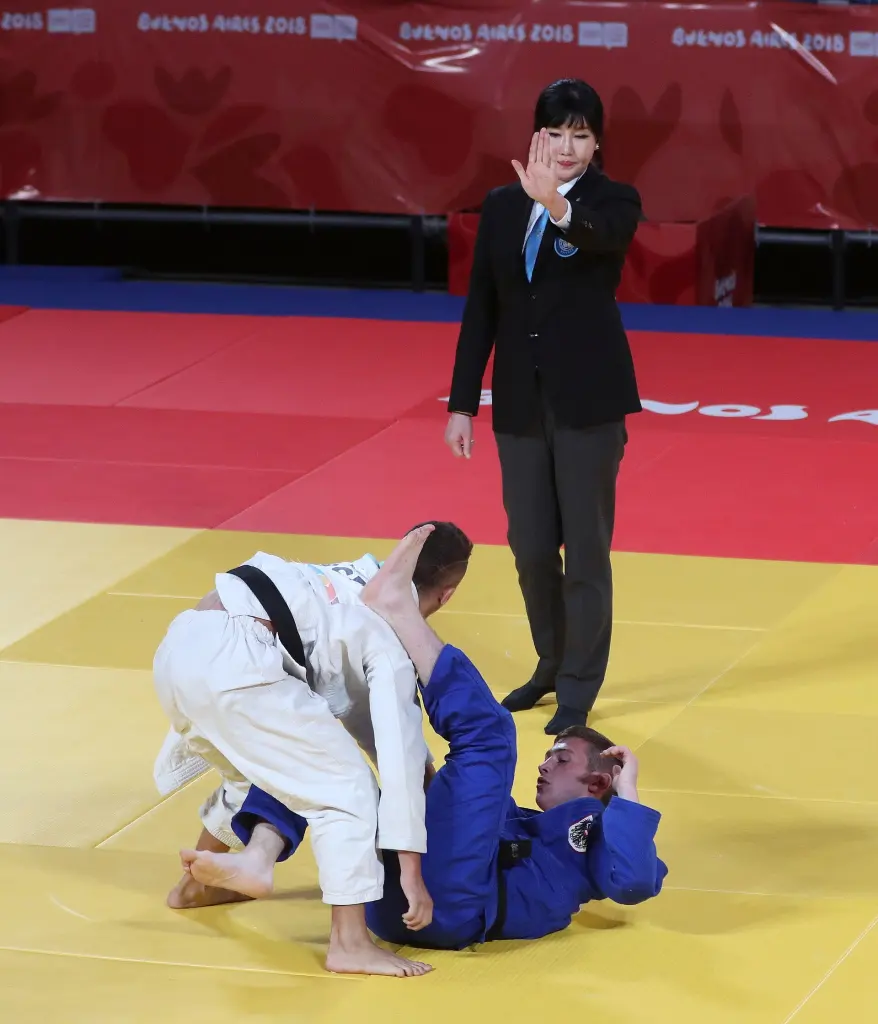
Image: Martin Rulsch, Wikimedia Commons / Wikimedia Commons · CC BY-SA 4.0
Judo weight classes divide competitors by body mass so that most modern international contests are held within defined size ranges. Under the International Judo Federation's 14 August 2026 rules, senior and junior individual competition uses seven women's and seven men's categories; cadets use eight for each sex, and team events use separate grouped divisions. Olympic individual Judo uses the seven senior categories, while mixed-team competition combines them into six team categories. Weight classes matter because they shape eligibility, training, selection, and tournament strategy, but they are not universal to every Judo event. Japan continues to hold major open-weight competitions, and category limits have changed historically. This page should therefore be maintained as a rule-sensitive reference.
Overview
| Martial art | Judo |
|---|---|
| Governing rules | IJF SOR |
| Rules researched | 14 August 2026 |
| Senior individual categories | Seven women; seven men |
| Cadet individual categories | Eight women; eight men |
| Article status | Update-target: category limits may change |
Senior men's categories
The IJF also recognises an open category in its general senior and junior table, but open weight is not one of the seven Olympic individual events.
| Category | Meaning |
|---|---|
| −60 kg | Up to and including 60 kg |
| −66 kg | Over 60 kg and up to 66 kg |
| −73 kg | Over 66 kg and up to 73 kg |
| −81 kg | Over 73 kg and up to 81 kg |
| −90 kg | Over 81 kg and up to 90 kg |
| −100 kg | Over 90 kg and up to 100 kg |
| +100 kg | Over 100 kg |
Senior women's categories
As with men, the SOR includes an open category outside the normal seven-category sequence, subject to the event programme.
| Category | Meaning |
|---|---|
| −48 kg | Up to and including 48 kg |
| −52 kg | Over 48 kg and up to 52 kg |
| −57 kg | Over 52 kg and up to 57 kg |
| −63 kg | Over 57 kg and up to 63 kg |
| −70 kg | Over 63 kg and up to 70 kg |
| −78 kg | Over 70 kg and up to 78 kg |
| +78 kg | Over 78 kg |
Olympic categories
Olympic individual Judo uses the seven senior men's and seven senior women's categories listed above. The categories determine qualification places and the event in which an athlete competes; they are not dan grades or technical divisions.
Women's Judo became an official Olympic medal programme in 1992. The present seven-category ranges developed through later revisions and should not be projected unchanged onto earlier Games.
Junior categories
Under the 2026 IJF SOR, juniors use the same seven individual categories as seniors: men from −60 kg through +100 kg and women from −48 kg through +78 kg. The age definition and event eligibility remain separate from the weight limit.
Junior team competition may group athletes into fewer categories. A junior's individual class therefore does not automatically identify the category contested in a team event.
Cadet categories
Cadet categories provide lighter lower limits and eight divisions for each sex. A cadet entering a junior or senior event follows that event's age-group rules, including its categories and safety provisions.
| Cadet men | Cadet women |
|---|---|
| −50 kg | −40 kg |
| −55 kg | −44 kg |
| −60 kg | −48 kg |
| −66 kg | −52 kg |
| −73 kg | −57 kg |
| −81 kg | −63 kg |
| −90 kg | −70 kg |
| +90 kg | +70 kg |
Team competition
The mixed-team event in Judo at the Asian Games uses grouped team categories alongside fourteen separate individual weight events, so the two entry structures should be read independently.
The senior and junior mixed-team categories are women −57 kg, men −73 kg, women −70 kg, men −90 kg, women +70 kg, and men +90 kg. Olympic mixed teams use the same six match categories, with eligibility drawn from grouped individual Olympic divisions.
Cadet mixed teams use women −48 kg, men −60 kg, women −63 kg, men −81 kg, women +63 kg, and men +81 kg. Non-mixed senior and junior team events in the SOR use five categories: women −52, −57, −63, −70, +70 kg; men −66, −73, −81, −90, +90 kg.
Team category labels are not identical to every individual division. An athlete may be eligible for a grouped team category because of the individual category in which the athlete was entered.
Historical changes
Early Kodokan and Japanese championship competition was not organised by the present international weight limits. Weight-class proposals became central during Judo's internationalisation; the 1961 IJF discussions and the 1964 Tokyo Olympic programme helped establish classified competition alongside an open category.
The international system expanded from three Olympic weight categories plus open in 1964 to five and then seven classes. Olympic open weight was later removed, and women's Olympic competition began as a demonstration in 1988 before official medal events in 1992. The numerical boundaries have also changed.
Why weight classes exist
Weight classes reduce the systematic advantage that greater mass can create in a contact sport and allow more athletes to compete under comparable physical conditions. A 1961 Japanese study of major competitions found that large differences in physique strongly favoured heavier competitors.
Classes do not make size irrelevant. Height, reach, body composition, strength, and style still vary within a category, and weight management can itself affect health and performance.
Japan-specific competition differences
Japan runs both weight-class and open-weight traditions. The All Japan Judo Championships for men and the All Japan Women's Judo Championships are prominent open-weight events, while national selection and international pathways also use IJF categories.
Open competition should not be described as the only traditional form or as evidence that weight categories are foreign to modern Japanese Judo. Historical scholarship shows sustained Japanese debate over fairness, technical ideals, and international expansion. Event regulations remain decisive.
Update status
This is an update-target article, not a timeless table. The governing source is the current IJF SOR and the specific event outline. Category limits, age definitions, mixed-team groupings, qualification rules, and weigh-in procedures can change independently.
Last rules check: IJF SOR version 14 August 2026. Japan-specific event entries should also be checked against the current AJJF tournament notice.
Sources
- International Judo Federation, Sport and Organisation Rules, version 14 August 2026.
- International Olympic Committee, Women in the Olympic Movement.
- Kiryu Shusaku, Todo Yoshiaki and Sakai Toshinobu, Internationalisation of Judo and the introduction of weight categories.
- Murata Naoki, Origins of the open-weight system in the All Japan Judo Championships.
- Tokuda K. and Minamitani N., Study on Classification by Body Weight in Judo Competition.
- International Judo Federation, Rules documents.
- All Japan Judo Federation, Refereeing regulations and rules.
- All Japan Judo Federation, Application of the 2025–2028 IJF rules from 1 April 2026.
- All Japan Judo Federation, Handling of yuko at non-AJJF-hosted competitions, 21 April 2026.
- All Japan Judo Federation, 2025–2028 IJF rule changes.
- Murayama Terushi, Changes in the refereeing rules of Judo and Kendo, Japan Journal of Budo.
Last updated:


_12.jpg)