Dojo & Institutions
Aikikai Hombu Dojo
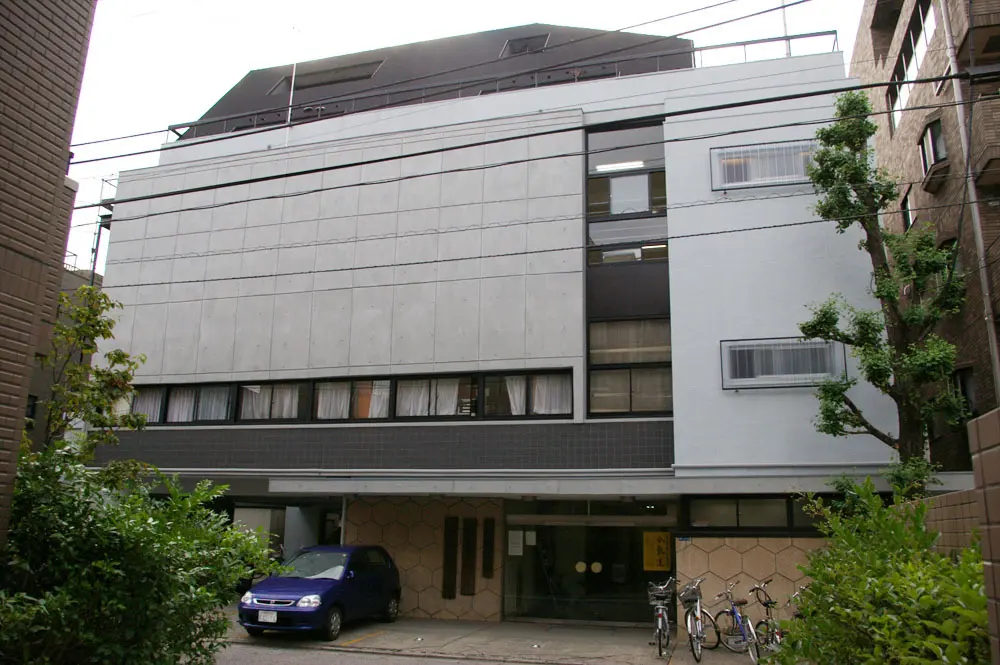
Image: Dionísio Alves de França / Wikimedia Commons · CC BY-SA 2.5
Aikikai Hombu Dojo is the central training hall of the Aikikai Foundation in Wakamatsu-cho, Shinjuku, Tokyo. The site has been associated with Morihei Ueshiba's teaching since the Kobukan dojo opened there in 1931. A reinforced-concrete building replaced the earlier wooden hall in 1967, and later expansion created three principal dojo with roughly 250 tatami of training space. The Hombu Dojo hosts daily classes taught by the Ueshiba family and senior instructors, receives practitioners from Japan and abroad, and anchors a large network of recognised organisations. It is historically important, but it is also a working dojo: class eligibility, observation, fees, etiquette, and photography are governed by current Aikikai rules rather than by ordinary tourist access.
Overview
| Japanese name | 合気会本部道場 |
|---|---|
| Location | Wakamatsu-cho, Shinjuku, Tokyo |
| Institution | Aikikai Foundation |
| Site established | 1931 as the Kobukan dojo |
| Present main building | Rebuilt in 1967–1968; expanded in 1973 |
| Training space | Three main dojo, approximately 250 tatami in total |
Name and status
Hombu dojo means headquarters training hall. Aikikai identifies the foundation that administers the site and supports Aikido instruction, grading, demonstrations, and international recognition. The term does not mean that every Aikido organisation in the world is administratively controlled from this building.
English sources use both Hombu and Honbu for 本部. Aikikai's own English pages use Hombu Dojo, so that spelling is followed here.
The Kobukan site
Morihei Ueshiba opened the Kobukan in 1931 at the present site. The dojo became the principal Tokyo base for the art then described by names including aiki-bujutsu and aiki-budo, before Aikido became the standard institutional term.
The original building and the people who trained there belong to a specific prewar setting. The current Hombu Dojo preserves the location and institutional lineage, but its building, class structure, and international role are products of postwar development.
Postwar reconstruction
Organised activity in Tokyo resumed after the Second World War under the leadership of Kisshomaru Ueshiba and other instructors, while Morihei spent much of the period at Iwama. The Aikikai Foundation became the main institutional vehicle for rebuilding and spreading the art.
Hombu's growth reflected a wider transformation: Aikido moved from a comparatively small Japanese network into an international practice taught through seminars, branch organisations, grading relationships, and visiting instructors.
The present building
The former wooden dojo was replaced in 1967 by a three-storey reinforced-concrete building. Fourth and fifth floors were added in 1973. The enlarged headquarters contains three principal training halls and administrative space within a compact urban site.
Unlike a purpose-built spectator arena, the building is organised around repeated daily practice. Its importance comes less from monumental architecture than from the density of instruction and exchange sustained there over decades.
Daily training and teaching
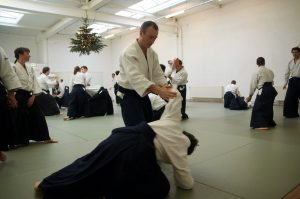
The schedule normally includes multiple classes for different levels and groups. Training follows the paired practice typical of Aikido, with throws, controls, receiving skills, movement, posture, and etiquette studied under different instructors.
There is no single Hombu class that defines every technical interpretation within Aikikai. Senior teachers may emphasise different rhythms, entries, and teaching methods while working inside a shared institutional curriculum and etiquette.
Doshu and the Aikikai network
The hereditary title Doshu, meaning leader of the way, is held by the head of Aikikai. Morihei Ueshiba was followed by Kisshomaru Ueshiba and then Moriteru Ueshiba. The Doshu teaches at Hombu and represents continuity in the organisation's public identity.
Affiliated federations and dojo operate with substantial local autonomy. Hombu provides grading and recognition frameworks, dispatches instructors, and receives international visitors, making the Tokyo site a node in a network rather than the location of all Aikido authority.
Access and etiquette
Aikikai publishes current information for members, beginners, overseas visitors, and observers. Registration requirements, class availability, temporary closures, and fees can change, so the official schedule should be consulted before a visit.
The building is a functioning dojo, not an exhibition space. Visitors should follow instructions about bowing, clothing, seating, silence, and photography. Participation presumes familiarity with safe paired practice or attendance in a suitable introductory class.
Sources
Last updated: