Manga
Bakuman
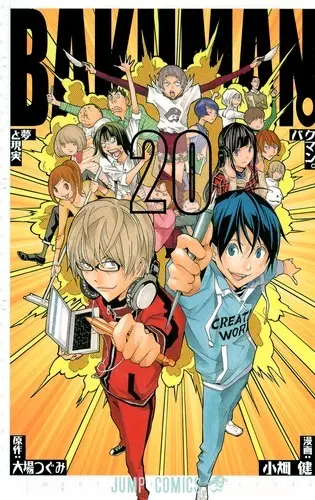
Image: Takeshi Obata and Tsugumi Ohba; © Shueisha / Shueisha official product page · Copyrighted; limited low-resolution identification and critical commentary
Bakuman (バクマン。) is a manga written by Tsugumi Ohba and drawn by Takeshi Obata. It follows artist Moritaka Mashiro and writer Akito Takagi as they form a creative partnership and try to secure a successful series in a fictional magazine closely modelled on Weekly Shōnen Jump. The work was published by Shueisha and collected in 20 volumes. Its appeal lies partly in the way a coming-of-age narrative is built around storyboards, meetings, reader surveys, assistants, deadlines, cancellation, and adaptation. These mechanisms are dramatized for entertainment rather than presented as a complete documentary account of manga labour. A television anime and a 2015 live-action film extended the franchise, while English publication by VIZ Media made its industry-focused story widely accessible outside Japan.
Overview
| Japanese title | バクマン。 |
|---|---|
| Creators | Story by Tsugumi Ohba; art by Takeshi Obata |
| Medium | Manga |
| Original publisher | Shueisha |
| Original magazine | Weekly Shōnen Jump |
| Collected edition | 20 volumes |
| Primary subject | Manga creation and magazine serialization |
Publication and creators
Ohba and Obata had previously collaborated on Death Note. In Bakuman, writing and drawing are divided between two protagonists, making creative partnership part of the plot as well as the production credit. Shueisha's collected edition reached 20 volumes, and the series was later republished and translated in several markets.
Premise and structure
Mashiro supplies drawing skill while Takagi develops stories and scripts. Their aim is not simply to publish once but to survive repeated editorial decisions and build a series capable of animation. Rival creators, assistants, editors, family expectations, school, and romance give the professional quest several competing timelines.
Manga production
The manga introduces names, manuscripts, editorial conferences, assistant work, schedules, and revision. These elements connect directly with the broader systems described in Manga Magazines and Tankōbon. It also shows how an idea changes as creators respond to an editor, readers, and production limits.
Rankings and serialization
Reader questionnaires and competition for limited magazine space create much of the tension. The story turns rankings into visible stakes, but real editorial decisions also involve sales, demographic fit, scheduling, contracts, staff judgment, and long-term planning. Its fictional magazine should not be treated as a transparent record of every Shueisha procedure.
Labour and authorship
Bakuman depicts manga as collaborative labour: named creators depend on editors, assistants, designers, printers, and distribution. At the same time, it concentrates attention on exceptional ambition and long working hours. Readers should distinguish narrative admiration for persistence from a general prescription for healthy or sustainable creative work.
Adaptations
A television anime translated the long publication narrative into episodic animation, while the 2015 film compressed characters and events around competition at a manga magazine. Each adaptation changes pacing and emphasis. Their existence also mirrors the manga's own interest in how successful print properties move into other media.
Cultural position
The series is often used as an accessible introduction to commercial manga production because it makes otherwise hidden editorial processes legible. Its strongest value is interpretive rather than statistical: it captures anxieties about talent, collaboration, audience response, and cancellation while remaining a carefully structured work of entertainment.
Sources
Last updated: