Other Martial Arts
Shorinji Kempo
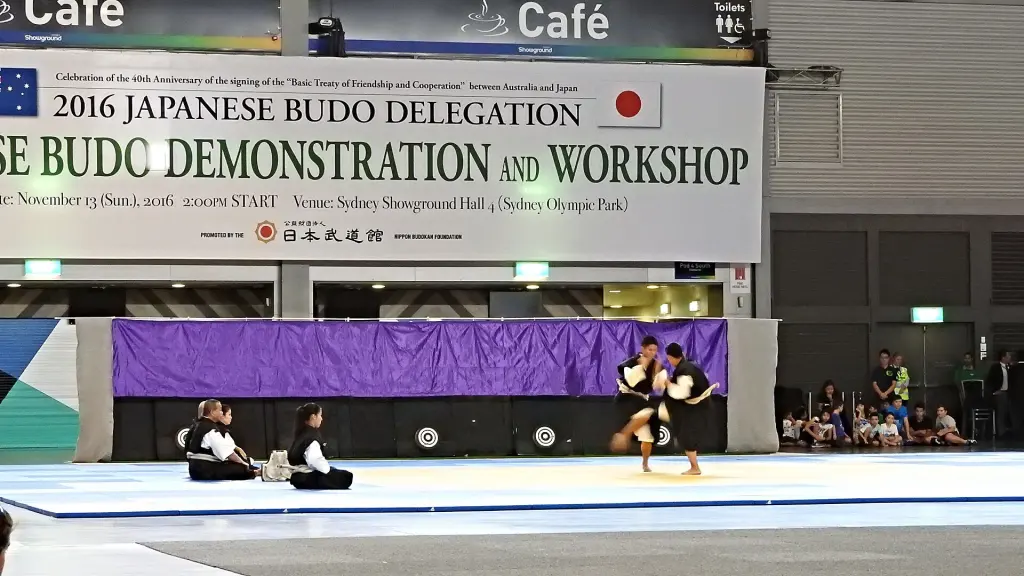
Image: Dushan Hanuska / Wikimedia Commons / Flickr · CC BY-SA 2.0
Overview
Technique is organised as paired education.
Shorinji Kempo is a postwar Japanese martial and educational system founded by Doshin So in Tadotsu, Kagawa, in 1947. Its curriculum connects gōhō—striking and defensive methods—with jūhō releases, locks, throws, and controls, alongside seihō body-maintenance methods in authorised settings. Paired practice is central: one person creates a defined problem and both learn distance, timing, protection, control, and responsibility. Structured embu makes technical and cooperative quality visible, while philosophical study frames training as development of capable people who can support others. Despite its name, Shorinji Kempo is a distinct modern Japanese organisation, not a generic label for Chinese Shaolin arts, Karate, or every system called Kenpo.
Manage attacks with movement, guards, deflections, and counters.
Use balance, leverage, locks, throws, and restraint.
Restorative methods taught within organisational conditions.
Partners alternate roles so technical development and responsibility grow together.
- Japanese
- 少林寺拳法
Shōrinji Kempō - Founder
- Doshin So
- Founded
- 1947
Tadotsu, Kagawa - Classification
- Postwar Japanese martial and educational system
- Technical divisions
- Gōhō, jūhō, and seihō
- International body
- World Shorinji Kempo Organization
01Founding frame
A new system answered a postwar social problem.
Official history centres Doshin So’s return to Japan and his conviction that society depended on the character of its people. The historically careful description is a new Japanese synthesis, not an unchanged import.
- Before 1945
Experience in China
Official accounts describe So learning and observing various methods while working in Manchuria and travelling in China.
- 1947
Founded in Tadotsu
After returning to Japan, he began teaching from his home in Kagawa. Technical training and lectures were joined from the start.
- Postwar growth
Curriculum and organisations
So reorganised methods he had learned, added original elements, and built institutions for training, education, qualification, and community.
- 1970s onward
International network
Overseas branches and a world organisation connected a common curriculum across national settings.
02Technical architecture
Hard and soft are complementary responses, not rival styles.
The curriculum classifies methods so practitioners can study different problems. Real sequences may connect categories, and instruction varies by level and qualification.
Protect, move, counter
Strikes, kicks, defensive movement, deflection, and counterattack develop distance and decisive timing.
Release, unbalance, control
Grabs are answered through releases, locks, throws, pins, and leverage rather than strength alone.
Care within scope
Body-maintenance knowledge forms a specialised division whose teaching and use depend on organisational authorisation.
The formula gōjū ittai—hard and soft as one—encourages practitioners to select and connect responses rather than identify permanently with one category.
03Paired learning
The partner is part of the method, not a disposable target.
Kumite shutai makes paired practice the main basis of study. Roles, resistance, speed, and complexity can be adjusted while both people learn to create realistic information without abandoning control.
Create a clear attack
The designated action gives the defender useful distance, direction, and timing to read.
Secure the body
Movement, guard, balance, and position come before an ambitious counter.
Apply the answer
Technique should be effective enough to study while proportionate to the partner and task.
Reverse and refine
Partners change roles, compare feedback, and improve the shared exercise.
Embu
Pairs construct and perform a sequence that displays technical understanding, timing, accuracy, spirit, coordination, and cooperation.
Not unrestricted fighting
Embu can be competitive and demanding, but it is judged performance. It should not be described as a knockout bout or unstructured sparring match.
04Six characteristics
The official framework links training method to social purpose.
These are normative principles—ways the organisation says practice should be understood. They describe an educational ideal, not a guarantee about every practitioner or branch.
Ken zen ichinyo
Technique and mental cultivation are studied as one practice.
Riki ai funi
Strength and compassion should operate together rather than cancel one another.
Shushu kōju
Protection comes first; the response follows the need created by the attack.
Fusatsu katsujin
The stated aim is to protect and restore life, not pursue killing technique.
Gōjū ittai
Hard and soft methods form one adaptable technical system.
Kumite shutai
Paired practice develops technique, cooperation, and interpersonal learning.
05Organisation & qualifications
A shared curriculum travels through several related institutions.
Shorinji Kempo’s martial, educational, religious, qualification, intellectual-property, and international functions are not always housed in one legal body. Country and branch context therefore matter.
Local instruction connects paired technique, philosophy, etiquette, and community.
Kyū and dan progression provides a common learning sequence and technical vocabulary.
Rank, instructor status, and authority to teach specialised material are distinct questions.
The World Shorinji Kempo Organization supports authorised practice across national federations and branches.
Use of official names, symbols, and teaching materials can involve organisational and trademark rules.
06Boundary checks
Visual resemblance does not establish lineage or institutional identity.
Uniforms, strikes, throws, locks, and East Asian names travel across many arts. Compare documented founding, curriculum, organisation, and teaching method before claiming a connection.
Shorinji Kempo
Doshin So’s 1947 Japanese system joins paired technique, embu, philosophy, and a specific organisational network.
Karate
Has different Okinawan roots, school histories, kata, competition formats, and institutions despite some shared training vocabulary.
Aikido
May look comparable in some locks or throws, but its genealogy, technical organisation, and pedagogical aims are distinct.
Sources and further reading
- Shorinji Kempo Unity, The Birth of Shorinji Kempo.
- Shorinji Kempo Unity, Six Characteristics of Shorinji Kempo.
- Shorinji Kempo Unity, History.
- World Shorinji Kempo Organization, About WSKO.
- Nippon Budokan, Introduction to Shorinji Kempo.
- Nippon Budokan, Introduction of Budo Disciplines.
- Web Japan, Martial Arts: From Ancient Tradition to Modern Sport.
- Japanese Academy of Budo, An Introductory Study of the History of Budo Technique.
Last updated: