Anime
Anime Studio
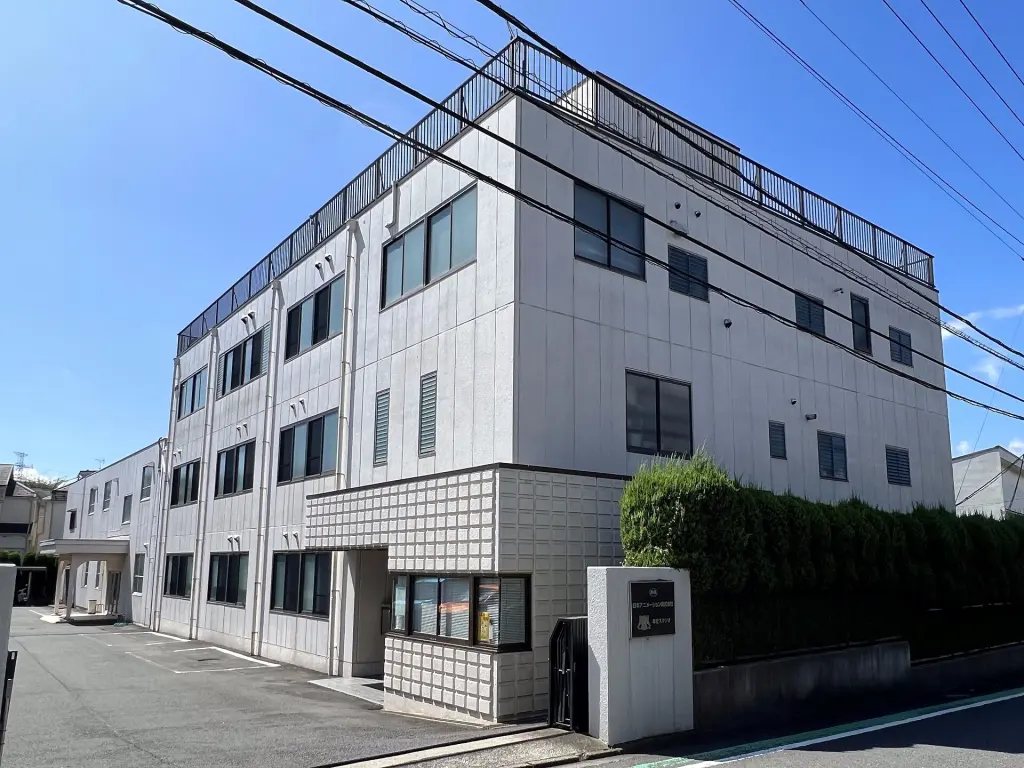
Image: Asanagi / Wikimedia Commons · Creative Commons CC0 1.0 Universal Public Domain Dedication
An anime studio is a company or production organization that performs and coordinates some part of Japanese animation production. The term can refer to a corporation, an internal production unit, or the physical workplace associated with it, but these are not always identical. A lead or prime studio may organize schedules, staff, materials, subcontractors, and delivery for a television series or film. Specialist studios may instead focus on backgrounds, computer graphics, colour, compositing, or another stage, while freelancers work across company boundaries. A studio is also distinct from an anime production committee, which primarily finances and commercially manages a project, although a studio may invest in that committee. Because work is distributed through contracts and networks, the name most prominent in a title's publicity does not necessarily employ every artist or create every image internally.
Overview
| Japanese | アニメ制作会社 / アニメスタジオ |
|---|---|
| Romanization | Anime seisaku gaisha / anime sutajio |
| Core function | Organizing or performing animation production |
| Common positions | Prime contractor, subcontractor, or specialist provider |
| Workforce | Employees, fixed-term staff, partner companies, and freelancers |
| Not equivalent to | Production committee, brand, building, or complete authorship |
Term and organizational scope
In everyday English, “studio” suggests both a creative company and a place where artists work. Japanese industry sources more precisely discuss animation production companies and the functions they perform. One company may operate several studios or production lines, while a named studio can be a division rather than a separate corporation.
Company identity can change through mergers, renaming, new subsidiaries, or staff departures. Encyclopedic description should distinguish a legal company, its brand, its offices, and the credits used on particular works.
Prime contractors and production management
A production committee, broadcaster, distributor, or other client may commission a prime studio to deliver the animation. The prime company assembles creative leadership, builds a schedule, allocates cuts, tracks materials, checks subcontracted work, and coordinates completion with sound, editing, and the client.
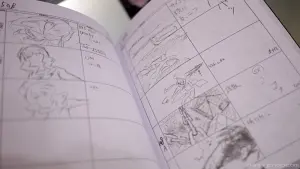
Production assistants and desks maintain this network from episode to episode. They estimate workloads from the e-konte, contact artists and companies, transport or transmit files, monitor deadlines, and respond when delays in one stage threaten later work.
Departments and specialization
A large studio may maintain planning, direction, design, genga and dōga, backgrounds, colour, computer graphics, photography or compositing, editing, and production-management functions. Smaller companies may specialize in only one or several areas.
Department names do not guarantee that all work is internal. A studio with key animators may outsource dōga and finishing; a company known for three-dimensional work may partner with hand-drawn units; an episode may be assigned almost entirely to another studio under the prime company's supervision.
Subcontracting and freelance networks
Anime production has long depended on inter-company and freelance networks. Credits may list cooperation studios from Japan and overseas, and artists can contribute remotely to several productions. This provides capacity and specialist knowledge but makes schedule control and consistent contracts important.
The prime contractor remains responsible for coordinating delivered work, yet each transaction can have its own scope, price, correction terms, intellectual-property provisions, and deadline. A studio credit is therefore evidence of participation, not a complete map of employment or authorship.
Geography and industry clusters
Japanese animation companies are strongly concentrated in Tokyo. An Association of Japanese Animations survey using 2020 data counted 811 companies involved in production and placed 692, or 85.3 percent, in Tokyo, with notable clusters in Suginami and Nerima. These figures describe that survey year rather than a permanent current total.
Clustering historically made it easier to move paper materials and recruit experienced freelancers near other studios, broadcasters, publishers, and post-production facilities. Digital transfer and remote work have widened participation, but professional networks and urban infrastructure still matter.
Business models and intellectual property
A studio may earn production fees as a contractor, invest in a committee, develop original projects, manage creators, license intellectual property, or combine these activities. Contract production can provide work without giving the company a large share of later licensing revenue; investment offers potential returns but also adds risk.
Recent business discussion emphasizes whether studios can build stable capital, retain skilled workers, improve transaction terms, and participate more directly in rights and overseas markets. No single model fits every company, and financial success cannot be inferred from the popularity of one title.
Creative identity and attribution
Studios can develop recognizable production cultures through recurring directors, designers, animators, pipelines, training, and management practices. Audiences consequently use studio names as guides to style and quality. Those associations can be meaningful but should not replace examination of the staff credited on each work.
Freelancers may create defining sakuga for studios they never joined, while an episode subcontracted elsewhere can differ from the surrounding series. Anime remains a collaboration among people and organizations rather than the expression of a company name alone.
Sources
- Japan Fair Trade Commission, Guidelines for Proper Transactions in Anime Production.
- Association of Japanese Animations, Anime Industry Report 2024 Summary.
- Agency for Cultural Affairs, Copyright Policy Committee: Anime Production and Rights.
- Association of Japanese Animations, A Manual for TV Anime Series Production Assistants.
- Agency for Cultural Affairs, Animation Production Process Working Group Minutes.
- Ministry of Health, Labour and Welfare, Anime Production Progress Management.
- Agency for Cultural Affairs, Anime Production Career Map and Workflow Report.
- Japan Research Institute, New Business Models for Japanese Anime Studios.
- Association of Japanese Animations, Anime Industry Report 2020 Summary.
Last updated: