Anime
Sakuga
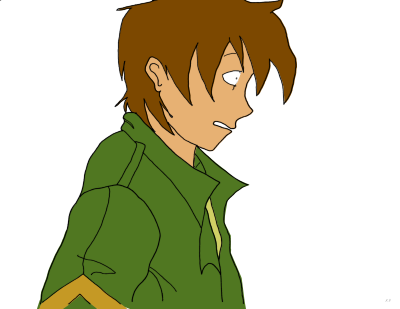
Image: Monica Marier; released by Brent P. Newhall / Wikimedia Commons; Otherspace Productions · Public domain
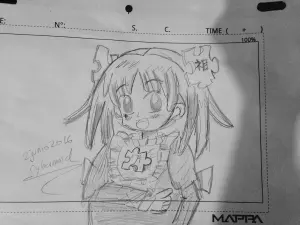
Sakuga (作画) literally means drawing pictures and, in Japanese animation production, refers broadly to the drawing work that creates character and effects animation. Credits such as sakuga kantoku (animation director) and processes such as genga and dōga use the term in this occupational sense. In international anime fandom, however, sakuga often has a narrower evaluative meaning: a visually striking passage whose movement, posing, effects, draftsmanship, or timing attracts attention. Fans collect and analyze such cuts and may identify recurring traits of individual animators. The two meanings overlap but are not identical. Sakuga is not simply a high frame rate, a genre, or a guarantee that one credited artist made every visible element. Layouts, corrections, in-betweens, compositing, computer graphics, and schedule conditions all shape the finished result.
Overview
| Japanese | 作画 |
|---|---|
| Romanization | Sakuga |
| Industry meaning | Drawing work used to create animation |
| Common fan meaning | A conspicuously accomplished or distinctive animated passage |
| Core roles | Key animation, in-between animation, and animation direction |
| Basic unit of discussion | A cut or shot, not necessarily a whole episode |
Word and industry meaning
In Japanese production, sakuga can describe the drawn-animation department or work rather than an exceptional moment. A credit may refer to key animators, in-between animators, animation directors, or a wider set of drawing responsibilities. Context is necessary because the same word can identify an ordinary stage of the pipeline.
The characters do not mean “good animation.” They identify picture-making. Evaluative phrases such as yoi sakuga can praise quality, while production documents use sakuga without implying that a sequence is unusually lavish.
Fan usage and cut analysis
English-language fan communities adopted sakuga as a convenient label for cuts with noticeable animated expression. Databases, screenings, and video compilations encourage viewers to compare movement, shapes, camera ideas, and effects across works and animators.
This practice can recover the contributions of staff who receive less publicity than directors or studios. Attribution remains provisional when credits list only teams, when several artists share a cut, or when corrections and uncredited assistance substantially alter the visible result.
Timing, spacing, and drawing count
Convincing movement depends on when drawings appear and how the represented action changes between them. Spacing can suggest acceleration, weight, impact, hesitation, or softness. Posing and silhouette can make an action legible even when the number of drawings is limited.
For that reason, sakuga is not synonymous with a high frame rate. A sequence may hold drawings, animate on twos or threes, or alternate dense motion with stillness. The artistic effect comes from the organization of images and time, not one numerical threshold.
Acting, action, and effects
Fan attention often goes to fights, transformations, vehicles, or spectacular effects, but character acting can be equally important. A small change in posture, gaze, clothing, or facial rhythm can carry narrative information without large movement.
Effects animation covers phenomena such as fire, water, smoke, debris, light, and impact. These forms invite stylization because there is no single fixed model sheet for a flame or cloud. Strong effects work can organize an entire composition and guide the viewer's eye.
Authorship and collaboration
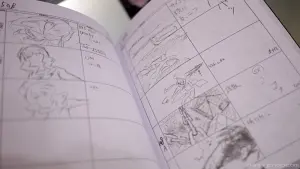
A key animator makes central movement decisions, but a finished cut is collaborative. The storyboard and layout establish dramatic and spatial conditions; animation directors may correct drawings; in-between and finishing staff prepare later stages; compositing adds camera movement, light, blur, and layered effects.
Studio branding can help audiences locate a production culture, yet most commercial anime relies on freelancers and partner companies. It is therefore safer to credit a named animator only when staff records, reliable interviews, or production materials support the attribution.
Digital tools and three-dimensional work
Sakuga discussion developed around hand-drawn two-dimensional animation, but drawing may now occur on paper, tablets, or a hybrid pipeline. Computer graphics, digital effects, and compositing can interact closely with drawn motion. A finished passage may combine several techniques without a clean boundary between them.
Digital work does not automatically remove individual style, and paper drawing does not automatically create it. Tools affect revision, line quality, asset exchange, and camera possibilities, while aesthetic decisions still depend on artists and production conditions.
Criticism and common misconceptions
The fan phrase “sakuga collapse” is often used for off-model or weak-looking imagery, but it is not a precise diagnosis. Deliberate distortion can communicate speed or emotion, while an awkward frame may reflect movement visible only in sequence. Production problems cannot be inferred reliably from a screenshot alone.
Celebrating isolated clips can also detach animation from story, sound, editing, and labour conditions. Sakuga analysis is most informative when it connects visible choices to the whole scene and acknowledges the collaborative pipeline that made the cut possible.
Sources
- Association of Japanese Animations, A Manual for TV Anime Series Production Assistants.
- Agency for Cultural Affairs, Animation Production Process Working Group Minutes.
- Ministry of Health, Labour and Welfare, Anime Production Progress Management.
- Agency for Cultural Affairs, Anime Production Career Map and Workflow Report.
- Agency for Cultural Affairs, Peel-Apart TV Anime.
- Agency for Cultural Affairs, Archiving Anime Production Materials.
- Agency for Cultural Affairs, Intermediate Products in Animation.
- E-SAKUGA, About Sakuga.
- Association of Japanese Animations, Anime Textbook and Key-Animation Materials.
Last updated: