
Shinto
Kegare
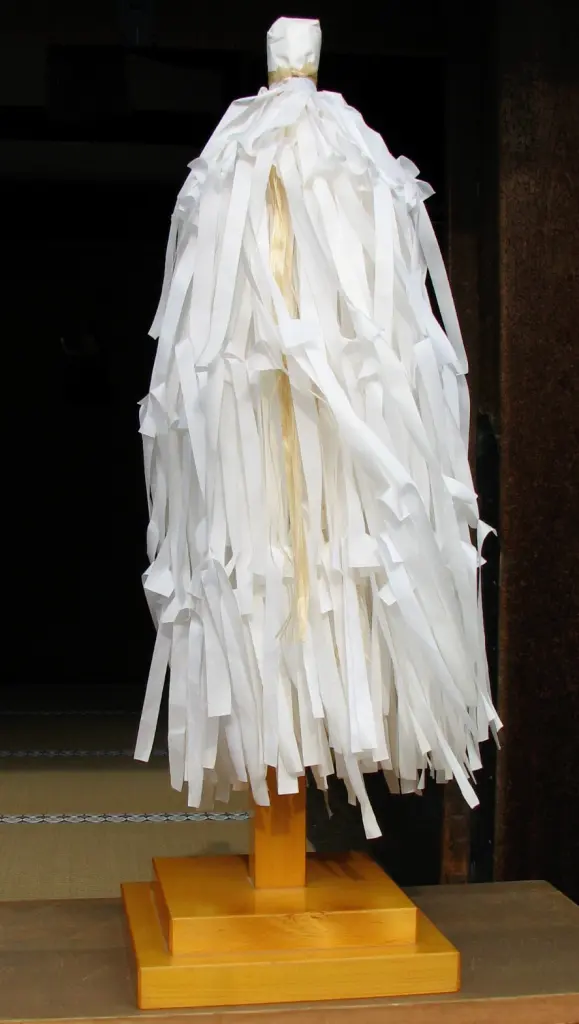
Image: nnh / Wikimedia Commons · Public domain
Kegare (穢れ) is a Japanese concept commonly translated as ritual pollution, impurity, or defilement. In historical court, shrine, and community practices, the term marked conditions thought to interfere with participation in sacred rites or ordinary social order. Death, illness, disaster, blood, and other disruptive events could be classified as sources of kegare in particular periods and settings. The concept is not identical to dirt, moral guilt, or a permanent quality of a person. Its meanings, restrictions, and remedies have varied across time, region, institution, gender, and ritual context. Shinto sources often place kegare in relation to tsumi, harae, abstention, and misogi, through which ritual participation can be restored.
Overview
| Japanese | 穢れ |
|---|---|
| Romanization | Kegare |
| Common translation | Ritual pollution or impurity |
| Religious contexts | Shinto, court ritual, and Japanese folk practice |
| Common responses | Waiting periods, abstention, harae, and misogi |
| Important distinction | A condition, not a person's permanent moral worth |
Definition and translation
Kegare denotes a condition incompatible with ritual purity. English words such as pollution or impurity are useful but can imply hygiene, blame, or personal inferiority that the Japanese term does not always carry. Encyclopedic use therefore states the historical context and the specific practice instead of assuming one timeless definition.
Historical contexts
Ancient and medieval regulations identified sources of pollution and prescribed periods of avoidance before officials or ritualists entered sacred service. Mourning, contact with death, illness, childbirth, menstruation, animal death, and disaster appear in different historical lists. The categories were neither uniform across Japan nor unchanged through modernity.
Tsumi and misfortune
Tsumi can describe offenses or disruptive acts, while kegare is often presented as a condition arising through events that may be involuntary. In practice the categories overlap: bringing pollution into ritual space could itself be treated as a transgression. Both also became associated with calamity, showing why simple translations as sin and dirt are misleading.
Purification and restoration
Kegare is not necessarily permanent. Time, abstention, harae, and water-based misogi provide ways to end or remove the condition. These processes restore ritual eligibility and social participation; they should not be interpreted as proof that affected individuals are inherently polluted.
Folklore and scholarly debate
Twentieth-century folklorists developed models linking hare (special or auspicious time), ke (ordinary time), and kegare. One influential proposal reads kegare as the withering of vital force, but the etymology and three-part cycle are scholarly interpretations rather than uncontested ancient doctrine. Later researchers have questioned overly homogeneous accounts of Japanese culture.
Modern usage and caution
Contemporary shrines usually explain purification in terms of recovering a proper or refreshed condition before ritual. Historical ideas of blood, birth, disability, disease, and occupation were also used to support exclusion and stigma. Responsible writing identifies such classifications as historically situated and avoids repeating them as valid judgments about people today.
Sources
- Association of Shinto Shrines, Matsuri and the order of shrine ritual.
- Ise Jingu, Soul of Japan glossary.
- Meiji Jingu, Kigansai private rite.
- Nanzan Institute for Religion and Culture, Rokujikyōhō in Medieval Japan.
- Kokugakuin University, Encyclopedia of Shinto: Kegare.
- Japanese Journal of Religious Studies, Defilement and purification in Japanese religious history.
- Japanese Society of Cultural Anthropology, A Study on the Structure of Japanese Folk Belief.
Last updated: