Shinto
Harae

Image: Malaiya / Wikimedia Commons · Creative Commons Attribution-ShareAlike 4.0 International
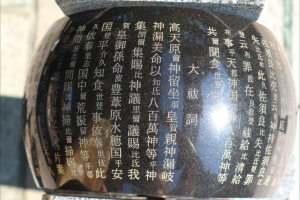
Harae (祓, also commonly pronounced harai) is a broad term for Shinto rites of purification. It refers to ritual actions intended to remove or set aside tsumi, kegare, misfortune, and other conditions considered unsuitable before approaching the kami. A shrine ceremony normally begins with purification, often including a priest's recitation and the movement of an ōnusa or haraigushi over participants and offerings. Harae also appears in large communal observances such as Ōharae, held at many shrines near the end of June and December. The term names a family of historically changing practices rather than one fixed ceremony, and it should not be reduced to physical cleaning, moral absolution, or exorcism in a single universal sense.
Overview
| Japanese | 祓 |
|---|---|
| Common readings | Harae; harai |
| Tradition | Shinto |
| Ritual purpose | Purification before worship and renewal after disruption |
| Common implements | Ōnusa or haraigushi; sakaki; salt; water; katashiro |
| Major observance | Ōharae, commonly held in June and December |
Name and scope
The older dictionary form is harae, while harai is widespread in contemporary compounds and speech. English translations include purification, cleansing, or expiation, but none covers every use. Harae may address people, ritual objects, buildings, vehicles, land, or a community, according to the occasion and shrine tradition.
Place in shrine ritual
Purification commonly precedes offerings and norito in formal shrine rites. A priest may recite purification words and wave an ōnusa over those present. The sequence marks a transition from ordinary circumstances into an appropriate condition for communication with kami; the implement is part of the rite, not a magical object acting independently.
Major forms
Shubatsu is purification performed at the beginning of a ceremony. Ōharae, or Great Purification, addresses a wider body of people and has ancient court precedents; many shrines now observe it twice yearly. Local rites may use reed rings, paper human figures, salt, water, evergreen branches, or other forms, so one shrine's procedure should not be treated as universal.
Tsumi and kegare
Historical sources connect harae with both tsumi and kegare, but these terms are not exact equivalents of Christian sin and guilt. They can refer to transgression, pollution, calamity, or disrupted ritual and social conditions. Purification restores the possibility of proper participation rather than permanently dividing people into pure and impure classes.
Relationship to misogi
Misogi specifically centres on ablution with water, whereas harae encompasses a wider range of purification rites. The two are closely linked and the compound misogi-harae is common, which explains why they are sometimes treated as synonyms, but historical and ritual descriptions preserve a useful distinction between them.
Modern practice and interpretation
Harae remains visible in annual shrine calendars, ground-breaking ceremonies, vehicle blessings, life-cycle rites, and private prayers. Visitors also encounter the related practice of washing hands and rinsing the mouth at a temizuya. Careful description distinguishes formal priest-led harae from visitor etiquette and from modern personal claims about spiritual cleansing.
Sources
Harae within a ritual sequence
Harae often prepares people or a place for what follows; it should not be mistaken for the whole ceremony. See Shinto Rituals for a wider reading framework linking purification to offerings, norito, participation, and closure.
- Association of Shinto Shrines, Matsuri and the order of shrine ritual.
- Ise Jingu, Soul of Japan glossary.
- Meiji Jingu, Kigansai private rite.
- Nanzan Institute for Religion and Culture, Rokujikyōhō in Medieval Japan.
- Kokugakuin University, Basic Terms of Shinto: Harae and Harai.
- Kokugakuin University, Encyclopedia of Shinto: Ōharae.
Last updated: