Anime
Anime Production
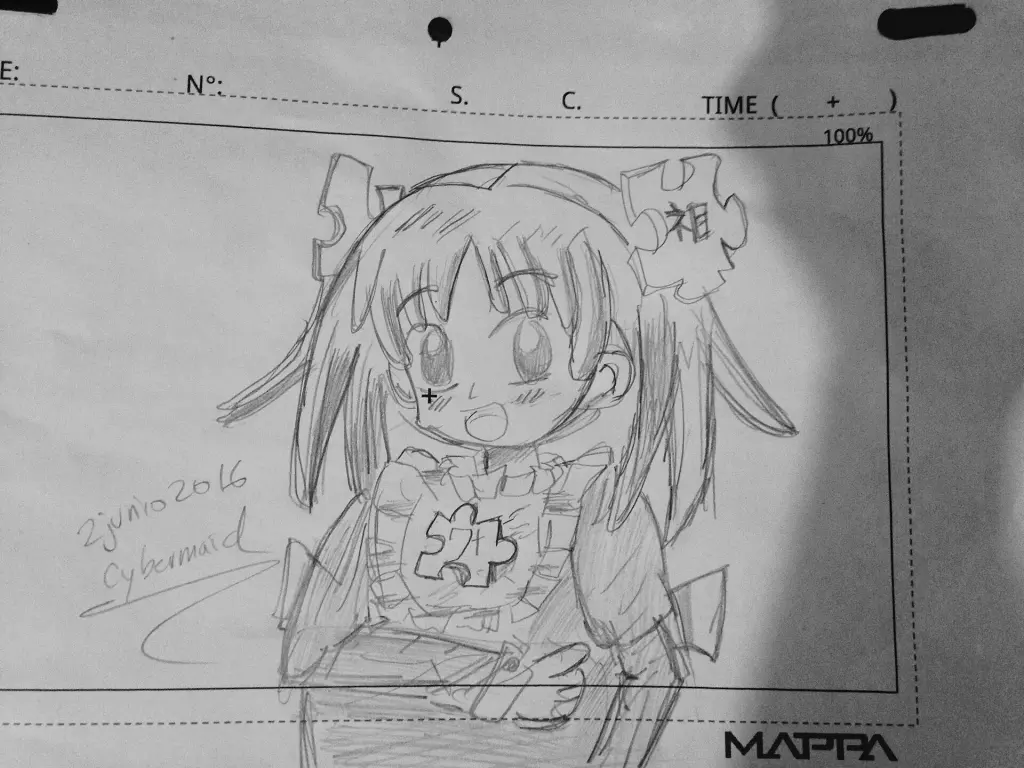
Image: ゴスロリ / Wikimedia Commons · Creative Commons Attribution-ShareAlike 4.0 International
Anime production is the collaborative process through which Japanese animated works are planned, financed, designed, animated, recorded, completed, and distributed. A television episode or film passes through overlapping stages that may include project development, scripts, storyboards, layouts, key animation, in-between animation, backgrounds, colour work, computer graphics, compositing, editing, music, sound effects, and voice recording. Roles and terminology vary by studio, medium, budget, schedule, and period. Although a lead animation studio may receive prominent credit, work is often distributed among partner companies, freelancers, subcontractors, broadcasters, publishers, and investors. Digital tools have transformed drawing, colouring, photography, delivery, and asset management, but they have not eliminated hand-drawn decision-making or production coordination. Anime production is therefore both an artistic workflow and an industrial network, not a single linear assembly line.
Overview
| Japanese | アニメ制作 |
|---|---|
| Romanization | Anime seisaku |
| Core phases | Planning, pre-production, production, and post-production |
| Key visual documents | Script, storyboard, design sheets, layout, and animation drawings |
| Coordination role | Production assistant or production desk |
| Outputs | Television, film, video, streaming, advertising, and short-form animation |
Planning and finance
A project begins with a proposal, rights discussions, intended audience, format, schedule, budget, and distribution plan. It may be original or adapt manga, prose, games, toys, or other properties. Producers assemble creative leadership and negotiate how the work will be financed and exploited.
Many commercial works use a production committee in which several companies share investment, rights, and business functions. This can spread financial risk and connect broadcasting, publishing, music, merchandising, and overseas distribution. It is a financing and rights structure, not the same thing as the animation staff that draws and completes the images.
Script and storyboard
Series composition organizes long-form narrative and episode distribution. Writers prepare scripts, while the director or episode director translates dramatic action into a storyboard. The storyboard sets shot order, framing, timing, dialogue, camera movement, and editing intentions in a form that production departments can follow.
A storyboard is not the finished visual performance. Designs, layouts, animation, background art, sound, and editing continue to interpret it. Approval practices vary, and revisions can occur when creative aims, source material, broadcast standards, staffing, or schedule constraints conflict.
Design and layout
Character, prop, mechanical, colour, and setting designs establish reusable visual information. Model sheets help multiple artists draw consistent forms, although deliberate variation may be required by acting, perspective, or style. Art settings and boards guide the treatment of locations and backgrounds.
Layouts translate storyboard panels into detailed shot plans. They specify composition, character position, camera information, background requirements, and movement. Layout checking is important because errors at this stage can propagate through animation and compositing. The exact division between layout and key animation differs by production.
Key and in-between animation
Key animators draw important poses and movement information that define the action of a shot. Animation directors review drawings for character consistency, movement, and production requirements. Specialized action or effects supervisors may contribute when a project needs particular expertise.
In-between artists create drawings that connect approved key poses according to timing instructions. The distinction is organizational as well as artistic: both stages require observation and draftsmanship. Modern software can assist drawing, checking, and interpolation, but the term anime does not imply that movement is automatically generated.
Background, colour, and compositing
Background artists produce environments based on layouts and art direction. Colour design assigns palettes, while finishing staff prepare and colour character and effects drawings. Three-dimensional assets may support vehicles, environments, crowds, or camera movement and can be integrated with two-dimensional work.
The department historically called photography combines characters, backgrounds, effects, and camera treatments into completed images. Today this work is largely digital and includes compositing, filters, depth, lighting, and movement. A digital pipeline still depends on naming, version control, checking, and timely delivery of many assets.
Voice, sound, and editing
Editing assembles shots and controls the final screen duration. Dialogue is performed by seiyū under a sound director; depending on the production, recording may use incomplete animation, storyboards, timing footage, or more finished material. Music and sound effects are recorded and mixed with dialogue.
Japanese animation recording is often described with afureko, recording after the visual timing has been prepared, but practice is not uniform and the term does not prove that every image was final. Lip movement may be designed for flexible timing rather than exact phoneme matching.
Schedules, labour, and outsourcing
Production assistants track cuts, move materials, contact artists and companies, update schedules, and help resolve delays. Their work connects departments that otherwise operate on different tasks and calendars. The Association of Japanese Animations publishes a manual because coordination is a specialized production function, not simple clerical work.
Studios frequently share work through subcontracting, overseas production, and freelance networks. Credits may name multiple companies for an episode. This system can provide capacity and specialization but also makes authorship, employment, and responsibility more complex than the popular image of one studio producing every frame internally.
Digital change and preservation
Digital colouring and compositing became standard, while tablets, three-dimensional graphics, remote review, and file transfer changed how drawings and assets move. Paper, pencil, and scanned drawings remain in use in many workflows. Productions combine tools according to staff, style, schedule, and infrastructure rather than following one industry-wide level of digitization.
Preservation must account for finished masters and the layered production record: scripts, storyboards, layouts, drawings, cels, backgrounds, digital projects, audio sessions, and business documentation. The Media Arts Database distinguishes television programs, video packages, films, and series, reminding researchers that a work can exist in several release and archival forms.
Sources
Last updated: