Buddhism
Buddhist Altar
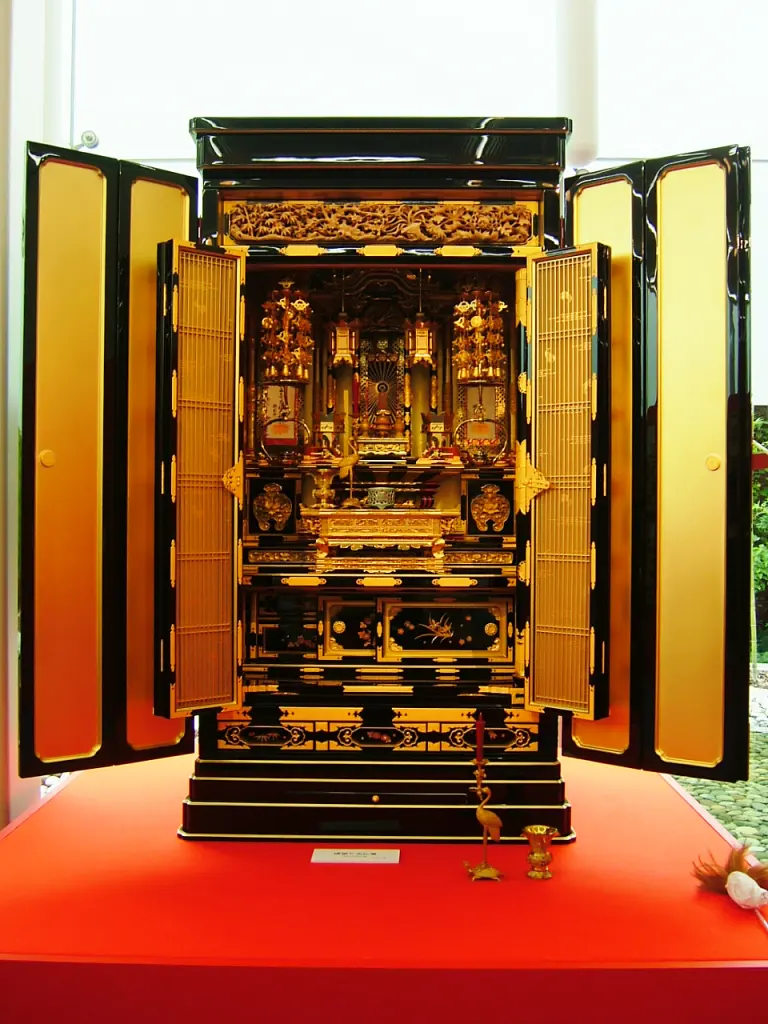
Image: Gnsin / Wikimedia Commons · CC BY 2.1 Japan
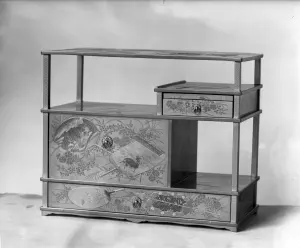
A Buddhist altar in Japan is commonly called a butsudan (仏壇), a cabinet or dedicated space that houses a Buddhist image, inscribed name, scroll, or other principal object of veneration. It may also include memorial tablets, flowers, incense, candles, offerings, a bell, and school-specific implements. A butsudan is not merely storage for the dead, nor can every example be described simply as an “ancestor shrine.” It provides a setting for recitation, listening to Buddhist teaching, daily offerings, funerary and memorial observance, and family continuity. Its central object, arrangement, vocabulary, and rules differ among Buddhist schools: some Jōdo Shinshū communities call it an onaibutsu and do not use memorial tablets in the same manner as many other traditions. Modern altars range from elaborate gilded cabinets to compact forms suited to apartments and diaspora homes.
Overview
| Japanese | 仏壇 |
|---|---|
| Romanization | Butsudan |
| Basic form | Cabinet or dedicated household Buddhist altar space |
| Central element | A school-authorized principal object of veneration |
| Common furnishings | Flowers, incense, candles, offerings, bell, and memorial objects |
| Main settings | Homes and temples |
| Variation | Form and practice differ by school, region, and household |
Name and definition
The characters butsu and dan mean “Buddha” and “platform” or “altar.” In common modern use, butsudan often refers to a closable wooden cabinet, but the term also has temple and historical contexts. Jōdo Shinshū speakers may prefer onaibutsu, emphasizing the Buddha enshrined within the home. English “altar” is convenient, provided it does not imply one standardized object across all Buddhist traditions.
Historical development
Domestic Buddhist images and memorial spaces have long histories among elites, temples, and lay communities. The spread of temple registration, parish relationships, funerary Buddhism, craft production, and urban commerce in the early modern period helped make household altars more widespread. Their forms often echo temple sanctuaries at a smaller scale, but chronology and diffusion differ by school, region, class, and household.
Honzon and memorial objects
The most important element is the honzon, the principal object of veneration. Depending on the tradition, it may be a statue, painting, mandala, or written sacred name. Memorial tablets called ihai, portraits, and registers may be placed within or near the altar in many households. Jōdo Shinshū arrangements centre on Amida and authorized scrolls or images; school guidance may discourage placing photographs, talismans, or ihai in the inner altar.
Furnishings and offerings
Common furnishings include flower vases, candlesticks, an incense burner, offering stands, water or tea vessels, and a small bell. Rice, fruit, sweets, seasonal foods, light, and incense may be offered. Their number, position, and symbolism are not interchangeable across schools. Fire safety, ventilation, accessibility, and the instructions of the family temple are practical parts of maintaining the altar.
Daily and memorial practice
Household members may open the doors, refresh offerings, light incense or candles, join their hands, recite sutras or the nembutsu, ring a bell, and speak inwardly to remembered family members. A priest may conduct services before the altar after a death or on anniversaries. These actions combine Buddhist veneration and family memory in different proportions; no single sequence is followed by all households.
Obon and the ritual year
During Obon, households may clean the altar, arrange additional offerings, receive a priest, and welcome ancestral spirits. New Year, equinoctial weeks, death anniversaries, and school-specific observances can also structure its use. Temporary Bon shelves and lanterns may supplement rather than replace the permanent altar. Regional practices should not be generalized as national rules.
School and regional variation
Gilded altars are strongly associated with several Pure Land traditions, while dark lacquer, carved wood, or simpler shelves appear elsewhere. Okinawan buchidan arrangements reflect Ryukyuan kinship and religious history and should not be treated as ordinary mainland examples. Because the central image and implements express doctrine, purchasing or rearranging an altar is often discussed with the household’s affiliated Buddhist temple.
Modern forms and diaspora
Smaller homes, mobility, changing funeral practices, and new design markets have produced compact, furniture-like, and portable altars. Japanese migrant communities also built butsudan in temples, homes, and wartime confinement sites, preserving religious life under difficult conditions. Size and ornament do not determine sincerity. The modern altar remains a negotiated space connecting Buddhist teaching, the dead, family history, craft, and everyday domestic life.
Sources
Last updated: