Seasonal Customs
Tanabata
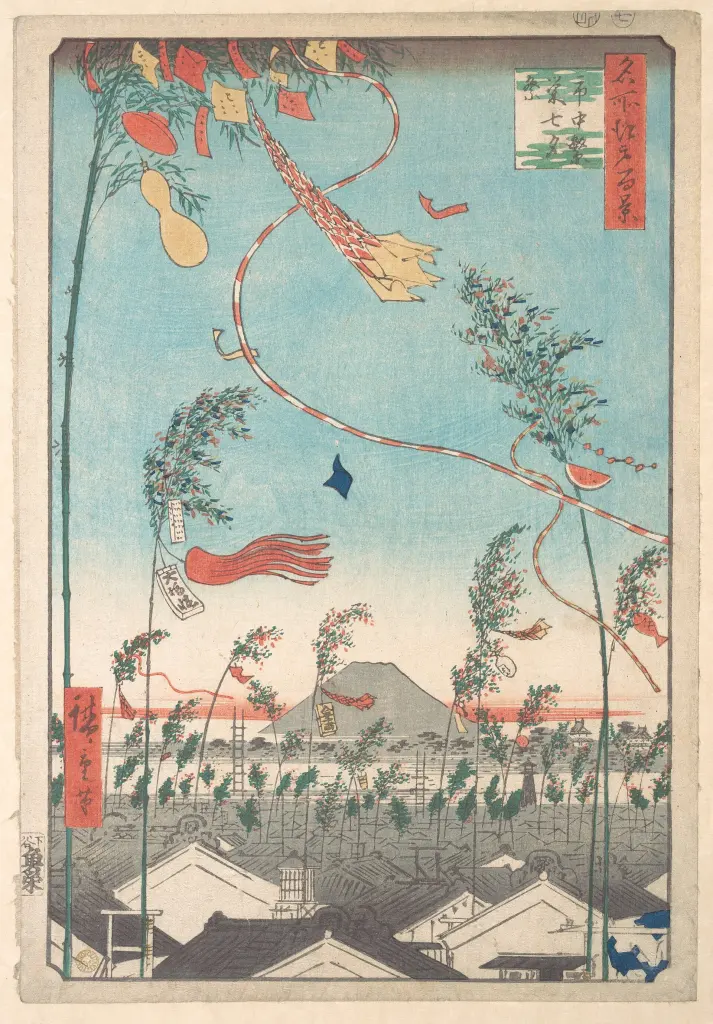
Image: Utagawa Hiroshige / Wikimedia Commons; Metropolitan Museum of Art · Public domain; digital reproduction CC0
Tanabata (七夕) is the Japanese star festival associated with Orihime and Hikoboshi, represented by Vega and Altair on opposite sides of the Milky Way. Their annual meeting on the seventh night of the seventh month provides the festival’s best-known story. In homes, schools, stations, and shopping streets, people write wishes on coloured paper strips called tanzaku and hang them from bamboo or dwarf bamboo. Tanabata developed through the meeting of continental star and weaving traditions with Japanese seasonal, agricultural, courtly, and ritual practices. It is observed on July 7 in many places, while communities using a month-delay or a date closer to the older lunisolar calendar hold it in August. Large festivals transform the intimate act of writing a wish into public decoration and procession.
Overview
| Japanese | 七夕 |
|---|---|
| Common English name | Star Festival |
| Central figures | Orihime (Vega) and Hikoboshi (Altair) |
| Common dates | July 7 or regional dates in August |
| Best-known practice | Hanging written wishes on bamboo |
| Major public form | Large streamer and decoration festivals |
Name, stars, and date
Chōyō no Sekku is another of the five traditional gosekku, fixed to the ninth day of the ninth month and associated with chrysanthemums and longevity.
The two characters are read tanabata through a Japanese reading connected with weaving. The festival’s seventh-night setting comes from the seventh day of the seventh lunar month. After Japan adopted the Gregorian calendar, July 7 became common, but August observances preserve a season closer to the older calendar and often provide darker skies for the stellar story.
Orihime and Hikoboshi
In the popular tale, the weaving woman Orihime and the herdsman Hikoboshi neglect their work after marriage and are separated by the heavenly river. They may meet only once a year. Versions differ over the cause, the bridge, and the role of rain, but weaving, skilled labour, separation, and reunion remain central themes.
Continental and Japanese strands
Chinese Qixi practices connected the stars with women’s prayers for skill, especially in weaving and needlework. Japanese traditions concerning a weaving maiden, water, and offerings, together with court observances and agricultural rites, contributed other strands. Tanabata is best understood as a historical fusion rather than a direct copy of one legend or a purely indigenous festival.
Tanzaku and bamboo
Today participants commonly write hopes, goals, poems, or prayers on narrow tanzaku. The papers are tied to bamboo or sasa, often among folded ornaments and streamers. Earlier court practice emphasized poetry and accomplishment; modern school and community displays broaden the act into a public language of personal wishes.
Decorations and their meanings
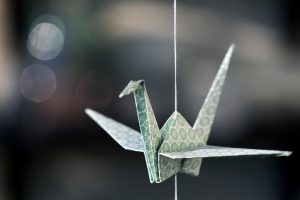
Regional and craft traditions use paper kimono, cranes, nets, purses, rubbish bags, and long streamers, each explained through skills, longevity, abundance, thrift, or weaving. These “seven decorations” are especially prominent in Sendai but are not arranged identically everywhere. Origami and paper craft help make Tanabata accessible to children and institutions.
Regional festivals
Summer Tanabata events may include visitors in yukata, linking the star festival to modern seasonal dress as well as bamboo decorations.
Sendai holds its large festival from August 6 to 8, filling shopping arcades with elaborate hanging decorations. Hiratsuka, Ichinomiya, and other cities combine Tanabata imagery with parades, markets, performance, local industry, and contemporary popular culture. Such events are modern civic festivals as well as expressions of an older seasonal custom.
Tanabata today
Tanabata can be a household observance, classroom activity, shrine event, commercial display, or citywide matsuri. The common vocabulary of stars, bamboo, paper, and wishes allows considerable local reinvention. Calendar variation is not an error to be corrected but evidence of how a lunisolar observance was adapted after calendrical reform.
Sources
Last updated: