Tea & Aesthetic Arts
Bonsai
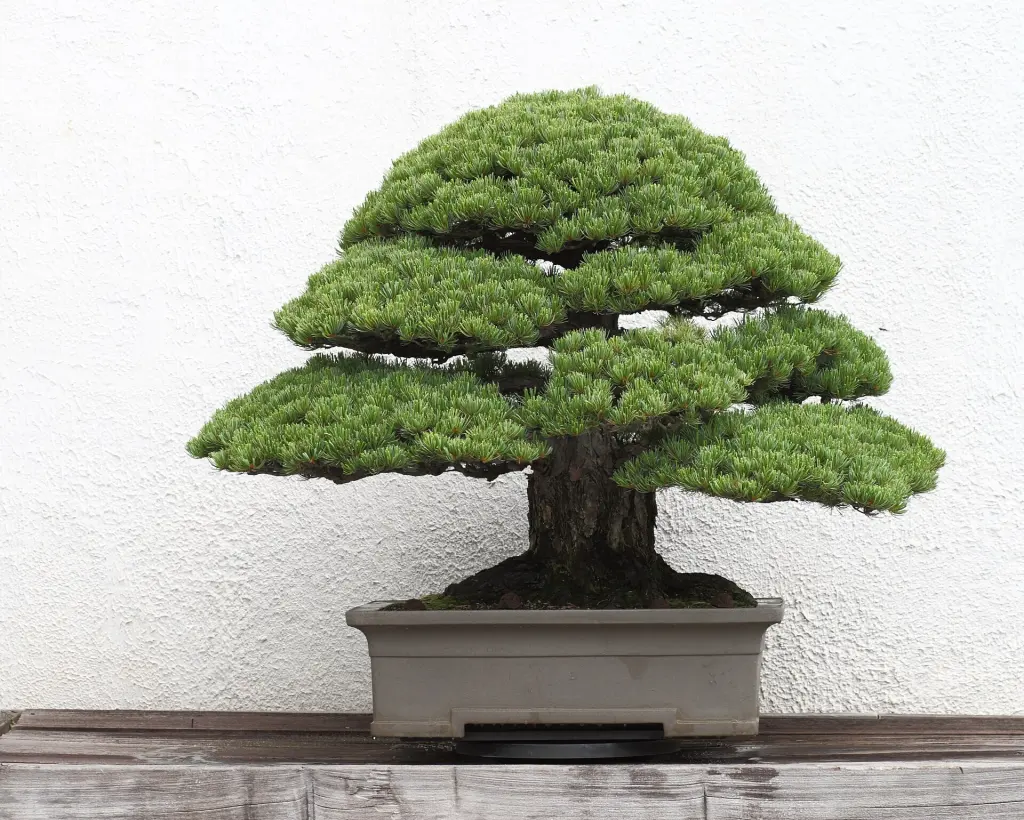
Image: Sage Ross / Wikimedia Commons · Creative Commons Attribution-ShareAlike 3.0 Unported
Bonsai (盆栽) is the Japanese practice of cultivating and displaying trees or woody plants in containers as living, changing compositions. The word combines bon, a tray or shallow container, and sai, planting. A bonsai is not simply a naturally dwarf species or a houseplant trimmed once into shape. It is developed over years through horticultural care, root and branch pruning, wiring, repotting, and close observation of seasonal growth. The aim is not always to copy a full-sized tree literally; trunk, roots, branches, foliage, pot, and empty space are composed to suggest age, landscape, force, or quiet stability. Japanese bonsai grew from earlier East Asian container-plant traditions and is now practised worldwide.
Overview
| Japanese name | 盆栽 |
|---|---|
| Literal components | Bon, tray or container; sai, planting |
| Medium | Living woody plants and containers |
| Core work | Cultivation, pruning, wiring, repotting, and display |
| Important viewing features | Roots, trunk, branching, foliage, and negative space |
| Major Japanese centre | Ōmiya Bonsai Village, Saitama |
Name and boundaries
Bonsai identifies both the practice and a tree cultivated for that practice. Size alone is insufficient: a young seedling in a pot is not automatically a developed bonsai, and some mature bonsai are large enough to require several people to move.
Bonsai is related to Chinese penjing and to other East Asian container landscapes, but each tradition has its own histories and conventions. Treating all miniature trees as the same practice obscures those differences.
Historical formation
Container-grown trees and miniature landscapes have deep roots in China. Related practices reached Japan through religious, diplomatic, and material exchanges and were adapted in elite, temple, and warrior settings during the medieval period.
Japanese paintings and texts document potted trees before the modern term became internationally familiar. During the Edo and Meiji periods, specialist nurseries, exhibitions, new urban audiences, and changes in display helped form modern bonsai culture.
Trees and seasonal types
Japanese museum classifications distinguish evergreen conifers known as shōhaku from deciduous and broadleaf trees grouped as zōki. Flowering and fruiting trees may be appreciated for a short seasonal display as well as for trunk and branch structure.
Pines, junipers, maples, flowering quince, azaleas, and many other species can be used. Choice depends on climate and horticultural suitability; a species that survives outdoors in one region may fail in another.
Forms and viewing
Named forms describe recurring trunk directions and growth patterns. Chokkan is formal upright, moyōgi informal upright, shakan slanting, and cascade forms extend below the rim of the pot. Multi-trunk, forest, and root-over-rock compositions create other spatial structures.
Viewers examine the surface roots (nebari), lower trunk (tachi-agari), taper, branch placement, foliage, and signs of age such as deadwood features. Named styles guide description but do not function as rigid moulds for every tree.
Cultivation and training
Pruning controls growth and reveals structure; wiring helps reposition branches; repotting renews soil and manages roots. Water, light, fertilizer, pests, winter protection, and recovery periods must be adjusted to species, climate, container, and stage of development.
Aesthetic work cannot be separated from plant health. Dramatic shaping performed too quickly can damage or kill a tree. Mature results usually depend on repeated small decisions across many growing seasons.
Pots and display
The pot contributes colour, visual weight, texture, depth, and drainage. Its relationship to the tree is judged as a composition; an ornate container can overwhelm a restrained tree, while an undersized pot may create horticultural risk.
Formal display may combine a bonsai with a stand, scroll, accent plant, or viewing stone. The arrangement sets scale and season while leaving space around each element. A nursery bench and an exhibition alcove therefore present the same tree differently.
Ōmiya and modern institutions
The Omiya Bonsai Art Museum, opened beside Omiya Bonsai Village in 2010, presents living trees together with pots, suiseki, images, documents, and research.
After the 1923 Great Kantō Earthquake, bonsai growers from the Tokyo area moved north to what became Ōmiya Bonsai Village. Established in 1925, the district developed as a concentration of nurseries and specialist knowledge.
The Omiya Bonsai Art Museum now interprets bonsai as both horticulture and art. Public museums, major exhibitions, associations, and apprenticeship networks have helped preserve old trees and explain viewing conventions to wider audiences.
Global practice and conservation
Bonsai expanded internationally through exhibitions, diplomatic gifts, teachers, books, clubs, and nursery trade. Practitioners outside Japan increasingly use locally adapted species rather than attempting to reproduce Japanese plant lists under unsuitable conditions.
Living collections raise questions of ownership, quarantine, invasive pests, collecting from the wild, and succession of care. A historically important bonsai survives only when knowledge and responsibility pass with the tree.
Sources
Last updated: