
Seasonal Customs
Momijigari

Image: Raita Futo / Wikimedia Commons · CC BY 2.0
Momijigari
Autumn colour becomes an occasion to go outside.
Momijigari is the practice of going out to enjoy autumn foliage in Japan. The word combines momiji, associated with autumn leaves and especially maple colour, with kari, hunting, used here for seeking out a seasonal sight. The custom connects walks, gardens and scenic places with a long history of poetry and visual art. It also shares its name with theatrical works, which should not be mistaken for a literal record of ordinary leaf-viewing trips. Red maples are especially recognisable, but the seasonal landscape includes yellow and other colours. Momijigari is an activity shaped by place and changing foliage, rather than a single national festival held on one date.
Landscape
Changing foliage gives the season its appearance.
Outing
Walking, company and food shape the occasion.
Representation
Poetry, painting and theatre frame the view.
At a glance
- Japanese name
- 紅葉狩り — momijigari
- Main activity
- Viewing autumn foliage
- Related word
- 紅葉 — kōyō, autumn colouring or coloured leaves
- Historical contexts
- Courtly outings, poetry, painting and popular excursions
- Theatrical overlap
- Momijigari is also the title of a Noh play
01
Hunting describes seeking a view
The term refers to looking for and appreciating seasonal foliage. It does not require gathering leaves or treating a garden as a place to collect plants. The art-history dictionary JAANUS records the expression in connection with aristocratic outings, boating and poetry by the tenth century. This is evidence for documented cultural practice, not an exact date when appreciation of autumn began.
02
Autumn appreciation includes more than red maples
Seattle Japanese Garden’s account draws attention to the yellow-leaf imagery of early poetry as well as later associations with red foliage. Trees, colour and literary vocabulary do not map onto one rigid category. The difference between a natural seasonal change and the activity of going to see it is useful when comparing kōyō with momijigari.
- Kōyō
- Autumn colouring and the coloured leaves themselves.
- Momijigari
- The activity of seeking out and enjoying the foliage.
- Momijigari on stage
- A titled dramatic work using an autumn-viewing setting.
03
Leaf-viewing became part of popular excursions
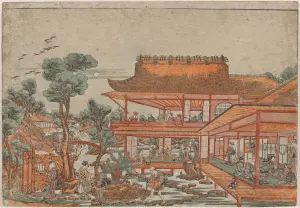
Japan Search’s National Diet Library gallery describes the spread of the custom among commoners during the Edo period. It identifies temples in Edo associated with foliage viewing. The gallery’s prints, illustrated books and portable dining objects show that an outing could bring together scenery, company and food, rather than consisting only of a solitary look at a tree.
04
Images preserve ways of framing the season
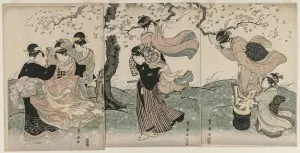
JAANUS discusses autumn-leaf viewing as a pictorial subject, including the sixteenth-century screen associated with Kanō Hideyori. Such works document how painters arranged people and landscape into meaningful scenes. A painting or print is a composed representation, not a survey of how every social group experienced the season.
05
The stage title belongs to a dramatic tradition
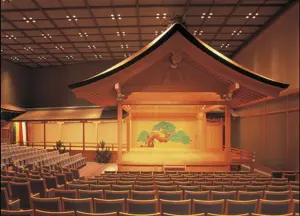
The Noh play Momijigari, attributed to Kanze Nobumitsu, turns an autumn outing into an encounter with a demon. Japan Search also traces related treatments in other performance forms, including kabuki. These works make the seasonal setting culturally legible while developing a story with its own characters and conventions. Noh provides the performance context.
06
The local landscape determines the occasion
The custom is best understood through the relationship between a place and its seasonal appearance. Gardens and scenic routes offer different settings; a historical image cannot promise the condition of leaves on a future visit. Hanami offers a comparison with flower viewing, while Tsukimi follows another way of organising attention around a seasonal sight.
Sources
Last updated:
.jpg)