Food Culture
Sake Brewing Regions of Japan

Image: 663highland / Wikimedia Commons · CC BY 2.5
Sake Brewing Regions of Japan
Water, work and local history shape brewing places.
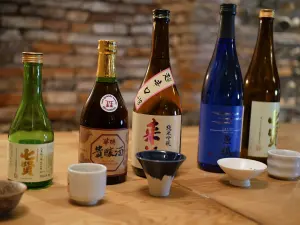
Japan’s sake brewing regions are places where water, rice, skilled work, trade and food culture have supported the production of rice-based alcoholic drinks. Famous names such as Nada, Fushimi and Niigata operate at different geographical scales: a brewing district is not the same thing as a prefecture. Regional descriptions can help explain history and production conditions, but they cannot predict every bottle’s flavour. Brewers select rice, yeast, techniques and maturation methods, and contemporary temperature control allows a wider range of styles. A useful regional account therefore connects landscape and institutions with individual producers, while avoiding a map that assigns one fixed taste to each part of Japan.
Materials
Water and rice enter a controlled process.
People
Brewing knowledge travels through workers.
Place
Districts and prefectures describe different scales.
At a glance
- Product focus
- Sake, also called nihonshu
- Nada
- Brewing area in Hyōgo Prefecture
- Fushimi
- Brewing district in Kyoto
- Niigata
- Prefecture with a distinct brewing community
- Regional factors
- Water, rice, skill, climate and food culture
01
A region can mean a district or a prefecture
The National Research Institute of Brewing’s guide compares places including Nada, Fushimi, Niigata, Akita and Saijō. These names are useful reference points, but they are not equivalent administrative units. Comparing a concentrated urban brewing district with an entire prefecture requires attention to the scale and purpose of the comparison.
02
Water matters without deciding flavour by itself
The Japan Sake and Shochu Makers Association explains that a reliable water source is a major condition for a brewery. Minerals can affect fermentation, while undesirable constituents such as excessive iron create problems. Water is only one input: the final drink also reflects rice preparation, microorganisms, brewing decisions and storage. A simple hard-water versus soft-water slogan leaves out that interaction.
03
Three familiar names illustrate different local contexts
Nada’s Miyamizu is a documented brewing-water resource; Fushimi is a longstanding Kyoto brewing district; and Niigata’s association explains the importance of snow-fed water. These examples identify particular relationships between place and production without claiming that their products all taste alike.
- Nada, Hyōgo
- Miyamizu and the concentration of breweries around the brewing districts.
- Fushimi, Kyoto
- A historic district with breweries and local spring-water traditions.
- Niigata
- Snow, water resources and a prefecture-wide brewing community.
04
Brewing knowledge travels through people
The research institute’s guide distinguishes kuramoto, the brewery enterprise, from tōji and other brewing workers. Associations helped transmit specialised knowledge between generations and workplaces. A regional tradition is therefore also a history of labour and learning. It cannot be explained solely by the location of a spring or the variety of rice grown nearby.
05
Regional identity changes with technology and collaboration
The national makers association describes local rice development, regional microorganisms and brewery collaboration as ways of renewing regional identity. It also notes that temperature control reduces some environmental constraints. Such changes can strengthen an association with place while widening the range of possible styles, rather than preserving one unchanging regional formula.
06
Read the producer and product alongside the place
A region provides context, while the brewery and the named product supply more specific information. Local food pairings are also historical tendencies rather than compulsory combinations. Sake explains the drink itself, and Rice in Japanese Culture places its principal agricultural material in a wider cultural setting. Production rankings require a stated year and measure.
Sources
Last updated: